


From the Quincy Pact to a Nuclear Negotiating Table
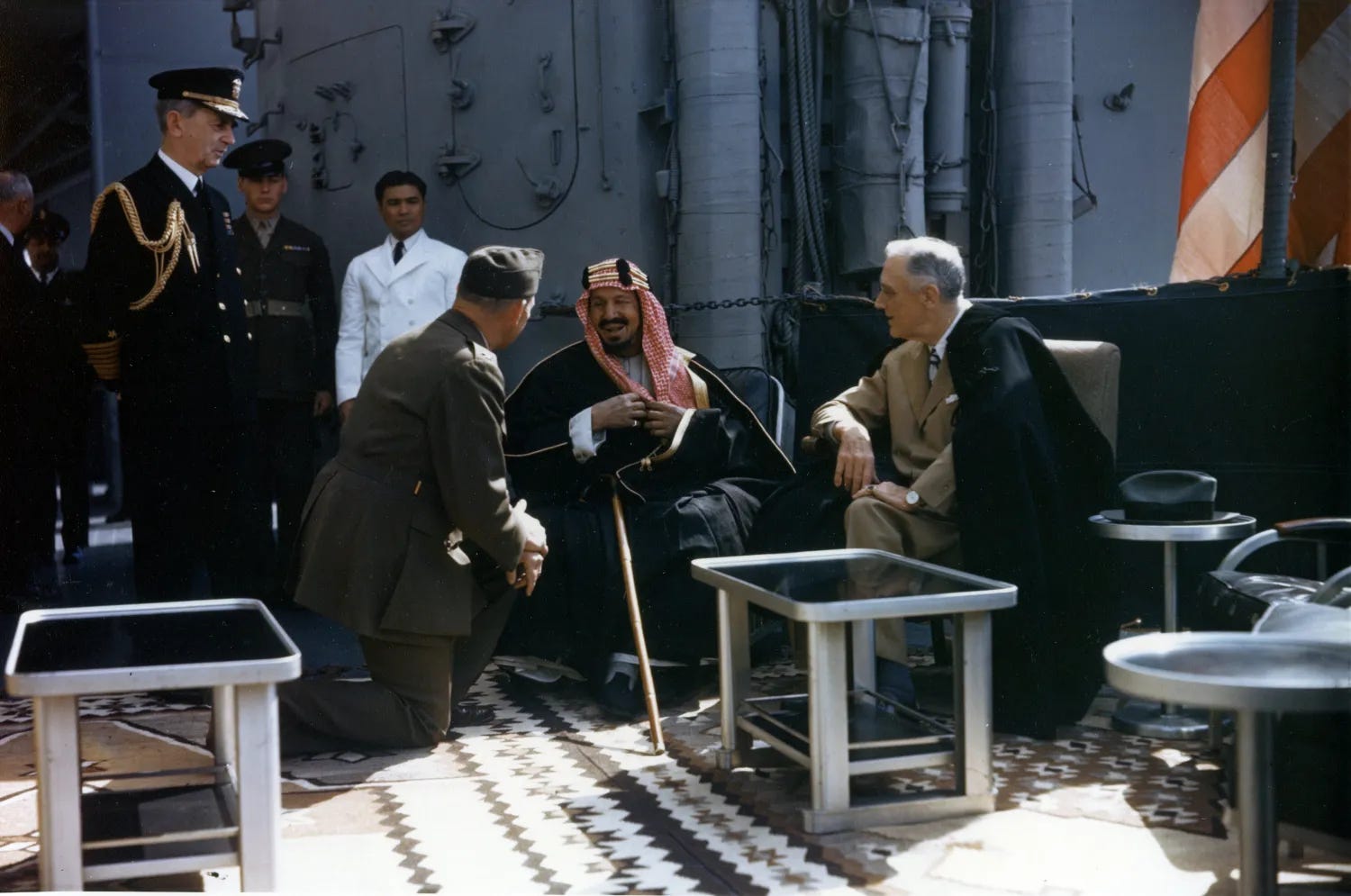
On 14 February 1945 Franklin Roosevelt met King Abdul Aziz ibn Saud aboard the USS Quincy in the Great Bitter Lake. That encounter created the strategic architecture that governed United States Saudi relations for most of the modern era. The Kingdom supplied stable oil flows and received an American security umbrella. Washington guaranteed the survival of a monarchy in a volatile region. Even after seismic shocks such as the 1973 embargo, the Iran Iraq war, 9-11 and the shifts caused by the United States shale boom, the structure persisted.
That long history framed the meetings held last week in Washington. Mohammed bin Salman travelled to the United States for discussions with Donald Trump which included nuclear power. Together they announced that negotiations on a United States-Saudi 123 nuclear cooperation agreement had been concluded. No text was released. There was no confirmation that the Kingdom had accepted any version of the so-called “gold standard model,” in which the importing country forswears enrichment and reprocessing.
The announcement gestured at a breakthrough without explaining what either side had conceded. Instead of a detailed text, Washington and Riyadh offered a carefully staged moment meant to show that the two governments were moving in step again. Saudi Arabia could present the trip as progress toward securing the nuclear cooperation it has sought for more than a decade. The United States could signal that it still held enough leverage to shape the Kingdom’s civil program at a time of shifting regional politics. For everyone watching from the outside the lack of clarity became part of the message.
This moment matters more when understood against the slow and often opaque evolution of the Saudi civil nuclear program.
A Civil Program That Has Never Really Started
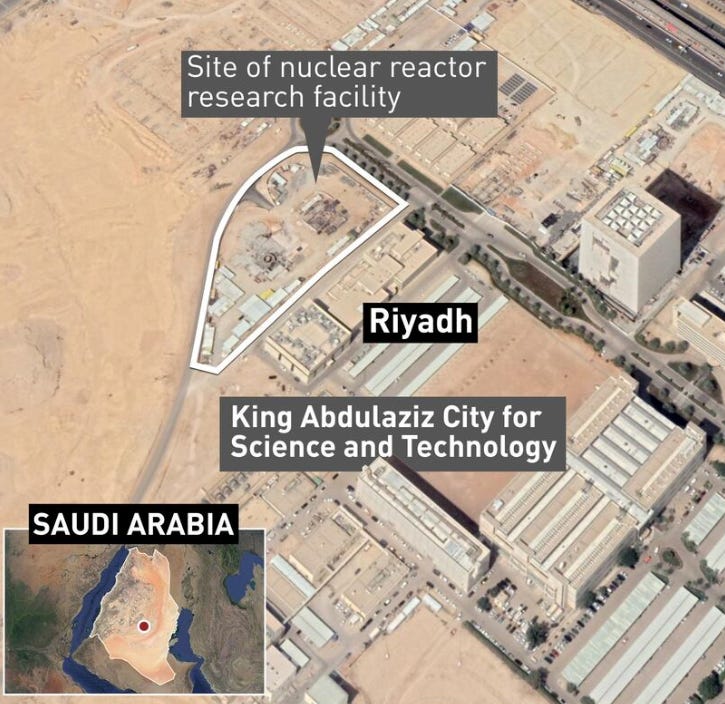
For more than fifteen years Saudi Arabia has floated nuclear ambitions that appeared large on paper and modest in practice. Early statements promised 17.6 gigawatts of large reactor capacity by 2030, Korean small modular reactors, a domestic fuel cycle and partnerships with the United States, France, South Korea, China and Russia. Precious little of that architecture materialized. The only project nearing completion is a 30 kilowatt Argentine research reactor in the commissioning and safeguards approval phase. What survives today is a tender for two large reactors and a file that has drifted through multiple bureaucratic re-organisations.
The apparent drift has had strategic value. By not committing early, the Kingdom ensured that no vendor held a privileged position. There was time for nuclear engineers to train abroad. Legal and regulatory frameworks developed gradually. Fuel cycle rights under the Nonproliferation Treaty were not surrendered. The long delay allowed Riyadh to watch how each potential partner behaved and how the global nuclear market shifted. The result is a program with very little concrete progress and a great deal of accumulated leverage.
Why Nuclear Makes Sense Mostly as a Strategic Option
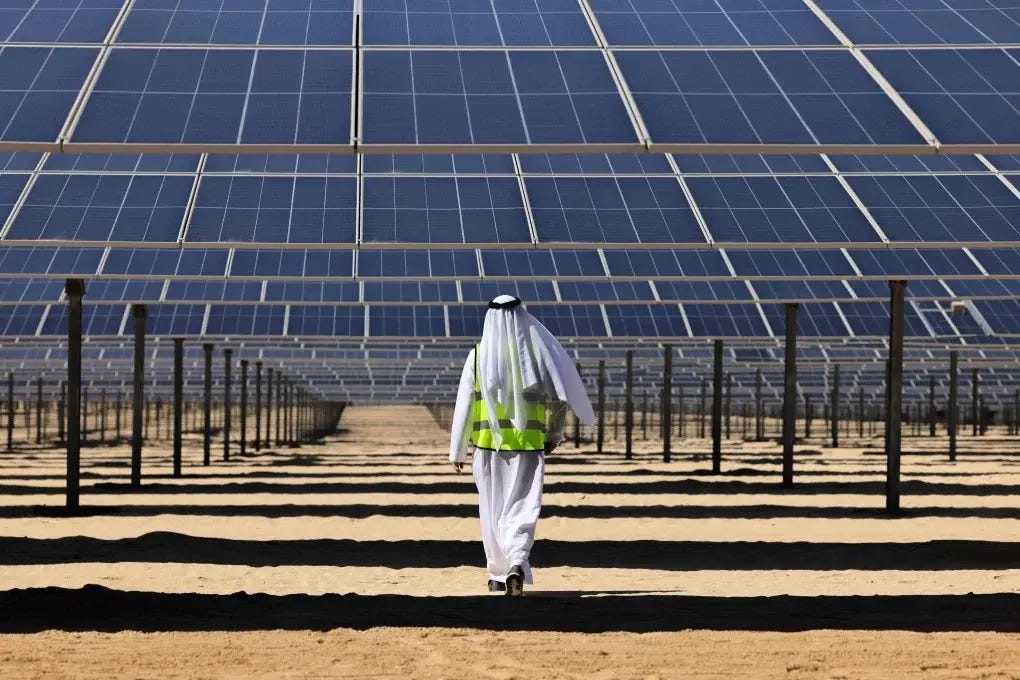
Saudi Arabia still burns on the order of one million barrels of oil per day for electricity and desalination during peak months, roughly one percent of global oil output across its ninety five gigawatt nameplate capacity grid. Freeing that oil for export would bring significant fiscal benefits, but the Kingdom has far cheaper ways to accomplish that goal than by building reactors. Since the 1970s Saudi Arabia has captured most of its associated gas through the Master Gas System and routed it into the domestic grid rather than flaring it. Current gas strategy focuses on expanding supplies from fields such as Jafurah and converting remaining oil fired units to natural gas. This shift is occurring alongside an unofficial target of roughly 100 to 130 gigawatts of solar photovoltaic capacity by 2030. Taken together, expanding gas use, replacing liquid fuel units, and rapidly scaling low cost solar provide a far shorter and more certain pathway to reducing oil fired electricity than waiting for a large nuclear program to come online.
Nuclear energy enters the picture for different reasons. It carries prestige. It anchors a long term industrial program. It provides the foundational components of a full fuel cycle. Most of all it creates latent capacity for rapid escalation if the regional environment deteriorates. That logic has been declared openly. In a 2022 interview Mohammed bin Salman stated, “If Iran acquires a nuclear bomb, we will follow suit as soon as possible.” Civil nuclear technology in this context is not only about megawatt hours but also about latent nuclear weapons potential.
A reactor deal with the right partner therefore becomes an instrument of long term signalling. It shapes alliances, defines the technological architecture through which any future fuel cycle could operate, and establishes the political obligations that would govern a Saudi program for decades. It is equally a liability for whichever country supplies the technology because the proliferation risks in this region are real, and the political consequences of enabling a latent nuclear capability are profound.
Enrichment and the Shape of a Future Bargain
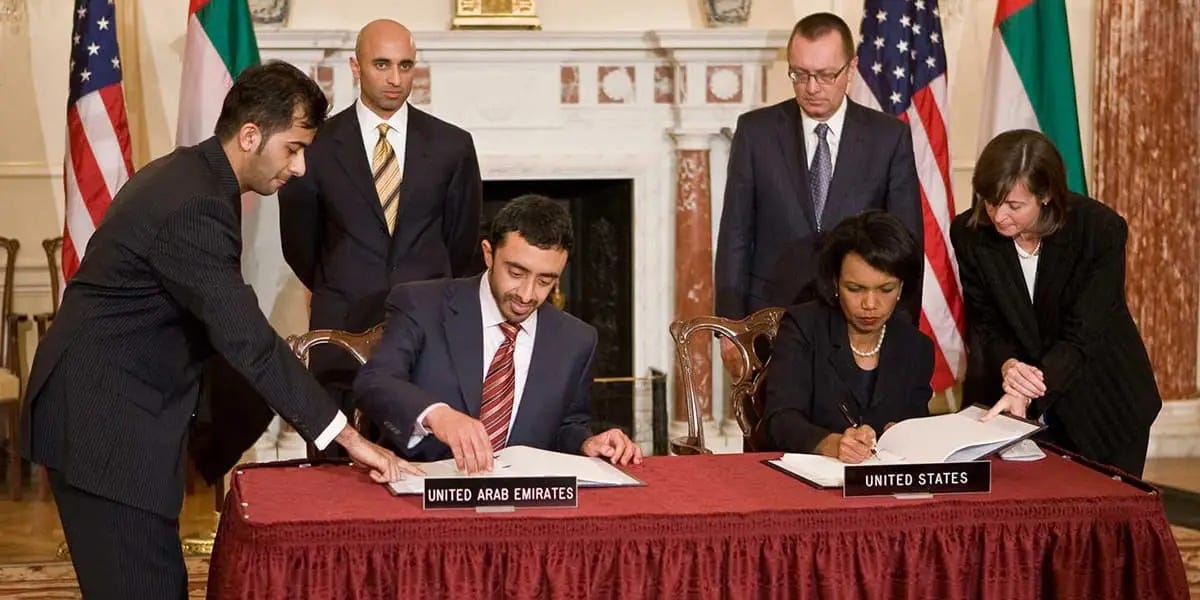
The United States has developed a preference for “gold standard” 123 nuclear cooperation agreements that forbids all enrichment and reprocessing. The UAE accepted such terms in 2009. That acceptance helped smooth the politics of the Barakah project in Congress. Saudi Arabia has refused to take that step. Article IV of the the Nonproliferation Treaty protects the right to peaceful fuel cycle activity and Riyadh sees no reason to give up a capability that its rivals either possess or are pursuing.
Before the Gaza war there was a serious attempt to build a three part arrangement that combined Saudi Israeli normalisation, a security guarantee and a nuclear cooperation agreement. Once the war erupted that track collapsed. Last week’s claim that a 123 agreement has been concluded is the first sign of renewed movement, but the absence of a public text makes it impossible to judge what shape the arrangement will take. If Washington accepts a non-gold standard framework, Congress will still have to approve it and concerns from Israel could be significant given its sizable US based lobby.
Why the UAE Picked Korea and Why That Still Matters
When the UAE held its competition in 2009, it treated nuclear energy as a capacity building problem rather than a geopolitical one. Emirates Nuclear Energy Corporation ran a disciplined tender. South Korea won with a 20.4 billion United States dollar bid for four APR1400 reactors, well below the Areva and GE Hitachi offers. The contract was heavily fixed price. KEPCO and its partners assumed substantial construction and integration risk in order to establish the APR1400 as a credible export product.
The UAE’s choice of nuclear reflected structural conditions that do not map cleanly onto Saudi Arabia today. Many are surprised to learn that the UAE is a net gas importer. Rapid growth in electricity demand and desalination outpaced domestic supply and produced a strategic dependence on Qatari gas supplied through the Dolphin pipeline. At the same time, solar photovoltaic technology in the early to mid 2000s was far less mature and far more expensive than it is today. Utility-scale solar in the Gulf was only beginning to emerge, and its cost structure made it inadequate as the main response to surging demand.
Nuclear provided the UAE with a large scale, non carbon source that reduced dependence on Qatari gas, and offered long term energy security. These pressures made nuclear urgent for Abu Dhabi in a way that was never as acute for Saudi Arabia, which has extensive domestic gas resources and is not structurally dependent on imported supply.
The results are visible. All four units at Barakah are operating. The project delivered a trained Emirati operating workforce and a competent national regulator. It remains the strongest modern example of a newcomer state executing a first-time nuclear programme without significant overruns. For Saudi Arabia the Barakah experience is both encouraging and complicated. It demonstrates that Korea can deliver. It also reflects a commercial and intellectual property environment that no longer exists.
The Lessons of Poland and Bulgaria
The financial structures of recent AP1000 projects reveal how costs vary with partner selection, project maturity, and the breadth of what is counted in programme figures. In Poland, the planned first plant at Lubiatowo Kopalino, using three AP1000 units under a Westinghouse-Bechtel consortium, carries an estimated cost of roughly 50 billion United States dollars. This is an all-inclusive national programme figure for a newcomer country with a greenfield coastal site, encompassing owner costs, contingencies, interest during construction, grid upgrades, civil works, and the institutional build out needed under European regulatory scrutiny.
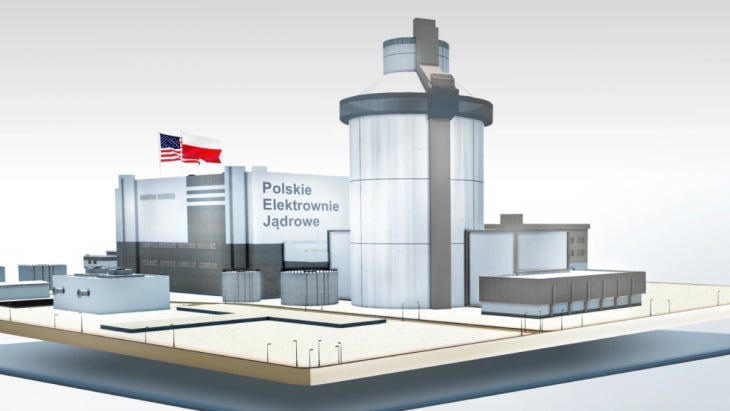
By contrast, Bulgaria has capped its two-unit AP1000 expansion at around 14 billion dollars with Hyundai Engineering and Construction as preferred partner. This reflects a construction cost ceiling at an existing site with established grid and cooling infrastructure. It excludes the breadth of owner costs included in the Polish estimate, and independent Bulgarian analysts place the likely all-in figure closer to 17.6 billion euro. The project is also at an earlier definition stage; Hyundai and Westinghouse have so far signed only an engineering services contract, not a full EPC.
These cases illustrate how different risk allocations drive different outcomes. When Bechtel anchors EPC, the structure is conservative and costs rise because price certainty requires thicker contingencies. When a Korean firm that is prepared to assume more construction risk leads EPC at an existing site with lower local construction costs, the burden can fall. Final prices, however, are known only once binding EPC contracts are signed.
For Saudi Arabia the implication is straightforward. Any AP1000-based programme would preferably resemble the Bulgarian structure rather than the Polish one and would be designed around heavy use of Korean construction capacity and supply chains.
The Westinghouse Monroe Doctrine
The intellectual property environment that enabled Barakah changed fundamentally after the project was completed. The APR1400 was developed from a long standing System 80 technology transfer from Combustion Engineering, later acquired by Westinghouse. During Barakah this lineage was acknowledged, Westinghouse was part of the consortium, and United States approvals were routine.
In the years that followed, Korea began presenting the APR1400 as an indigenous design. Westinghouse and Washington pushed back. From 2022 onward the United States asserted that APR1400 remained dependent on United States-owned IP and was therefore subject to United States export controls. Litigation followed, culminating in a global settlement in 2025.
Leaked figures reported in the Korean press suggest that Korean firms must assign Westinghouse about 650 million dollars of equipment and services scope and pay roughly 175 million dollars in licensing fees for each export reactor. In effect the settlement places a United States commercial and political gatekeeper between Korea and any autonomous export bid.
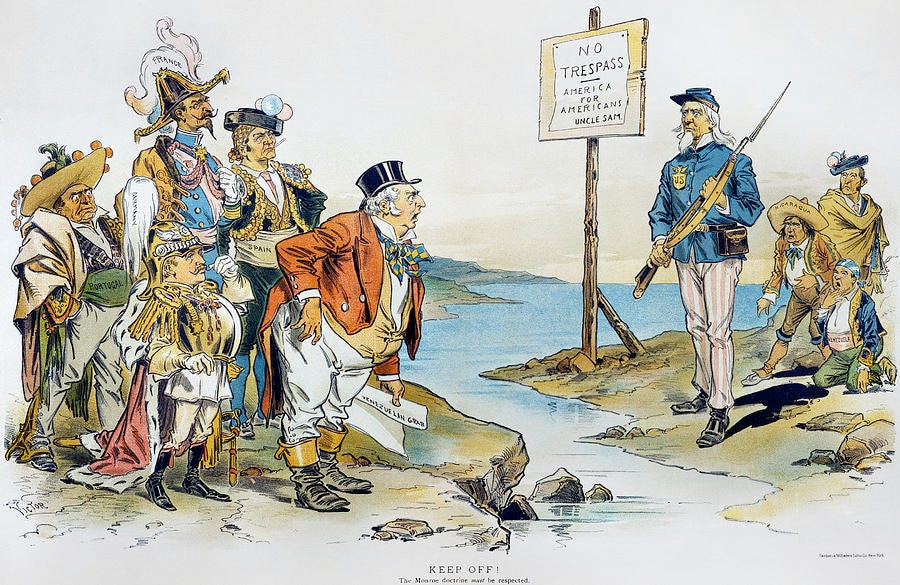
The resulting structure functions as a modern Nuclear Monroe Doctrine. The original doctrine signalled that outside powers could not establish independent spheres of influence in the Americas. The Westinghouse-Korean settlement does not create a formal geographic prohibition, but it defines where Korea can act independently. KHNP’s effective sidelining or withdrawal from programmes in Poland, the Netherlands, Sweden and Slovenia reflects this new environment. The mechanism became explicit in the Saudi tender when Washington asked Seoul not to bid APR1400 and instead to join an AP1000-based proposal. United States export controls provide a workable veto through the ability to withhold authorisation for intermingled technology. That possibility alone is sufficient to shape Korean decisions.
The Korean Predicament
The settlement eliminated legal risk but created political strain in Seoul. Korean reporting described the terms as a burden on the industry and criticised the previous administration for conceding too much. The financial details came to light only because internal factions leaked them. Korea remains free to participate in foreign projects, but primarily as an EPC partner on AP1000 designs rather than as an autonomous exporter of APR1400. This structure is acceptable to countries that want both United States technology and Korean delivery capacity, and it poses no obstacle where Korea is welcomed as a major builder. The constraint is domestic. The pathway for a semi-independent Korean nuclear export option has narrowed. Korea’s future participation abroad now sits within a framework defined by Westinghouse technology, United States authorisation and United States strategic priorities.
Saudi Strategic Logic and Narrowing The Field
From Riyadh’s perspective the other major players present challenges.
France retains a sophisticated nuclear industrial base and decades of construction experience but its export bandwidth has eroded. EDF is still trying to bring Flamanville to full power after eighteen years of construction, attempting to finish Hinkley Point C, getting started on two EPR units at Sizewell, and preparing between six and fourteen EPR2 units in France. The signs of exhaustion are evident. EDF has withdrawn from multiple international tenders and its capacity to shoulder a project of regional significance in Saudi Arabia is limited.
Rosatom is competent but burdened by sanctions and political risk. China has demonstrated capacity but has limited export bandwidth, and a Chinese Saudi reactor would signify a geopolitical pivot.
As illustrated above Korea can deliver, but only inside an export architecture that gives Washington approval authority.
The United States offers the AP1000, political cover and a pathway to a reactor deal that aligns with long term security objectives. A Korean built AP1000 under United States oversight might just be the the most viable model.
Conclusion: A High Stakes Game of Optionality
Saudi Arabia’s nuclear program has always been presented as a civil project. In practice it functions as a strategic instrument in a region defined by rivalry and shifting alliances. The Quincy pact still shapes expectations. The meetings in Washington hint at a new bargain. The choice of reactor will affect more than the power grid, it will determine how the Kingdom positions itself between Washington, Beijing and Moscow. It will influence whether Saudi Arabia preserves a latent weapons option. It will test how far the United States is willing to go in directing allied technology through export controls.
For a Kingdom that does not need nuclear power to generate electricity, the stakes are unusually high. The final decision will be remembered not for the megawatt hours it produces but for the alliances it cements.


