

From Nuclear Waste to Nuclear Sovereignty: What Four Years Testifying in Ottawa Reveals
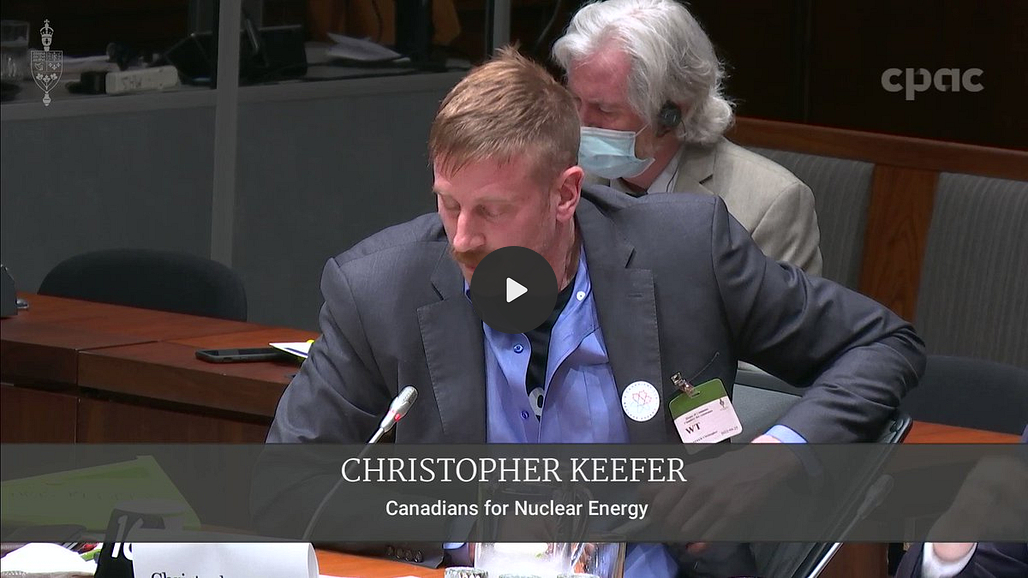
Yesterday, I appeared before the House of Commons Natural Resources Committee to discuss a defining choice facing Canada’s nuclear industry: whether to champion our homegrown CANDU technology or throw federal support behind American reactor designs such as the Westinghouse AP1000.
MPs asked substantive questions about reactor technology, the practical challenges of deployment, and how federal industrial policy can maximize the economic benefits of Canada’s nuclear renaissance.
What a difference a few years makes.
When I appeared before the same committee in 2022 during the Trudeau era, I argued that nuclear energy was indispensable to Canada’s climate and economic future. Much of the discussion, however, was consumed by familiar fear-mongering about radioactive waste and whether nuclear power had any legitimate place in the energy transition.
Things got downright surreal when NDP MP Charlie Angus repeatedly accused me of suggesting that Canadians should eat nuclear waste.
At one point, Angus exclaimed:
“You told us I could go home to my people and tell them they could eat uranium. I mean, God help us!”
For that bizarre exchange, see the video linked in this tweet below.

Four years later, the contrast could hardly be sharper.
We have moved from debating whether Canada should build nuclear reactors to debating whose reactors we should build.
That represents an extraordinary shift in Canada’s political conversation, and one that Canadians for Nuclear Energy has worked hard to bring about.
Our challenge today is to ensure Canada’s nuclear renaissance builds on generations of public investment, engineering expertise, and industrial capabilities that have made this country a world leader in nuclear technology.
Below is a transcript of my testimony.
Like this post if you prefer your nuclear waste well done.
“Thank you, Chair, and members of the committee.
I am Chris Keefer, president of Canadians for Nuclear Energy, an industry-independent advocacy organization that helped drive the federal government’s transformation from nuclear skepticism to enthusiastic support for nuclear energy.
Canada is one of only six countries in the world that can call itself a tier one nuclear nation: capable of designing, building, and exporting its own nuclear reactor technology.
My argument today is that we need to decide whether to build on that advantage, or increasingly become a supplier within other countries’ nuclear industries.
In practical terms, will we invest in our own CANDU technology, or build American reactors here and compete for peripheral involvement in U.S.-brokered global exports of the Westinghouse AP1000?
Last week, Cameco CEO Tim Gitzel urged this committee to give Westinghouse and CANDU equal standing in federal nuclear policy.
Cameco is an iconic Canadian company, the descendant of Federal and Provincial Crown corporations.
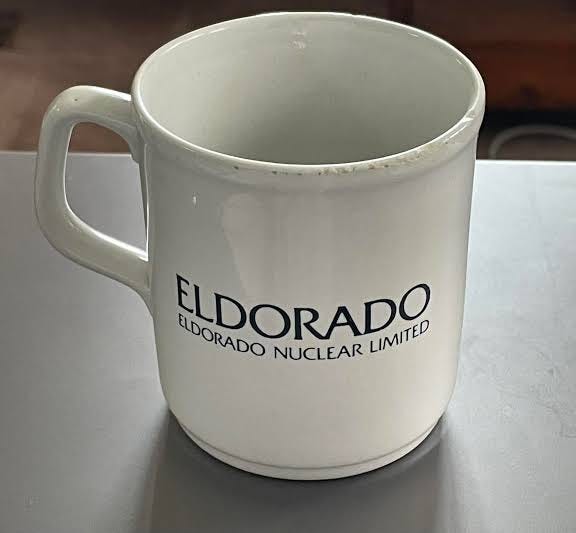
Buying a minority stake in Westinghouse, an equally iconic American company, may prove an excellent commercial decision for Cameco. But creating a false equivalency between AP1000 & CANDU based on a private-sector investment is misleading.
Consider what true equivalence with CANDU would entail for Westinghouse:
It would require a complete transfer of AP1000 technology & IP rights sufficient for Canada to independently develop, license & export the reactor, overcoming longstanding American export controls and binding national-security safeguards designed to protect strategic nuclear technology and restrict foreign owners’ access and influence.
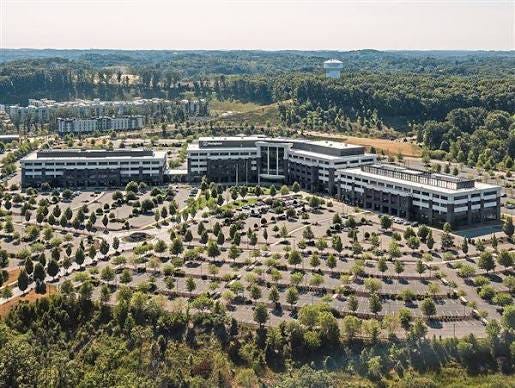
It would require headquarters & design authority to move from Pittsburgh to Canada, as well as construction of a multibillion-dollar enrichment and AP1000 fuel fabrication facility here in Canada.
A satellite Westinghouse engineering office & equity stake fall well short.
Recall that CANDU’s underlying IP belongs to Canadians through AECL & Ontario Power Generation.
Domestic & export CANDU builds sustain decades of Canadian engineering, equipment sales, research & services, generating skilled jobs, revenues & a strong Canadian tax base.
These relationships are anchored by CANDU Energy’s headquarters in Mississauga,
CANDU research at Canadian Nuclear Laboratories & Toronto-based CANDU Owners Group, which coordinate best practises across the global fleet.
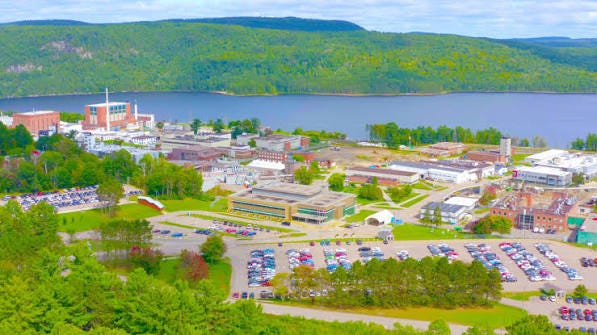
In addition, CANDU reactors provide energy security as they are fuelled by Saskatchewan Natural Uranium, avoiding foreign enrichment, with bundles fully manufactured in Canada
American officials are clear-eyed about how they see Westinghouse. U.S. In 2026, Energy Secretary Chris Wright said, and I quote, “I would call Westinghouse an American Company. It has a Canadian partner in Cameco, but it’s an American company.”
How is Washington asserting its influence over Westinghouse?
Under its 2025 strategic partnership with Cameco and Brookfield, Washington is arranging financing and approvals for at least $80 billion in AP1000 reactor projects, in return for conditional rights to an equity position in Westinghouse itself.
Korean reporting, in the context of its 10% proposed ownership stake in Westinghouse’s, citing a ministry submission to its National Assembly, also warns of a proposed American golden share under negotiation that would give Washington veto rights over key corporate decisions.
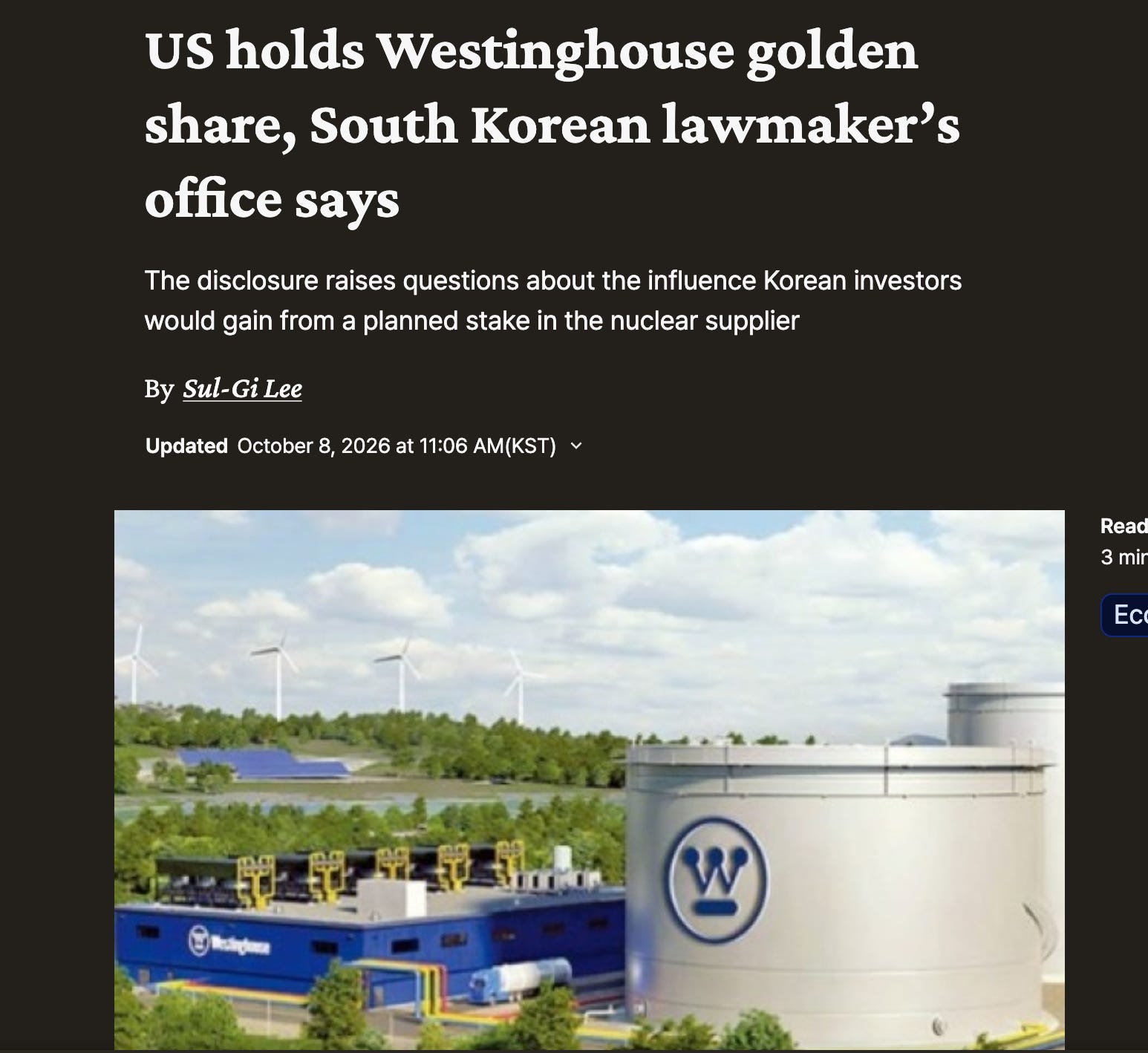
My concerns about Canada ceding influence over its nuclear future precede Washington’s trade war.
We now face 50% steel and aluminum tariffs, 25% auto tariffs and threats to decertify Bombardier aircraft.
Even the Canadian-financed Gordie Howe Bridge was held hostage by the Trump Administration to secure half its net revenues before Canada recovers its investment, violating the prior agreement.

American protectionism will ebb and flow, but over the past decade, even under Biden, each retreat has left more barriers in place, and a change of administration offers no guarantee against its eventual return.
We must sustain our economic relationship with the United States through thick and thin, BUT we have learned that it is essential to avoid critical dependencies that leave Canada exposed to American political leverage.
Fortunately, our indigenous CANDU reactor technology insulates us from such dependency.
Our recommendations are therefore that while reactor choices are ultimately provincial, the federal government should reserve financing and loan guarantees for the reactor Canadians have spent decades developing and whose IP it owns.
In addition, Ottawa should accelerate domestic CANDU deployment, and invest in supporting infrastructure such as heavy water production.
Lastly, the federal government should establish an industry-wide Team CANDU consortium with independent governance, competitive procurement and shared accountability, building on the collaborative project delivery models that have brought CANDU refurbishment mega projects at Darlington and Bruce in ahead of schedule and under budget.”


