

“If you look at a map, they drew an artificial line right through it between Canada and the U.S. Somebody did it a long time ago, many decades ago, and it makes no sense.” Donald J Trump
With Trump’s threats of annexation, images of North America draped in the red, white, and blue, and talk of Canada as the 51st state, a basic question underlies the current dispute. Why does Canada exist as a separate country at all? Why didn’t Britain’s possessions north of the rebellious American colonies become part of the United States? This is a strangely personal story for me, as my ancestors played an outsized role in engineering the Canadian nation into existence.
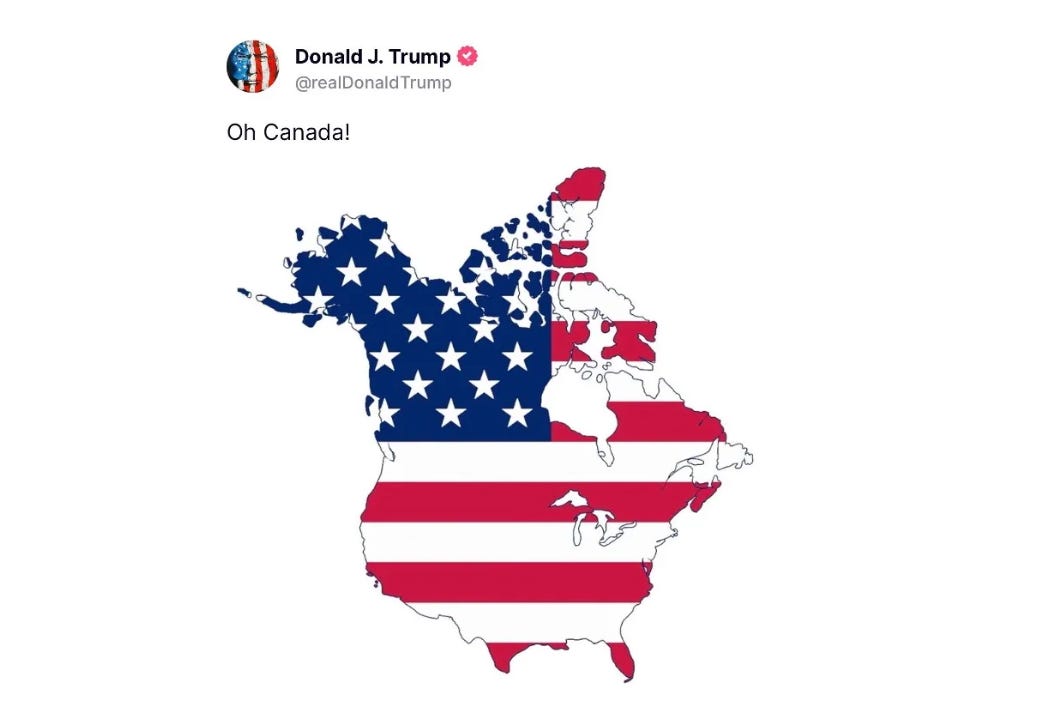
Canada emerged from a series of political bargains, military contests, and infrastructure choices that bound a loose collection of colonies into a viable country, despite the persistent pull of a much larger United States.
In 1775, there was no recognizable Canadian counterpart to the future United States. Britain’s thirteen colonies along the Atlantic seaboard had roughly 2.5 million people, established merchant cities, large agricultural economies, and political institutions that had been developing for generations.
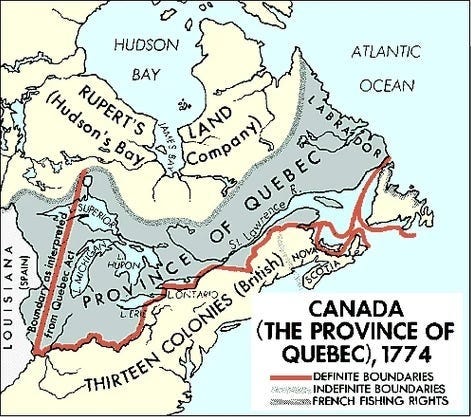
To their north lay the Province of Quebec, a British-controlled but overwhelmingly French society concentrated along the St. Lawrence around Montreal and Quebec City. Conquered from France only fifteen years earlier, it contained roughly 90,000 inhabitants. To the east were Britain’s sparsely populated Atlantic possessions. Westward, settlement consisted of scattered trading posts, forts, and missions, most housing only a handful of Europeans, within vast Indigenous territories.
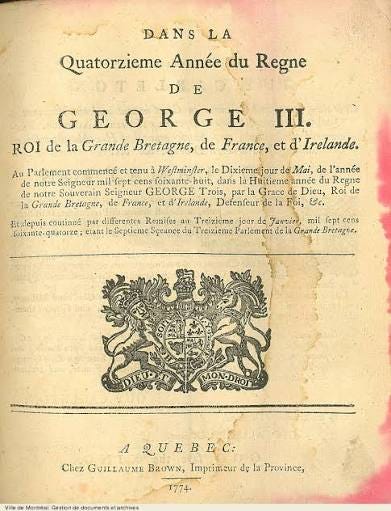
A year before the American Revolution began, Parliament passed the Quebec Act of 1774, preserving Catholic religious rights and French civil law in private matters. Perhaps no British decision did more to make Canada’s eventual existence possible. The settlement gave Quebec’s French-speaking Catholic majority considerably less reason to join a rebellion led largely by Protestant colonists to the south.
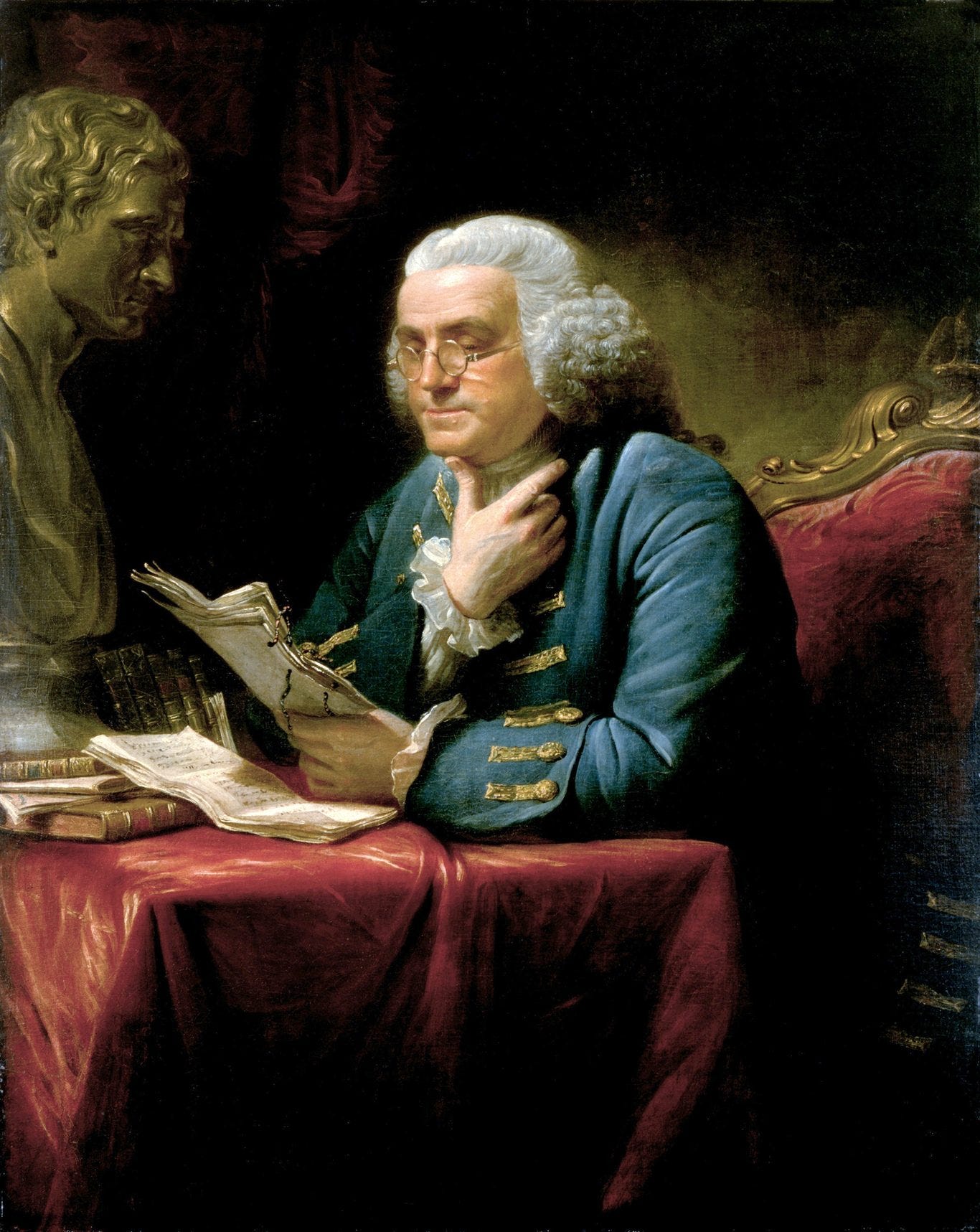
The Americans nevertheless invaded. They captured Montreal in 1775 and advanced on Quebec City. In the spring of 1776, Congress sent Benjamin Franklin, already one of the best-known intellectual and political figures in the colonies, to Montreal. His delegation encouraged Canadians to establish their own representative government and send delegates to Congress, promising religious freedom and protection for Church property.
The occupying army’s unpaid debts, anti-Catholic associations, and doubtful paper currency undermined confidence in American promises. The hoped-for mass uprising among French Canadians never materialized, and the arrival of British reinforcements forced the inadequately supplied and overstretched American army to withdraw.
The Loyalist migration north after the American Revolution, including my own ancestor George Keefer, created a much larger English-speaking population in British North America. They brought with them a political culture that was strongly pro-British, anti-republican, and deeply suspicious of American expansion.
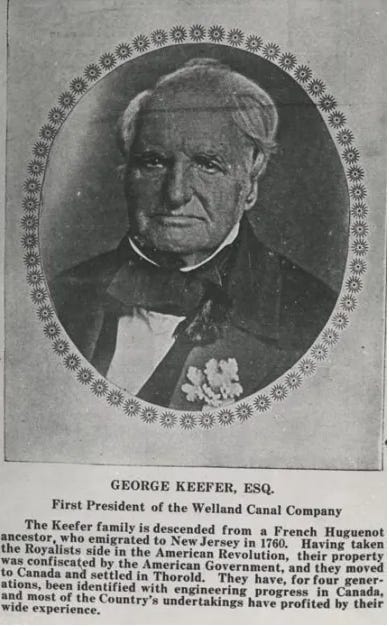
Geographically, the Great Lakes and the St. Lawrence River formed a defensive moat and a critical east-west transportation corridor. George Keefer and his sons, Thomas and Samuel, were instrumental in strengthening this commercial artery: they engineered the Welland and Lachine canals, built sections of the Grand Trunk Railway from Toronto to Montreal, and erected bridges that connected the emerging country.
The War of 1812 became another critical moment in preserving a separate British North America. The conflict grew out of American grievances over British restrictions on neutral trade during the Napoleonic Wars, the impressment of sailors from American vessels, and tensions over the western frontier.
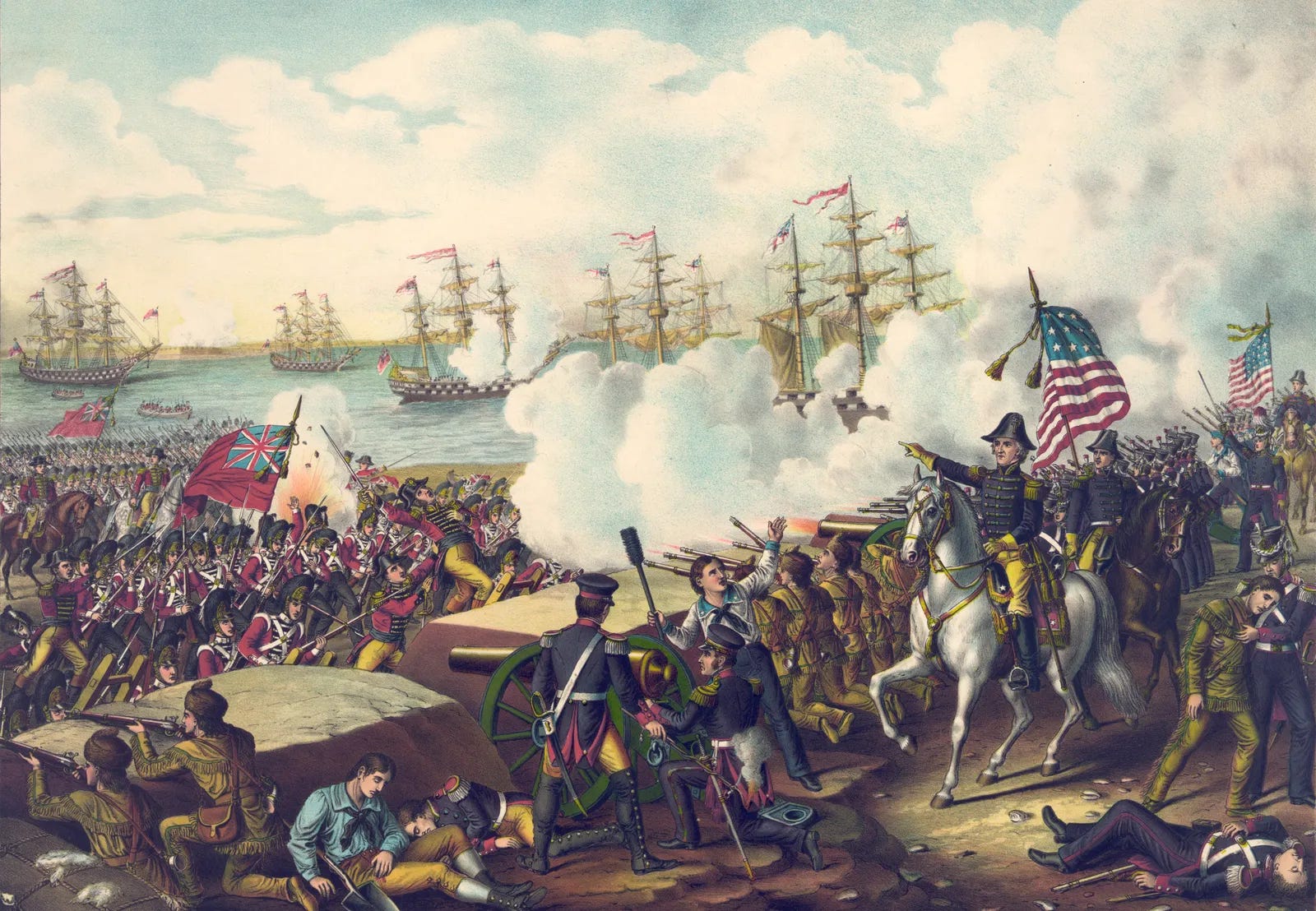
American armies invaded across the Niagara frontier and again attempted to sever the St. Lawrence and capture Montreal. British regulars, colonial troops, and Indigenous allies ultimately repelled these invasions.
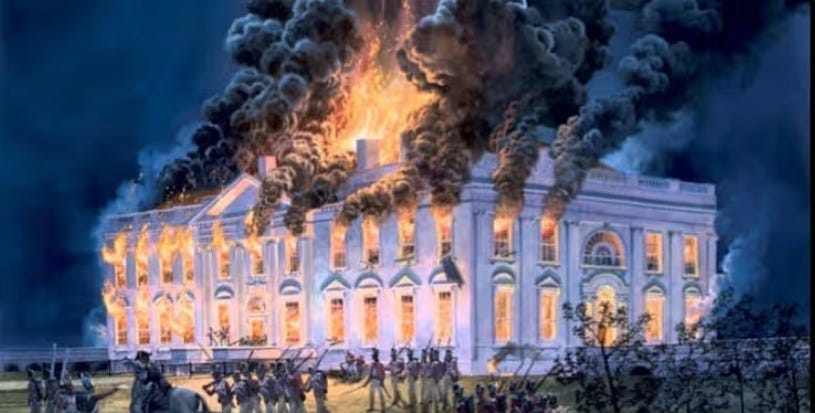
The War was marked by dramatic acts of arson on both sides of the border, with American troops capturing York, now Toronto, in 1813 and setting its parliament buildings alight, and British troops burning down the White House and Capitol building the following year.
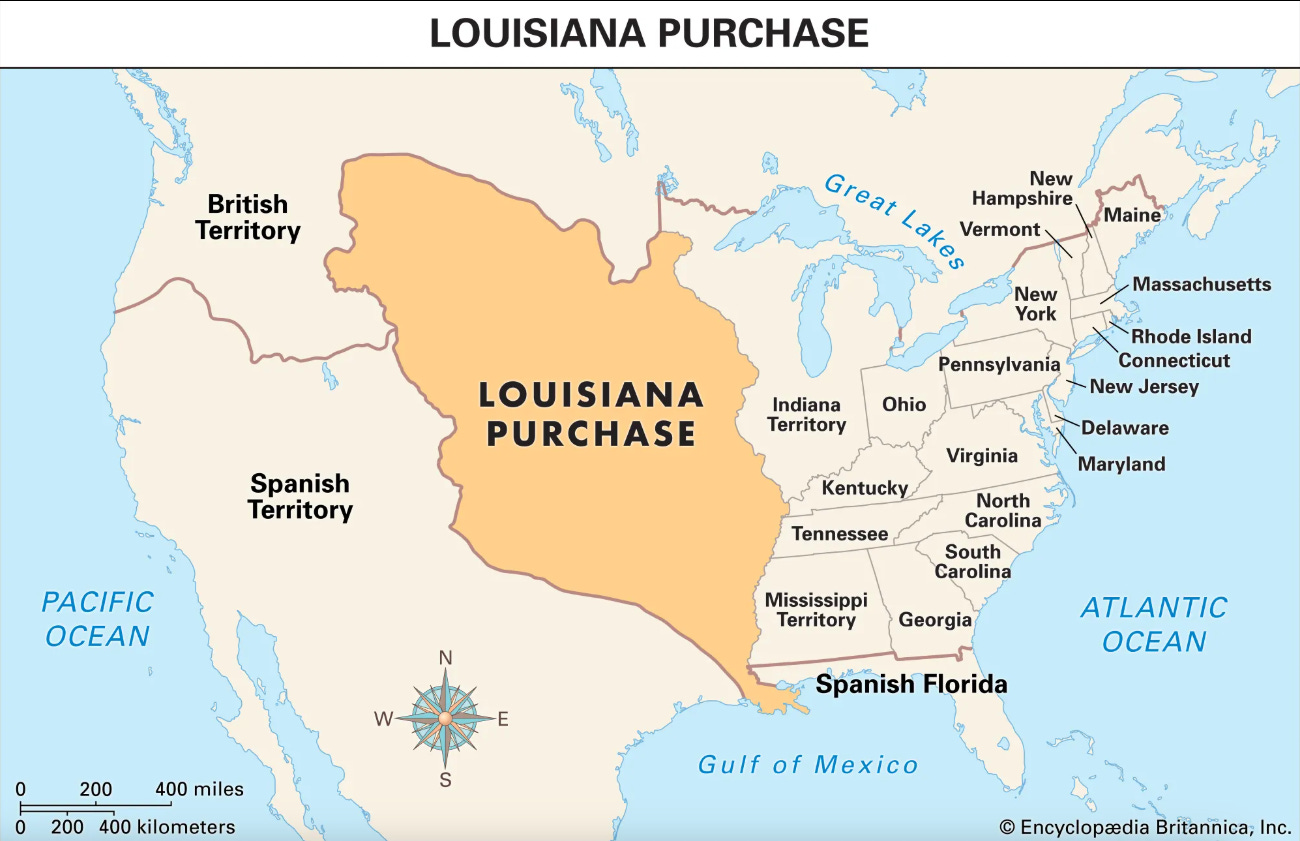
After the war, Britain and the United States negotiated a northern boundary along the 49th parallel, initially from Lake of the Woods to the Rocky Mountains and later toward the Pacific. American expansion continued across the continent, but Washington generally pursued it within its Louisiana Purchase, avoiding another war with Britain while advancing its broader territorial ambitions against Mexico.
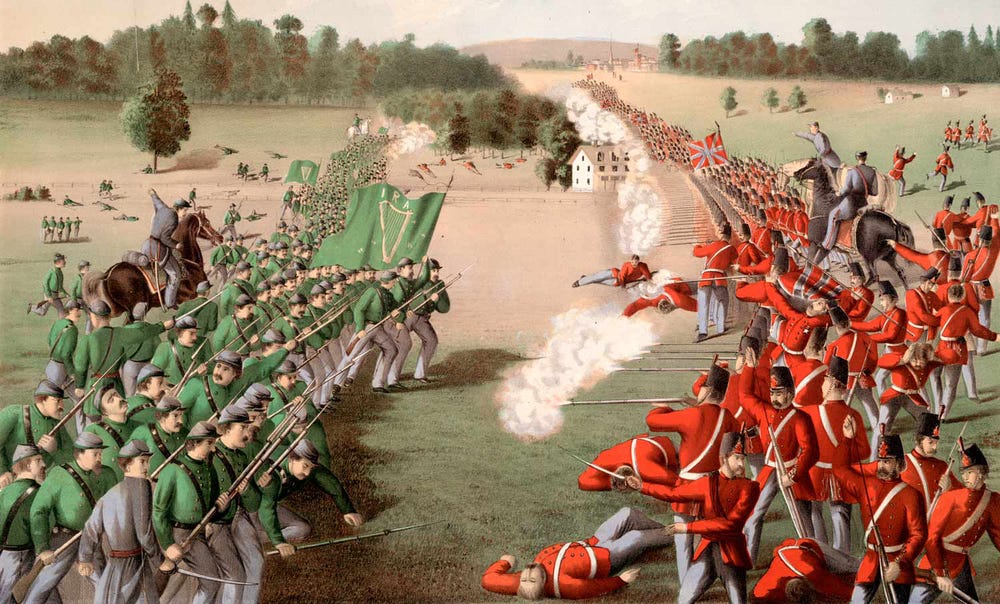
By the 1860s, however, the durability of these distinct British North American colonies was again in question. The American Civil War had mobilized a Union army of roughly a million men and created an enormous war economy capable of overwhelming Canada. Subsequent Irish American “Fenian” raids helped accelerate the final push toward Canadian Confederation in 1867. However, binding the new country together, particularly beyond the Great Lakes-St Lawrence waterway, required a vital piece of transcontinental infrastructure.
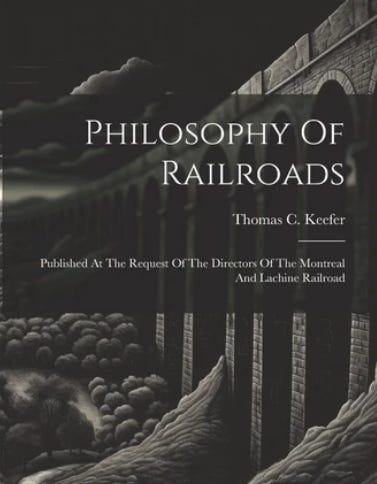
My triple great-grandfather, Thomas Keefer, in his 1850 Philosophy of Railroads, argued that Canada should stop thinking in terms of isolated local lines and instead build rail networks that would bind its cities and hinterland together, directing the trade of the interior eastward through Montreal rather than allowing it to drain south through American ports. He saw railways not simply as commercial ventures but as instruments of national development, requiring coordinated effort and public investment. By 1869, he was publicly advocating a railway to the Pacific.
The Canadian Pacific Railway was incorporated in 1881 and completed in 1885. It tied the Pacific coast to the Eastern provinces, opened the Prairies to large-scale settlement, and created an east-west transportation system that reduced Canada’s dependence on routes through the United States.
Since the American Revolution, maintaining a separate country has required Canadians to overcome geography: politically, through accommodation of Quebec and federation and physically, through canals and railways that created a continent-spanning internal market.
The line on the map may look artificial to President Trump. Creating and sustaining it was anything but an accident.
Like this post if you think the continent benefits from a control group.
The Canadian/American border is one of the few completely natural borders in the world. It follows the watersheds all across the continent. Not that there has to be a border but if you are going to have one, it's current location is exactly where to put it. There are a few dips and doodles of course but they were imposed on to the original vision.
One of the most notable was revision of the Fraser River watershed to replace the original Columbia River watershed removing what is now Washington state from the then British/Canadian view of the situation. The *little* dip was imposed by Teddy Roosevelt in his big stick mode.
Thanks for the color.
The fact that Canada became a federal, parliamentary democracy also had a lot to do with America’s 200 plus year old decision not to envelope Canada. From a realist viewpoint it definitely could/should have done so by now. The liberal peace theory says otherwise. Also, despite the east-west connection you highlight with the railroad there is enough economic flow from Canada to the US to assuage the US. For instance, most of Canada’s hydrocarbons still go to US refineries as you point out.
Stanley Lipset’s book “Continental Divide” does a very good job of explaining why the two so similarly cultural peoples have developed differences that keep them politically separate.
As an aside, the US’s and Canada’s decision to build railroads and then roads across their continents and America’s ability to finish the Panama Canal made any development of the famed Northest passage much more unlikely.