

Across seven decades Iran’s nuclear program has cost an extraordinary sum measured in capital, trained talent, diplomatic isolation, sanctions and most recently widespread aerial bombardment.
The economic damages resulting from sanctions alone have been estimated by experts to be roughly equivalent to those of the Iran-Iraq war, running into the hundreds of billions of dollars.
The result of that investment and sacrifice are shockingly modest. Its power fleet consists of a single Russian-built VVER-1000 reactor at Bushehr, supplying about 1.7% of national electricity. Iran also operates several small research reactors, most notably the 5MW Tehran research reactor.
Its enrichment capacity, the program it has defended and paid most dearly for in punishing sanctions, has never been more than a rounding error when benchmarked against the global industry. At its peak it runs several tens of thousands of separative work units (SWU) per year. For comparison Rosatom runs about 28 million SWU and Urenco and Orano combined run another 20 million SWU.
The quantities are insufficient to fuel any power reactor of consequence. They are, however, enough to build a bomb.
Today’s essay is a comprehensive history of Iran’s nuclear program which will provide historical context and insights into the future of Iran’s nuclear ambitions. It draws on my Decouple Podcast interview with Dr. Farzan Sabet, an Iran expert and historian at the Geneva Graduate Institute.
Origins
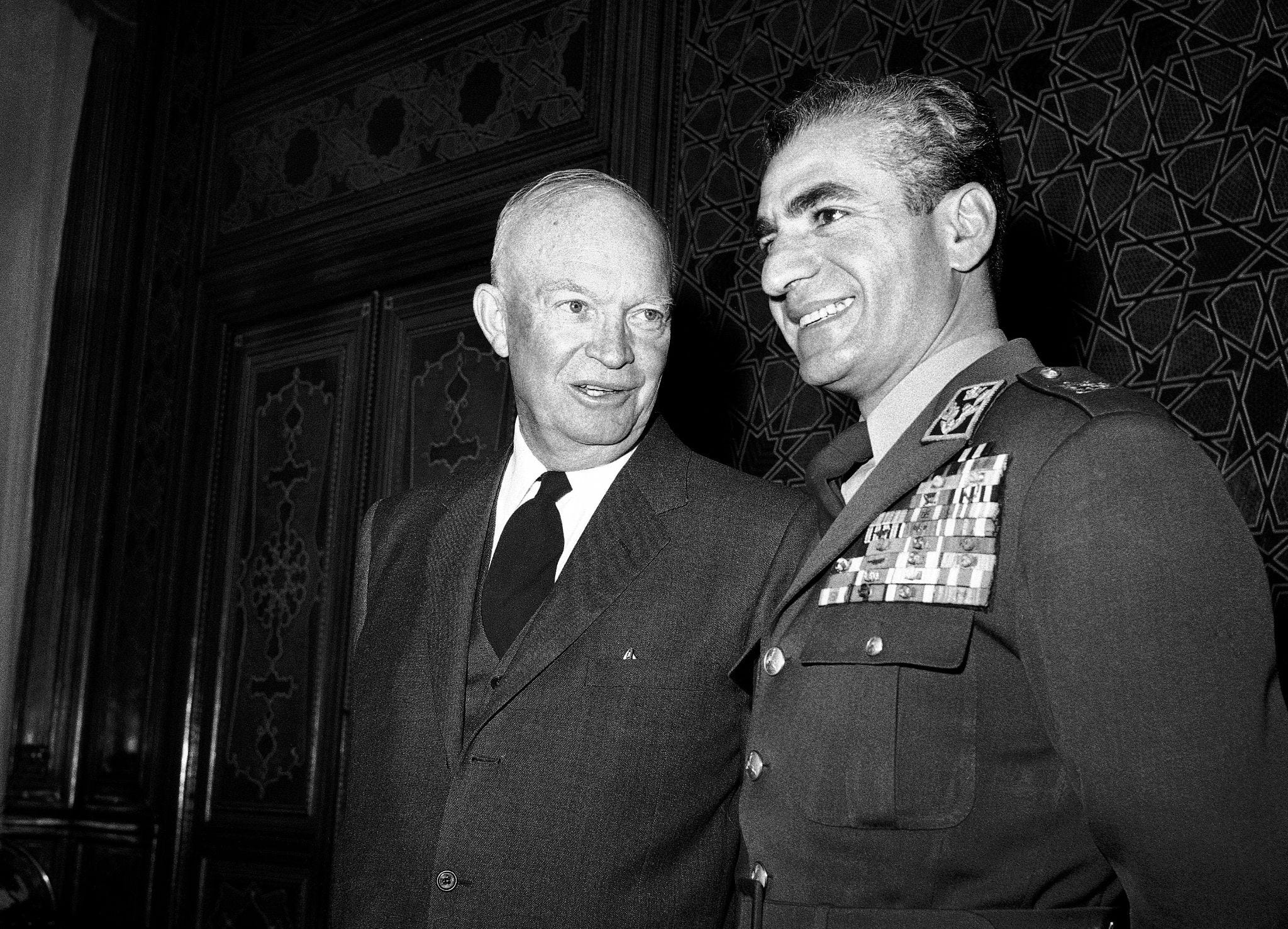
Iran’s nuclear program stretches to 1957 beginning under the auspices of Eisenhower’s Atoms for Peace. In 1967 the United States delivered the Tehran Research Reactor, a 5 MW pool-type unit, along with its fuel: roughly 5kg of “bomb grade” highly enriched uranium.
This of course raises eyebrows in today’s non-proliferation environment, however, the quantities involved were far below IAEA estimates of the 25kg of 90% enriched uranium required for a crude nuclear weapon.
For a decade the reactor mostly sat idle. Iran lacked the trained physicists to run it, and the program was small and underfunded, consisting of a smattering of research projects.
Oil for Atoms
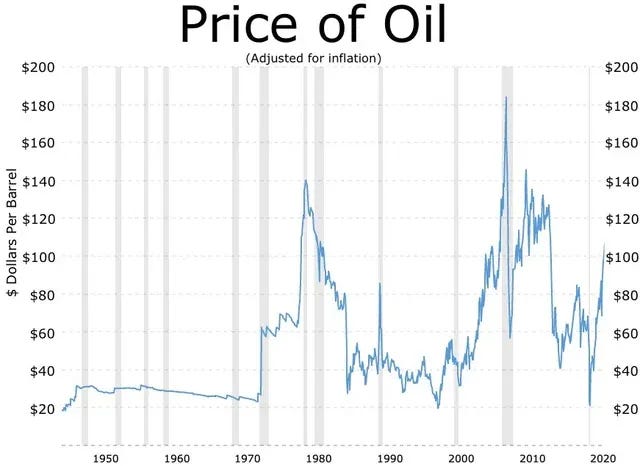
The 1973 oil shock changed everything. The price of oil quadrupled just as Shah Mohammad Reza Pahlavi successfully wrested control of Iran’s oil industry back from Western oil companies and the treasury was flooded with petrodollars. The result was huge current account surpluses.
.
The Shah’s “Oil for atoms” program was multifaceted.
First, it was an opportunity for economic diversification and techno-nationalism, a bid to plant Iran, an ancient civilization with a long memory of its own greatness, at the cutting edge of the era’s most advanced technology.
Second, Oil, whose value had reached new heights, was now seen as too precious to burn at home for electricity when it could be exported or refined into higher value products. Reactors which in the 1970s were assumed to be coming down a cost curve would therefore carry domestic electricity load to free up lucrative petroleum exports.
Lastly, it offered a mutually advantageous recycling of petrodollars. France, battered by the rising cost of imported oil, could recover hard currency by exporting reactors and nuclear expertise, while Iran converted its oil surpluses into advanced technology and industrial capabilities.
The Nuclear Energy Program
The resulting 1974 Nuclear Energy Program was breathtaking. The Atomic Energy Organization of Iran planned for the construction of 20 reactors targeting some 23,000 MW of capacity.
The organization quickly became the third largest body in the Iranian state, behind only the state oil company and the armed forces. It reached 7,000 staff and broke the civil service pay scale in order to poach the country’s best engineers.
The ambition extended past electricity generation and included sovereignty over the entire fuel cycle. Iran bought uranium in southern Africa, took a stake in the French Eurodif enrichment consortium, and set its sights on one day exporting reactors and nuclear services.
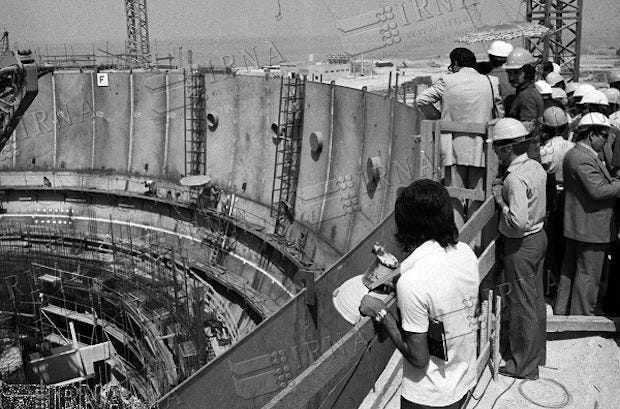
The Bushehr nuclear power station was begun under contract with the German firm Kraftwerk Union and excavations for the French supplied Darkhovin nuclear power station were begun.
The option of Iran pursuing a nuclear weapon under the Shah was considered but kept on the back burner due to the certainty of diplomatic and financial blowback. As a regional bulwark against the Soviet Union, Iran was at the time the largest purchaser of American weapons. Iran simply had too much to lose from pursuing a bomb although the Shah later signalled a nuclear weapon would be considered should a regional rival like Iraq or Libya develop a bomb of their own.
Revolution, War, and Nuclear Deterrence
The 1979 revolution slammed the breaks on the Shah’s nuclear aspirations. To the Revolutionaries the nuclear program was a white elephant, a monument to Pahlavi extravagance in a country wrestling with deep rural poverty.
Nuclear construction was halted at Bushehr and Darkhovin. However, Nuclear technocrats managed to convince Ayatollah Khomeini to resume the Bushehr project which was 80% complete. Kraftwerk Union however had no intention of staying. The company fully withdrew from Iran in July 1979, rendering the technocrats’ internal victory a dead end.
Then Iraq invaded, and the eight year war that followed shifted the Islamic Republics position on the future role of nuclear technology.
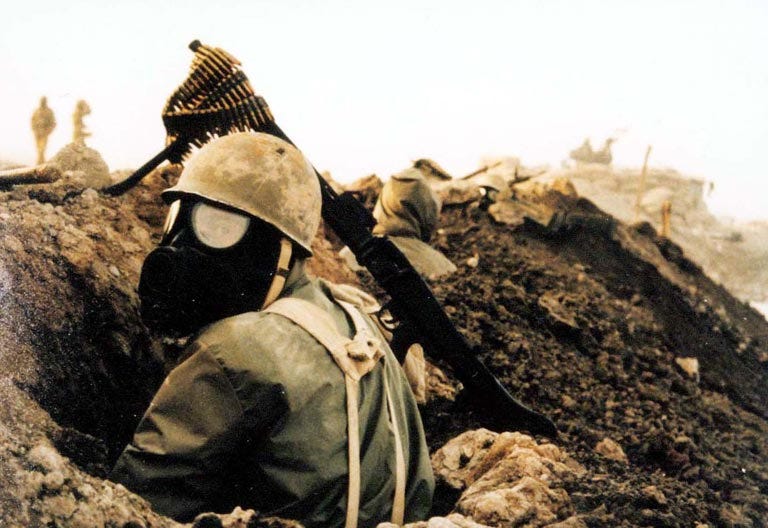
Around 750,000 Iranians died in the conflict. Saddam used chemical weapons while the United States supplied him battlefield intelligence and diplomatic cover at the UN. The world mostly looked the other way.
Although it received arms from China and North Korea, Iran had no reliable great-power protector and faced an opposing coalition with far greater diplomatic and financial backing.
The Gulf monarchies bankrolled Baghdad, Both the Soviet Union and America armed Saddam. Kissinger is reported to have summed up America’s position in the following words: “It’s a pity they can’t both lose.”
In a surprising twist Israel, which read Saddam as the greater danger, sold arms to Iran and eventually played a role in the Iran-Contra deal.
The lesson the Islamic Republic drew from this conflict was that no treaty or international body could be counted upon to come to its rescue. It could only depend on itself and needed its own deterrent.
The AMAD Plan
After the war, Iran began clandestine nuclear weapons related work under a succession of military-linked organizations. By the late 1990s, much of this activity had been consolidated under physicist Mohsen Fakhrizadeh into the AMAD Plan: a structured program examining the technologies required for an implosion-type nuclear weapon and reportedly aiming to produce five missile-deliverable warheads with yields of roughly ten kilotons each, slightly smaller than the bomb dropped on Hiroshima.
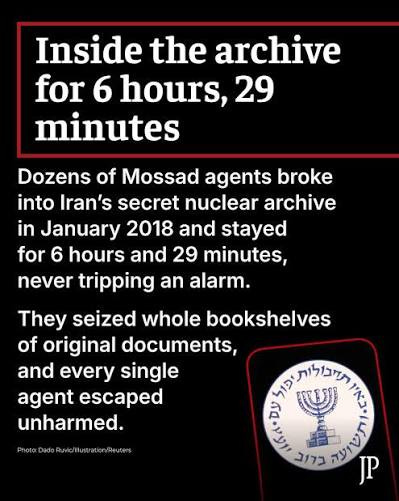
The program’s scale and organization were reconstructed through years of IAEA investigation and intelligence supplied by multiple countries, then illuminated further by the Iranian AMAD Plan archive itself. In January of 2018 Israeli Mossad agents managed to seize it carrying away 1000lbs of documents from a warehouse in south Tehran.
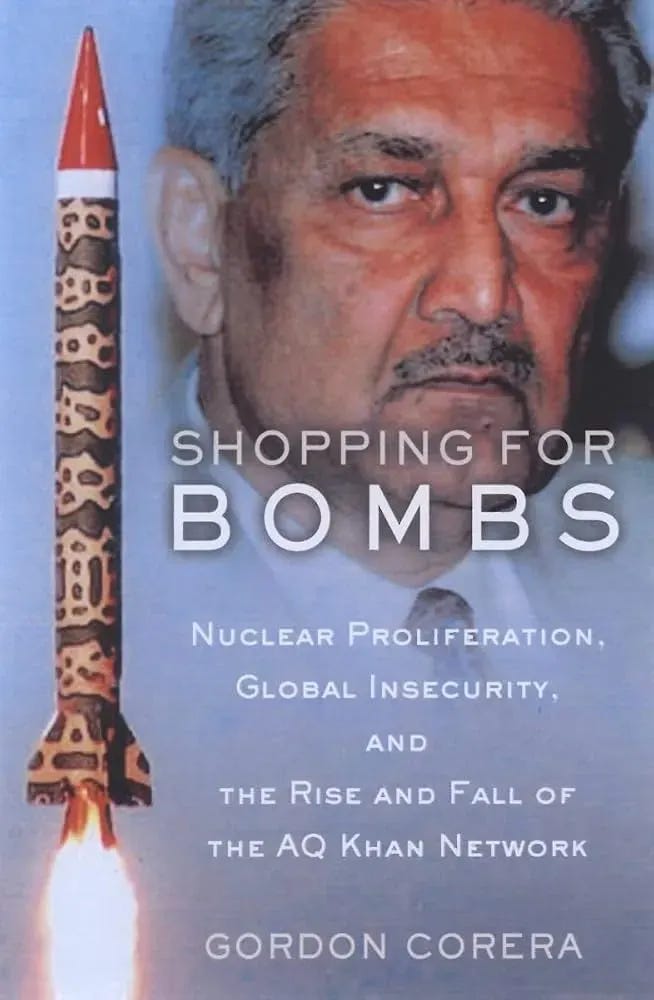
Iran’s enrichment program received crucial early assistance from the clandestine network built by Abdul Qadeer Khan. A Pakistani metallurgist who had worked during the 1970s for a contractor to the British-German-Dutch URENCO consortium, Khan illicitly obtained European gas-centrifuge designs and used them to establish Pakistan’s nuclear weapons program.
Khan later transformed the procurement network created for Pakistan into an international proliferation enterprise. Iran was one of the network’s earliest customers.
At a meeting in Dubai in 1987, Iranian representatives obtained drawings and sample components for Khan’s P-1 centrifuge, a machine derived from European URENCO technology, together with information needed to establish an enrichment program. The P-1 became the basis of Iran’s IR-1 centrifuge, thousands of which were eventually installed at Natanz and Fordow.
According to the IAEA, Iran separately investigated several technologies relevant to an implosion-type nuclear weapon. Researchers conducted experiments using surrogate materials to study the conversion and casting of uranium metal. They developed exploding-bridgewire detonators capable of firing with the near-simultaneous timing required for an implosion nuclear device, and worked on a multipoint high-explosive initiation system. They also studied how a spherical payload could be integrated into the re-entry vehicle of a Shahab-3 missile.
What Iran lacked was sufficient fissile material.
Scaling Enrichment, Sanctions, and the JCPOA
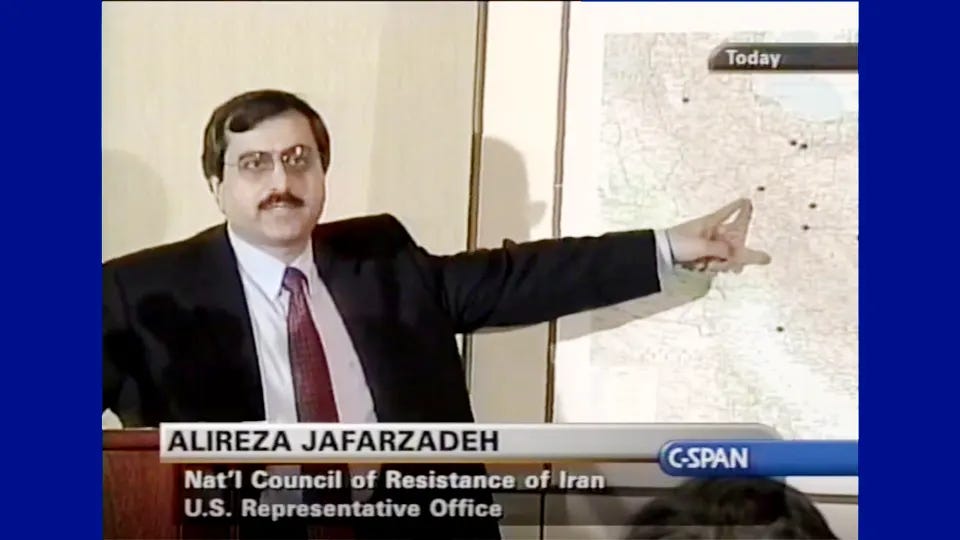
In 2002, an Iranian dissident group publicly exposed the existence of Iran’s hidden underground enrichment facility at Natanz. In 2003 the presence of US troops on its eastern and western borders following the US invasions of Afghanistan and Iraq is thought to have led to the halting of the AMAD program.
Enrichment, however, was expanded under a civilian banner justified in part by Iran’s need to fuel its research and power reactors. In 2006, under President Mahmoud Ahmadinejad, Iran expanded its centrifuge halls and pushed enrichment levels up.
The discovery in 2009 of a secret enrichment plant burrowed into a mountain at Fordow, a site with roots in the AMAD program, hardened world opinion against Iran. The sanctions that followed were backed by both Russia and China at the UN Security Council. The impact on the Iranian economy was severe.
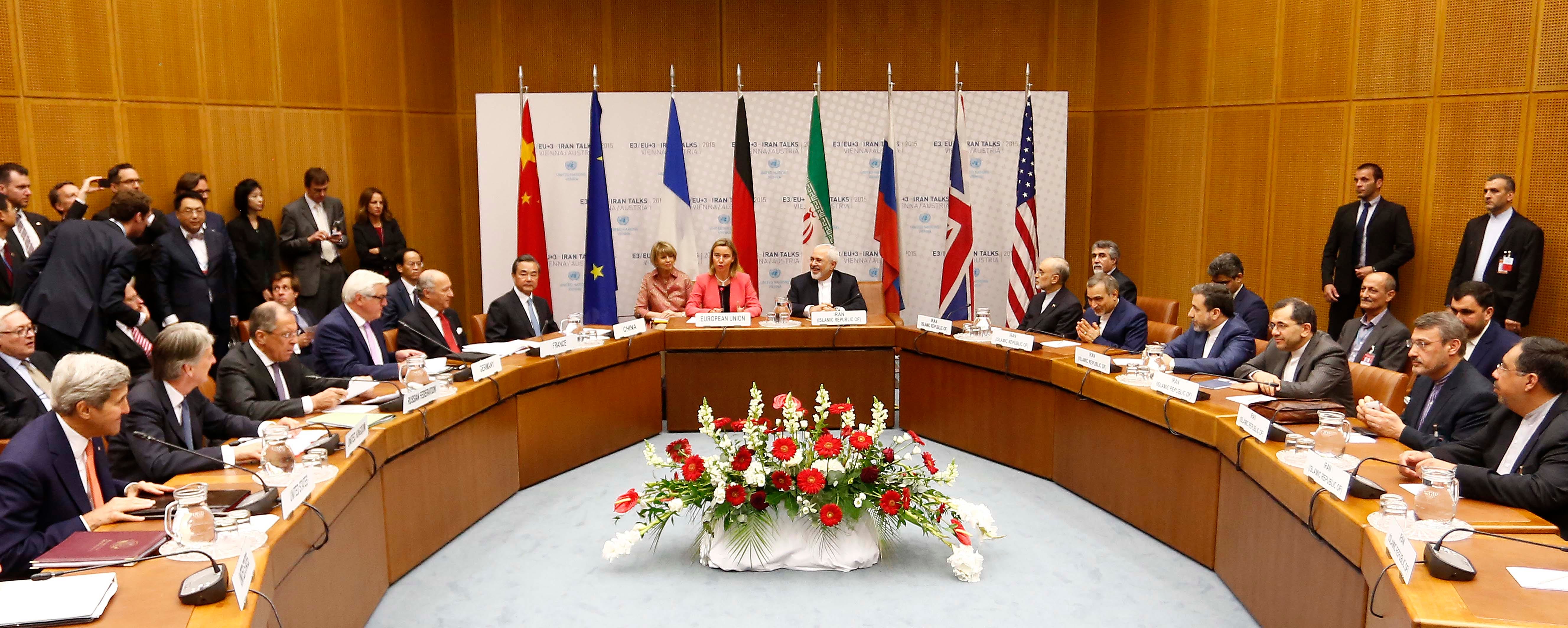
With the Supreme Leader’s blessing, a moderate government under Hassan Rouhani negotiated the 2015 Joint Comprehensive Plan of Action which provided sanctions relief in exchange for real, physical concessions.
Iran removed two-thirds of its centrifuges, shipped almost all of its enriched-uranium stockpile to Russia, capped its maximum enrichment level at 3.67% and ceased enrichment at its deeply buried Fordow mountain site.
In 2018, under Donald Trump, the United States unilaterally walked away from the deal.
In the subsequent years after initially keeping to its JCPOA committments Iran ratcheted up its enrichment activities and eventually developed a stockpile of 440kg of 60% enriched Uranium, enough for approximately ten small nuclear devices.
After a decades long campaign of cyber attacks and sabotage against its enrichment facilities as well as assassinations of many senior scientists including Mohsen Fakhrizadeh, Iranian nuclear sites came under aerial bombardment and have been heavily degraded by US and Israeli bombs over the last 13 months.
Nuclear Breakout as Anti-Deterrent
One only has to look at the contrast in the fortunes of Saddam, Gaddafi and Kim Jong-Un to see how nuclear weapons capabilities can serve as the ultimate deterrent to external regime change efforts.
Iran’s conventional deterrents are in a fragile state. While its Houthi allies threaten the Bab el-Mandeb strait strengthening their chokehold on the worlds oil supply, the remainder of its proxy network has been significantly degraded.
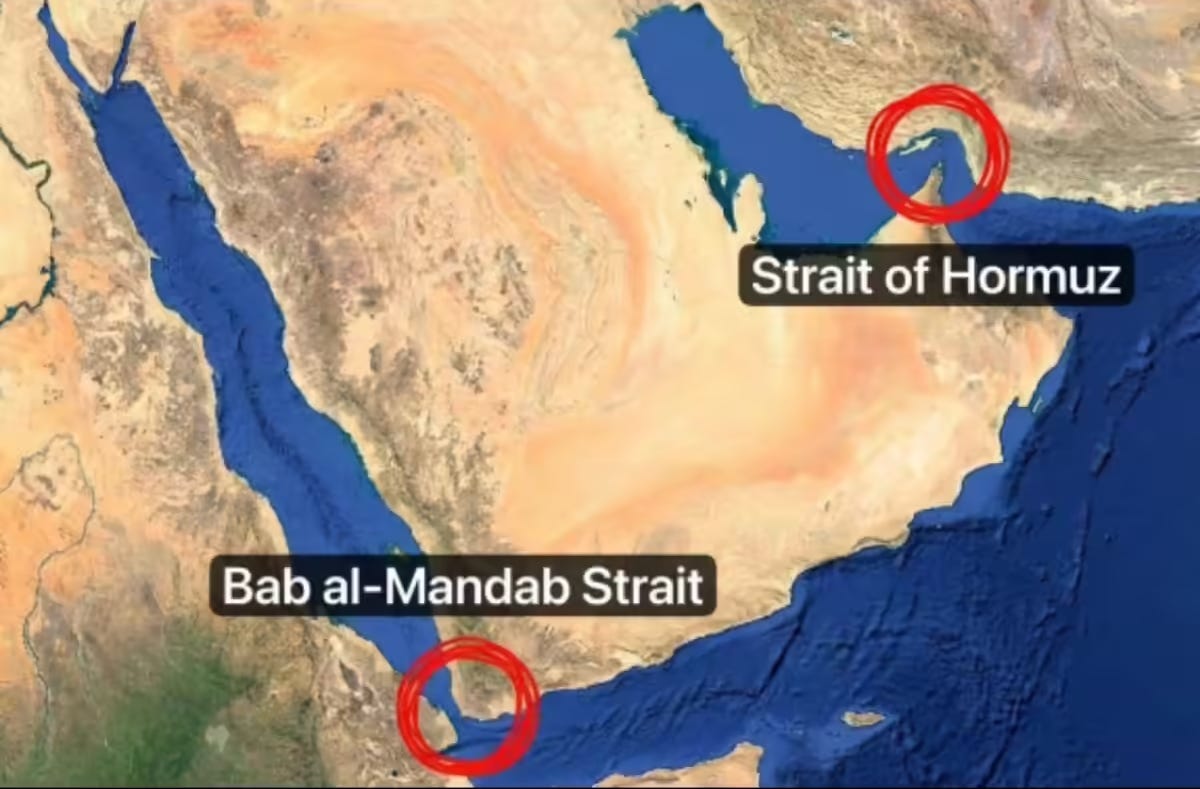
Hezbollah has been weakened, Hamas is in tatters, the Assad government is gone, and Iraqi militias are being pressed toward disarmament. In addition, Iran’s grip on the Strait of Hormuz, while currently a major threat to the global economy, is a diminishing threat whose leverage will fade as the Gulf states build export pipelines around it.
Seeking deterrence via a breakout dash towards a nuclear weapons capability is not, however, as simple as it seems. One or two crude weapons with an unreliable delivery mechanism are not enough to deter an adversary.
On the contrary they could provoke a first strike before an Iranian arsenal has time to mature. Israel holds an undeclared nuclear monopoly in the region and an Israeli nuclear response to an Iranian test is not unimaginable.
An effective nuclear deterrent involves serialized warhead production, reliable missiles, and a second-strike capability. Iran is thoroughly penetrated by Israeli intelligence networks and such an effort would require enormous resources and many years during which Iran would remain vulnerable.
Curtailing Iran’s Nuclear Options
Iran has paid a huge price for a nuclear program that has delivered very little and yet despite enormous economic and now military costs it still clings to its asserted right to enrich.
Enrichment is difficult for Iran to abandon because it simultaneously represents security, sovereignty, prestige, bargaining leverage, institutional interests and revolutionary identity as well as an enormous sunk cost.
A durable agreement to limit Iran’s nuclear latency is likely to resemble the JCPOA by preserving the formal principle of enrichment while severely constraining its strategic usefulness: very low enrichment levels, tiny stockpiles, strict centrifuge limits, imported fuel guarantees and exceptionally intrusive verification.
Iran could present that domestically as retaining its sovereign right; the other side could obtain a program incapable of rapidly producing weapons material.
A demand for permanently abandoning enrichment asks Iran not merely to make a technical concession but to acknowledge strategic defeat. That may be achievable in the case of regime transformation or outright military capitulation. It is much harder, however, to obtain through an agreement that Iran’s leaders must voluntarily sign, defend and implement.
Superb historical background. Informative and with a cogent, clear-eyed analysis of the situation.
The one thing we wonder about is whether, under the circumstances as they exist at the moment, the regime would even agree to return to the conditions of the JCPOA. The argument might be that the terms of that agreement were negotiated before they were attacked by a nuclear-armed superpower, which only bolsters the need not to limit enrichment to the terms of the JCPOA.
This is a fantastic post, Doc.
This account omits significant facts:
The Fatwa prohibiting development of WMDs.
The U.S. provided Iraq with precursors for chemical weapons during the Iraq-Iran war.
Iran is a signatory to the NPT; Israel is not.
U.S. IC has assessed since 2003 that Iran has no nuclear weapons program.
In modern times, Iran has never attacked or invaded another country unless responding to an attack. Israel has attacked all its neighbors. The U.S. is not much better.
The U.S. and Europe didn’t uphold their obligations under the JCPOA.
The Iranian government was overthrown by the CIA in 1953(?).
I believe that the nuclear issue is a red herring. It’s just a good excuse for the Zionist’s to further the Greater Israel project by ruining Iran.