

The CANDU pressurized heavy water reactor is the third most widely deployed reactor technology in the world, with a total of 54 units built between Canada, India, Pakistan, Argentina, Romania, Korea and China. Its distinctive modular pressure tube core, heavy water moderator and robotic refuelling machines stand in sharp contrast to the heavy reactor pressure vessels that define US origin light water reactors.
These unique design features are the consequence of a single unifying design choice: the use of natural uranium.
The decision to avoid enriched uranium was set in motion during the Second World War. The British atomic bomb program, codenamed “Tube Alloys,” relocated to Canada alongside the world’s entire supply of heavy water which had been spirited out of Norway by a French spy under the noses of the invading Wehrmacht.
The Americans, having found graphite the easier moderator to scale for plutonium production, left heavy water research largely to the British and Canadians, with their laboratory at Chalk River. Work there progressed quickly and ZEEP, a heavy water/natural uranium reactor, was the first reactor to go critical anywhere outside the United States.
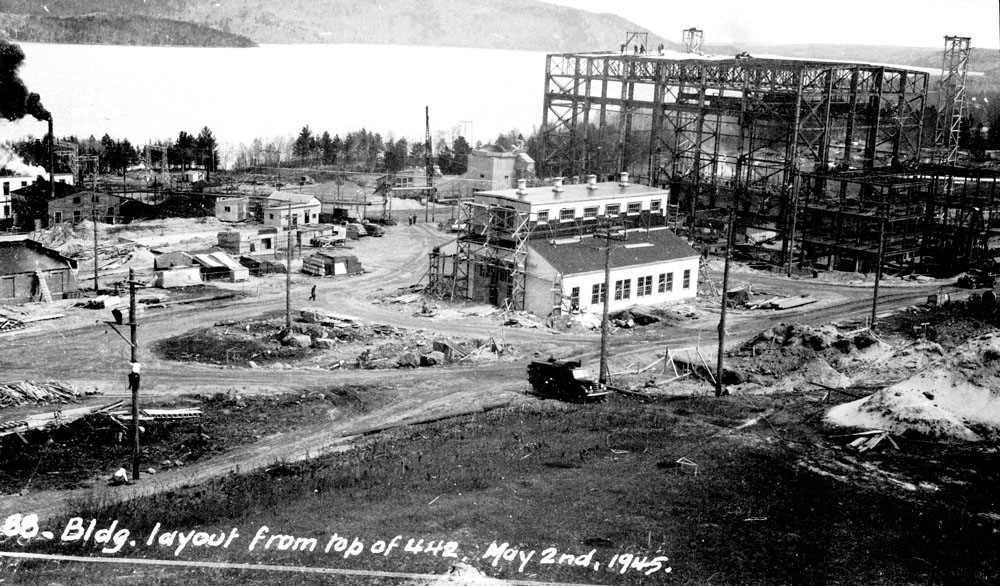
Post war politics decisively limited Canada’s options. On January 1st 1947, the McMahon Act cut Britain and Canada off from American nuclear technology, including uranium enrichment. In this context Canada decided to go it alone, developing its own sovereign power reactor technology based on its strengths in natural uranium and heavy water research.
The following essay is based upon my Decouple Media podcast interview with Navid Badie, Chief Nuclear Engineer at Candu Energy Inc.
The Neutron Economizer
Natural uranium is 0.711% fissile U-235 by weight. The remaining 99.3% is mostly U-238, which absorbs neutrons without fissioning. A reactor running on this fuel starts with almost no margin. With so little fissile material in the core, you cannot afford to lose neutrons to parasitic absorption, and you cannot afford to let them escape.
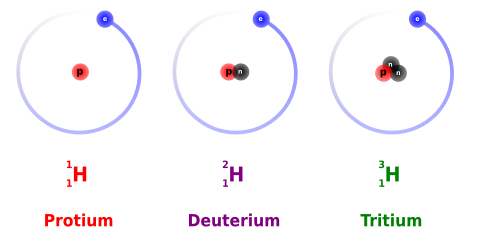
That rules out ordinary light water as the moderator. Heavy water, in which the hydrogen is replaced by deuterium, absorbs far fewer neutrons. The tradeoff is weaker moderation per collision, so you need more of it to slow neutrons to thermal energies.
More moderator means more volume, and more volume would mean a larger, thicker walled reactor pressure vessel which Canada did not have the capability to forge. Rather than import an oversized reactor pressure vessel and surrender supply chain sovereignty the early designers distributed the pressure boundary.
A Container Full of Microreactors
Because a narrow pressure tube can hold the same pressure with a 4.2mm wall that a conventional light water reactor vessel could only contain with a 21cm thick wall, CANDU designers elected to modularize the core of the reactor into several hundred individual pressure tubes.
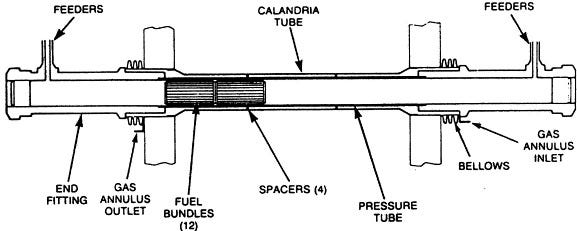
These 10cm diameter tubes run six meters horizontally through a large tank of low pressure heavy water called the calandria. Twelve log shaped fuel bundles each 50cm long sit inside each tube with pressurized heavy water coolant circulating around them.
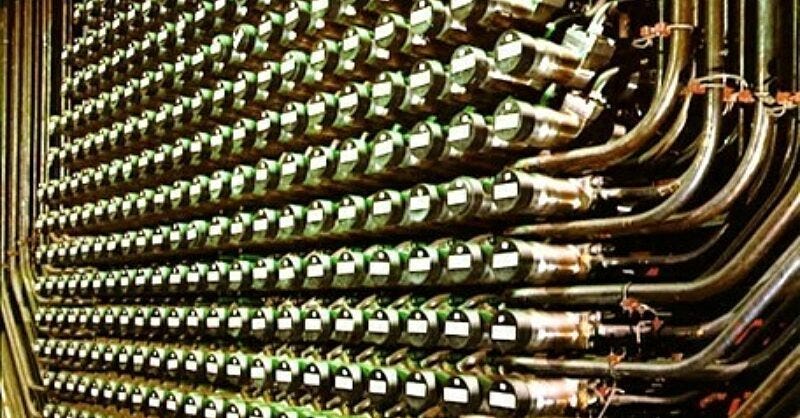
A useful way to conceptualize CANDU reactor anatomy is as a collection of hundreds of tubular 5MWt microreactors.
While a standalone microreactor leaks neutrons from every surface, requires its own costly shielding, refueling apparatus, security perimeter, and spent-fuel handling the CANDU places hundreds of microreactors together inside of a single 7 meter by 6 meter cylindrical calandria vessel. As a result they share a neutron population, radiation shielding, fueling system, and spent fuel bay dramatically reducing costs and simplifying logistics.
The Fueling Machine with a Reactor Attached
A natural-uranium core holds little excess reactivity, so it cannot be loaded with a year or two of fuel at a time the way an enriched core can. If a CANDU were shut down for batch refueling it would sit idle for outages every few weeks. The answer to this challenge is to refuel without shutting down at all.
Online refuelling has led CANDU to dominate the charts in setting run time records and achieving world class capacity factors. For over three years from January 2018 to February 2021, Darlington Unit 1 ran continuously for 1106 days, setting a world record for all thermal generators.
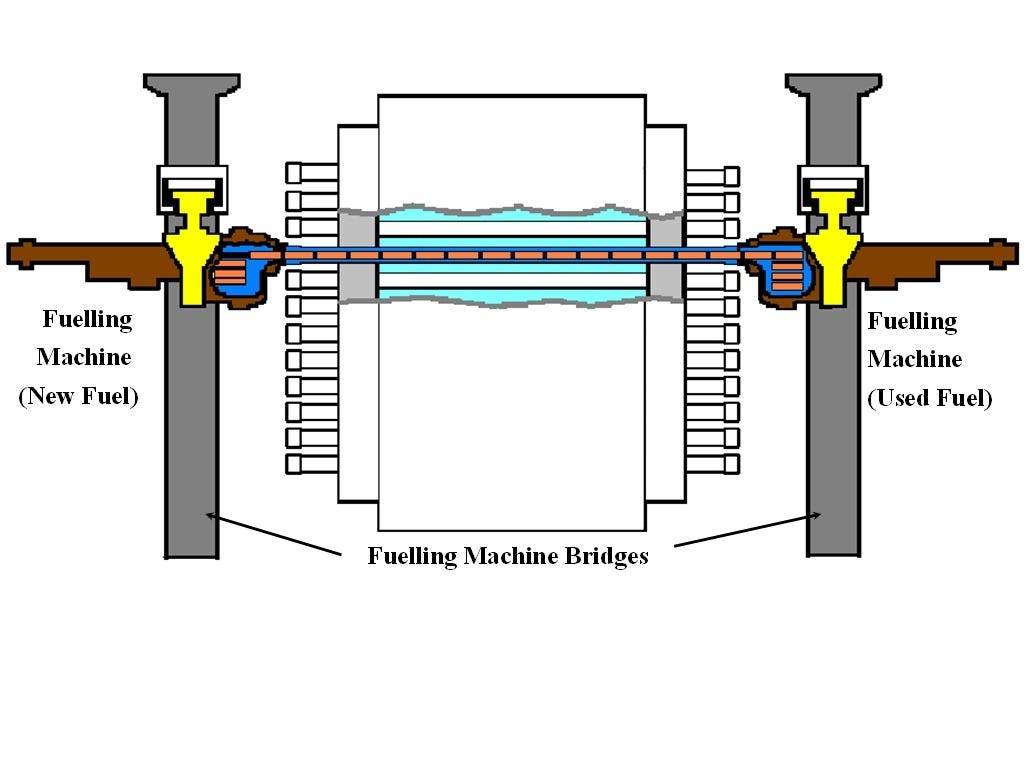
Monday to Friday at every CANDU plant across the globe, two robotic fuelling machines exchange on average 10 fuel bundles. They clamp onto opposite ends of a pressure tube, one pushing fresh fuel bundles in while the other receives the spent ones. This occurs at full power and full pressure.
International operators unfamiliar with the technology are often stunned that Canadians routinely open the primary pressure boundary of their operating reactors.
However, this is routine; with more than 1000 reactor years under their belts, CANDU operators have performed this maneuver almost one million times, becoming the world’s experts in online nuclear refuelling.
Pressure Tube Refurbishment
The same neutron flux the fuel channels are built to share also wears them out. An LWR concentrates its pressure boundary in a single steel forging set outside the core, shielded by the surrounding water, where fast neutron fluence accumulates slowly enough that embrittlement is a 60-80 year concern. CANDU pressure tubes are surrounded by a hard neutron field which causes them to deteriorate more quickly over the course of 30 years.
End of life arrives when rising hydrogen, falling toughness, and dimensional change together leave too little margin, at roughly 30 years. Refurbishment is the reset. The reactor is opened and its pressure tubes, the calandria tubes around them, and the feeder pipes that carry coolant to the boilers are cut out and replaced, returning the core to good-as-new condition for another 30-year run.
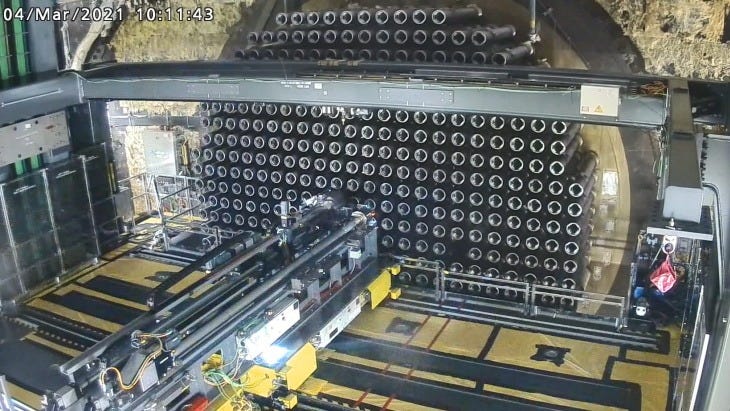
The technique has matured across three generations of refurbishment. Each cycle has shortened the outage through better tooling and tighter logistics. The Darlington stations lessons are being carefully filed for the day these reactors return for a second refurbishment, one that would carry them toward 90 to 100 years of service.
The Thermal Sink Safety Margin
One of the most challenging accident scenarios reactor designers plan for is the station blackout, made famous by the Fukushima accident, in which grid power and emergency back up diesels are unavailable. This means that the massive pumps that circulate coolant and remove heat are unavailable.
Thankfully, seconds after a reactor is tripped with control rods or neutron poison injection, power levels drop to 6-7% of full thermal power, reducing further to around 1% within a day. That 1% is still a substantial amount of heat.
In both a CANDU and a pressurized light water reactor it is buoyancy that moves the coolant once the pumps power down. Hot water rising from the core to the steam generators which sit above it, gives up its heat and sinks back, creating a thermosiphon that runs on gravity for as long as the loop stays full of water.
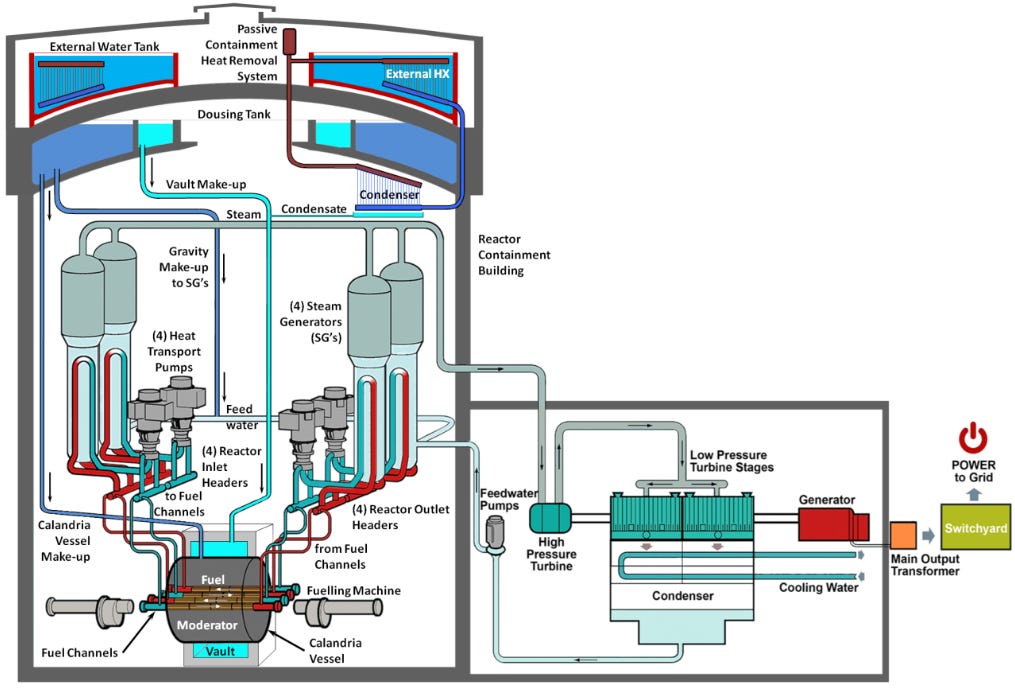
The heat passes into the steam generators, boils their secondary-side water, and leaves as steam through the relief valves. If that secondary side is kept fed and vented, which an Enhanced CANDU 6 does from an elevated reserve tank with no grid power, the reactor cools itself for around three days before stored water runs out. Three days is a very long time to find a fire truck and a hose to refill the reserve tank.
The CANDU adds a second safety margin in the unlikely scenario where thermosiphoning fails. Each pressure tube microreactor is surrounded by a huge inventory of water already prepositioned to provide cooling by simple conduction from one tank to another.
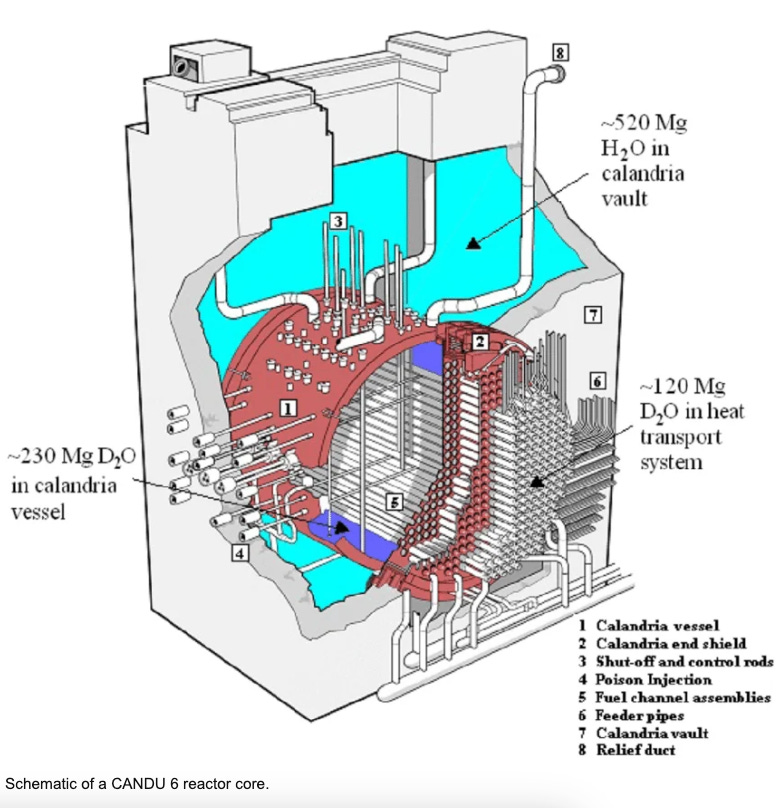
Each fuel channel sits in 230 tonnes of cool, low-pressure heavy water inside the calandria tank. If a pressure tube overheats it sags until it touches its calandria tube, conducting its decay heat straight into that water. Around the calandria, in direct contact with it, another 520 tonnes of light water sits in the shield tank, ready to soak up heat one layer further out.
Finally, the reserve tank, larger than all of these inventories combined, is capable of refilling the calandria and the shield tanks as they boil off. This buys operators ample time to reconnect to the grid or start up backup diesel power sources which restore flow to heat exchangers. The latter definitively rejects decay heat to the ultimate heat sink the reactor uses to condense its steam in routine operations such as a large river, lake or ocean.
Fuel Sovereignty and Isotopes
Fuel sovereignty is a strong value proposition of the CANDU. Uranium enrichment is a very complicated technology which, due to weapons proliferation concerns, is tightly guarded and limited at commercial scale to the USA, several European nations, Russia, China and Japan.
Whereas the CANDU “enriches” its heavy water moderator only once, at the time that the moderator inventory is produced for the reactor, light water reactors depend on enriched uranium fuel to be produced for refuelling intervals every 18-24 months.
In addition, light water fuel elements, which this podcast has referred to as the Swiss watch of fuels, are highly complex engineered products that few countries and companies have the capacity to fabricate.
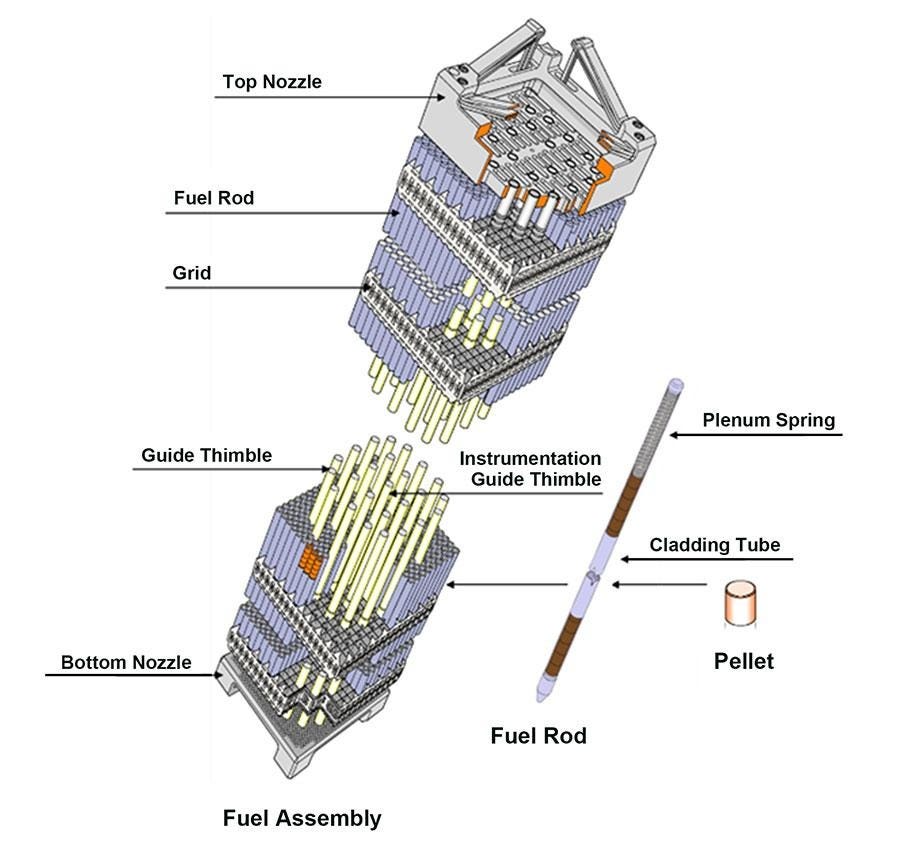
In contrast, every single country that runs CANDUs fabricates their own far simpler fuel bundles under license. Canada, the only country in the world that mines sufficient uranium to fuel its own nuclear fleet, controls its fuel production from mine mouth to reactor fuel.
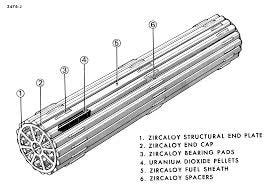
The low pressure calandria enables access to a high neutron flux environment during operation with a variety of isotope targets. This makes the CANDU reactor the world’s workhorse for bulk production of medical isotopes like Cobalt-60 and an increasing number of more bespoke cancer treatments like Lutetium-177 which my father received as part of his prostate cancer treatment. CANDU provides the vast majority of the global supply of Cobalt-60, which is used to sterilize most of the world’s single-use medical devices.
Canada’s Choice: CANDU vs. AP1000
The future of Canada’s nuclear sector hangs in the balance with Ontario’s technology selection teetering between CANDU and the American Westinghouse AP1000 reactor technology.
While the AP1000 reactor, covered previously on Decouple, is the world’s most advanced pressurized light water reactor, it has proven difficult and expensive to construct outside of China.
The Vogtle AP1000 units came in at over $25 billion CAD each, more than double their anticipated original cost. The next Western deployments, a three-pack of AP1000s planned for construction in Poland is now estimated at $73 billion CAD, or $24 billion CAD per unit. This price tag is barely better than that of the Vogtle fiasco (and that is the cost estimate, not the final cost).
CANDU benefits from a supply chain that has been energized by successful under budget, ahead-of-schedule refurbishments, meaning greater supply chain certainty regarding reactor components, a workforce and regulator intimately familiar with its inner workings, and unparalleled Canadian content.
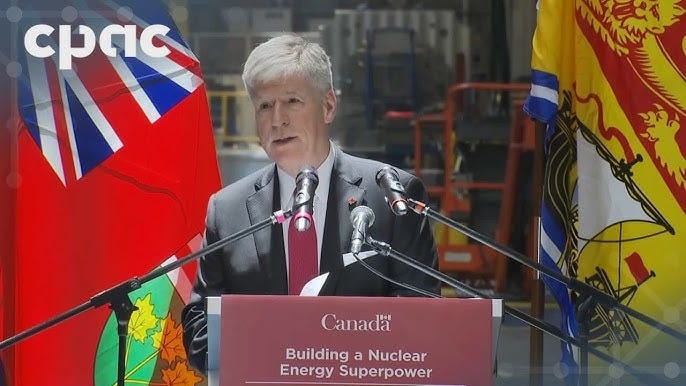
The future of CANDU got a boost this week with the Canadian federal government releasing its nuclear industrial strategy and committing to supporting the development of a modernized Gigawatt scale CANDU.
This would complement the Gen 3+ Enhanced CANDU 6 at 750 MW and help build on the success of Canada’s previous CANDU 6 exports. The industrial policy document also declares a strong preference for Canadian technology to maximize local supply chain benefits.
CANDU fits that bill like no other.
My goal is to get half of the North American nuclear industry subscribed to this substack. Please share and recommend to a nuclear friend or nuclear family member.
With all its virtues, why isn't CANDU a larger share of the global nuclear fleet?
Interesting! the fuel sovereignty argument is the one that doesn't get enough attention in Western nuclear policy discussions. Every country running a light water reactor is dependent on enriched uranium fuel from a handful of suppliers, a supply chain vulnerability that looks very different post-2022 than it did before. CANDU's ability to run on natural uranium, fabricated domestically, with no enrichment dependency is a geopolitical asset as much as an engineering one. That alone should be a serious factor in Ontario's technology decision, independent of the cost comparison with AP1000.