

“We also know there are known unknowns; that is to say we know there are some things we do not know.” Donald Rumsfeld
Israel is widely believed to possess roughly ninety nuclear weapons. There has been no official Israeli test nor public declaration of a nuclear arsenal. Instead, it maintains the carefully worded formulation that it will “not be the first to introduce nuclear weapons into the Middle East.”
This formulation has survived the exposure of its secret nuclear complex by a former technician and more than half a century of regional wars.
The origins of this arsenal are as improbable as the silence surrounding it. In the 1950s, Israel was an impoverished state struggling to absorb hundreds of thousands of immigrants. Within little more than a decade, it acquired the capacity to manufacture nuclear weapons, taking advantage of a brief opening in the international nuclear order.
Israel’s nuclear arsenal was conceived as an apocalyptic insurance policy against national annihilation. Yet their most consequential applications may have been far more limited: the threat of a nuclear demonstration, intended to shock the superpowers into intervening and securing the conventional military assistance needed to avert defeat.
Their continued existence without official acknowledgment has depended upon an enduring accommodation among Israel, Washington, its Arab neighbours and the international nonproliferation system.
The following essay is based on my conversation with Professor Avner Cohen, author of Israel and the Bomb and The Worst-Kept Secret, whose research has done more than any other to reconstruct Israel’s clandestine nuclear past.
Oranges and Refugees: Israel of the 1950’s
Israel had a population of roughly 800,000 when it declared independence in 1948. Three years later it had nearly doubled. Holocaust survivors arrived from Europe alongside large migrations of Jews from Iraq, Yemen, North Africa and elsewhere in the Middle East. The government struggled to house them. By 1951, some 227,000 people lived in ma’abarot, temporary settlements of tents, huts, and one-room shacks erected around Israeli towns.
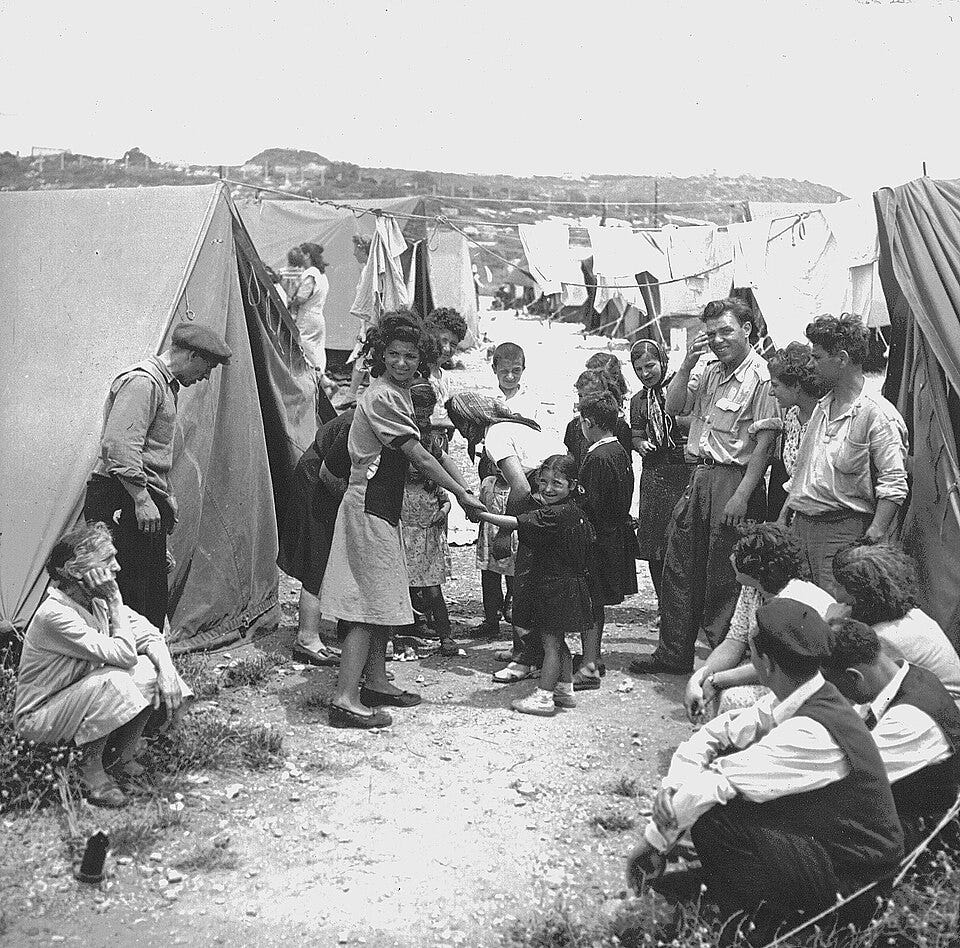
Food and essentials were rationed under the austerity regime known as tzena. Jaffa oranges and polished diamonds provided most of the country’s scarce foreign exchange. Imported fuel, machinery and military equipment competed for these dollars with housing, roads and water systems. Into this setting David Ben-Gurion introduced one of the most expensive and technologically demanding projects a 20th-century government could undertake.
Israel’s founding prime minister, who also served as defense minister for much of this period, feared the consequences of another major war. Israel possessed almost no strategic depth, and the combined population of its Arab neighbours vastly exceeded its own. Ben-Gurion had watched the world’s spectacular failure to respond to the destruction of European Jewry and doubted that foreign governments could be relied upon when Israel’s survival was at stake.
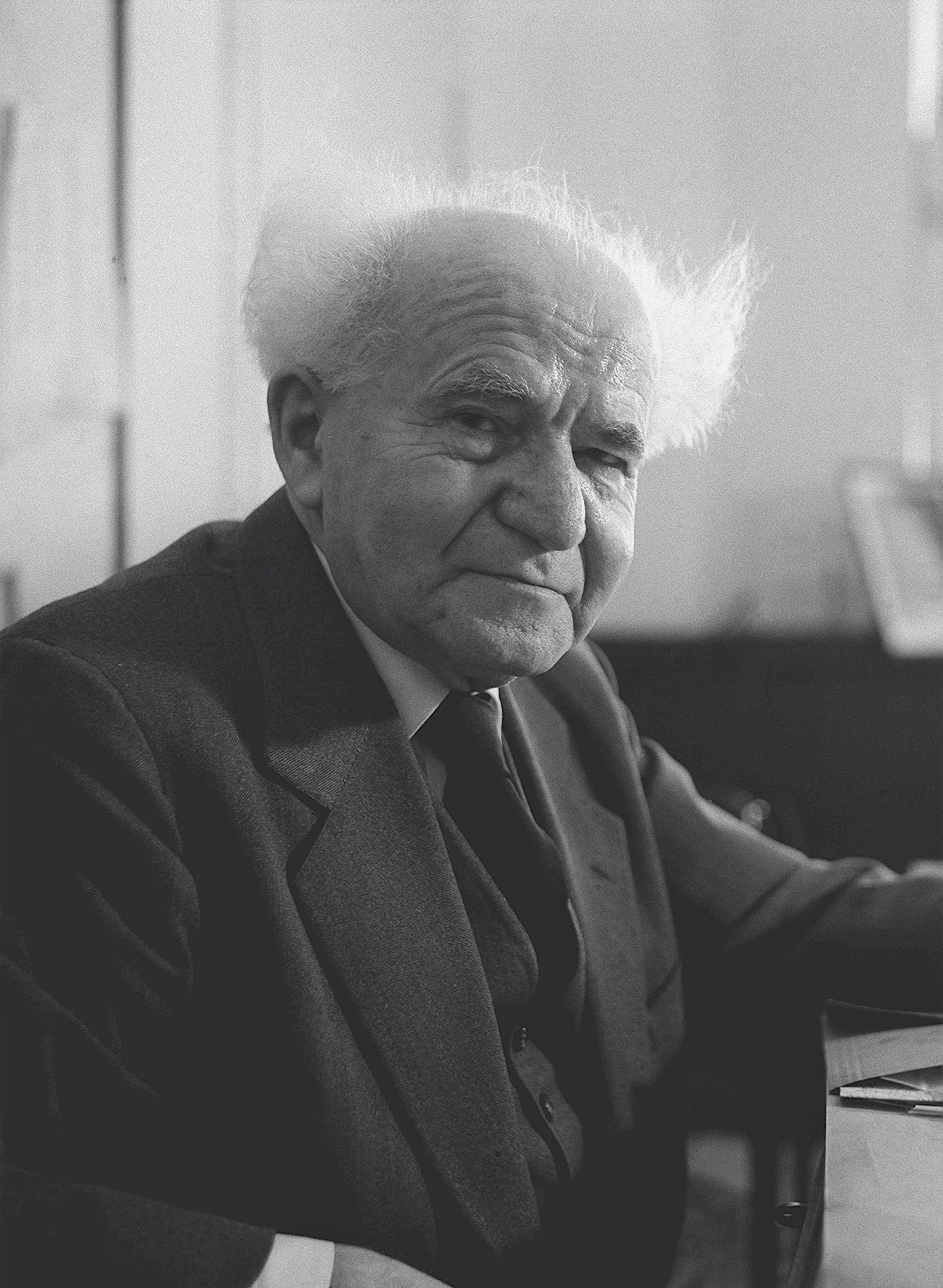
He believed the scientific achievement of the “Jewish brain” could compensate for the country’s disadvantages in territory, population and industry. Shimon Peres, an ambitious defense official who entered Ben Gurion’s inner circle while still in his twenties, proved adept at turning those ambitions into reality through his political instincts and contacts abroad.
The origins of Israel’s nuclear program make a compelling case for the great man theory of history. Without the particular talents of a handful of individuals, Israel would almost certainly not have managed to squeeze through the narrow window of historical opportunity that made its nuclear weapons ambitions possible.
The Fleeting French Connection
In the mid-1950s, access to nuclear technology was expanding faster than the rules governing its transfer. Eisenhower’s Atoms for Peace initiative encouraged international nuclear cooperation, and the safeguards that would eventually become central to the nonproliferation regime remained incomplete. Peres set aside fanciful ambitions of developing the bomb independently and began cultivating relationships with countries that might be of assistance.

The decisive partnership was with France, which was in those early days of Israel’s existence its principal supplier of fighter jets, tanks and artillery. Its government was fighting a brutal colonial war in Algeria, where the National Liberation Front enjoyed support from Egypt’s president, Gamal Abdel Nasser. Israel regarded Nasser as its principal regional enemy, particularly after Egypt acquired Soviet weapons through Czechoslovakia in 1955.
Peres cultivated sympathetic officials in the French defense establishment, intelligence services and Atomic Energy Commission, often working around opposition in the Foreign Ministry. The Fourth Republic’s divided authority made future nuclear cooperation possible without anything resembling a coherent decision by the entire government.
The Suez Crisis of 1956 deepened the alliance. Britain and France secretly coordinated an intervention with Israel after Nasser nationalized the canal. Under their plan, Israeli troops would invade Egypt, creating the pretext for an Anglo-French operation ostensibly intended to separate the combatants and secure the waterway.
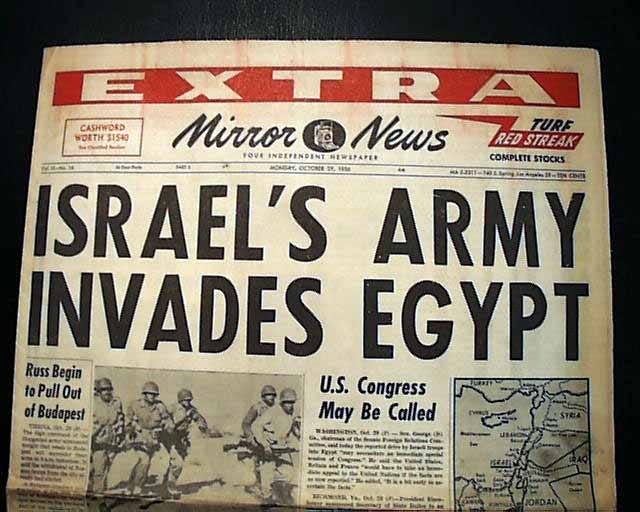
On Israel’s part, it hoped to enlist British and French military power to cripple Egypt’s armed forces before they had fully assimilated their new Soviet weapons. The intervention quickly collapsed under American financial and diplomatic pressure, and Soviet threats of direct intervention potentially involving nuclear weapons.
Britain and France emerged from Suez humiliated. Israel, on the other hand, achieved a dramatically stronger strategic position, having inflicted substantial damage on Egypt’s army and air force at relatively little cost to itself and secured a UN peacekeeping buffer force along its southern frontier.
Its assistance also left influential French officials feeling indebted to their Israeli partners. By October 1957, Peres had secured an agreement for a substantial reactor at Dimona and, critically, a plutonium reprocessing facility. Hundreds of French engineers and technicians would help build the complex.
The window of opportunity was already closing. Charles de Gaulle returned to power in 1958, determined to restore French authority and repair relations with the Arab world. France was developing its own nuclear deterrent and he had little interest in assisting another state to acquire one.
Peres had kept the arrangements confined to a small circle of sympathetic French officials, so effectively that de Gaulle did not learn the full extent of French involvement until more than a year after taking power. By 1960 he was moving to curtail it, although negotiations allowed private French contractors to continue work after official support ended. Much of the essential expertise and equipment had already been transferred.
In the aftermath of the 1962 Cuban Missile Crisis, Washington and Moscow became increasingly determined to prevent the emergence of additional nuclear powers. The Nuclear Non-Proliferation Treaty, opened for signature in 1968, would recognize as nuclear-weapon states only the five countries that had tested before 1967. Israel had used a temporary alignment of French and Israeli interests to establish a weapons program before such transfers became far more politically and legally difficult.
How to Finance the Bomb?
American intelligence estimated the cost of Dimona at $100–200 million, potentially comparable to the entire National Water Carrier and several times the cost of the new deepwater port at Ashdod. Both were under construction at the same time, and offered clear economic benefits. Financing the nuclear program through ordinary government channels would have invited fierce competition for resources. Dimona, after all, promised an uncertain future strategic advantage at a formidable immediate cost.
The Israel Defense Forces wanted tanks, aircraft and artillery to maintain the conventional balance against Egypt. A wider debate over the nuclear project’s cost and uncertain prospects, even if conducted in absolute secrecy, might have killed it.
Ben-Gurion and Peres therefore circumvented normal budgetary and military channels, securing the project’s initial capital from wealthy Jewish supporters abroad.

Abraham “Abe” Feinberg, a New York hosiery magnate and influential Democratic Party fundraiser with close ties to Harry Truman and, later, John F. Kennedy, orchestrated the fundraising effort. Feinberg had helped mobilize American support for Israel since its founding. Ben-Gurion trusted him to discreetly approach wealthy Jewish donors, later referred to as consecrators, to finance what he regarded as an almost sacred undertaking. Peres later claimed that private contributions covered half the cost of the reactor.
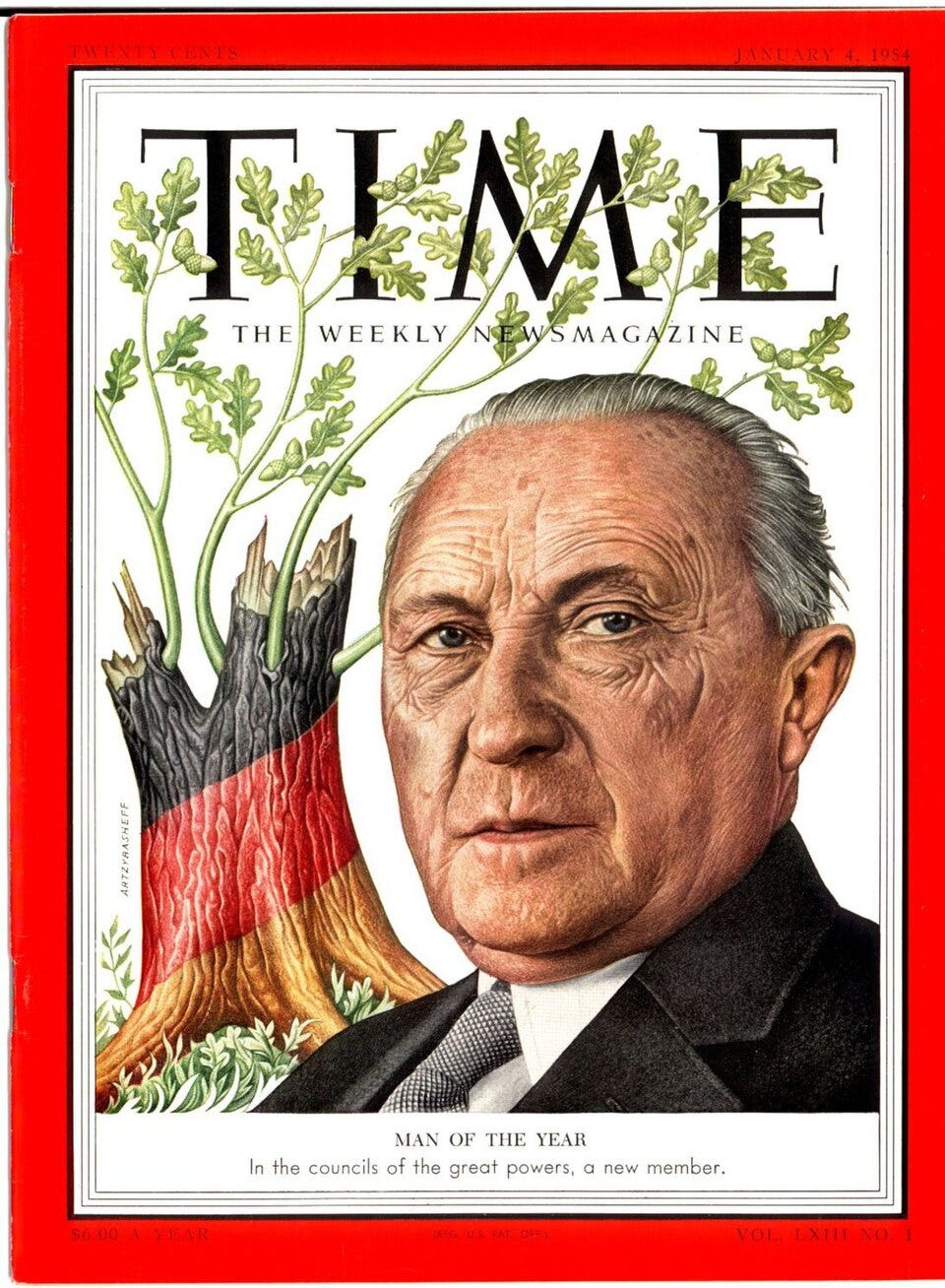
According to Avner Cohen, further support appears to have come through a substantial long-term financial arrangement with West Germany under Chancellor Konrad Adenauer, although the precise proportion directed to Dimona, and Adenauer’s knowledge of its purpose, remain unclear. Less than two decades after Auschwitz, German money may have helped finance the Jewish state’s ultimate insurance against another Holocaust.
By the end of the 1950s, construction was under way in the Negev, roughly thirty kilometres from Beersheba. The reactor would attract attention, but the more sensitive infrastructure could be concealed beneath the desert surface.
Inside Dimona
Plutonium weapons require a reactor in which uranium absorbs neutrons and produces plutonium within the irradiated fuel. A chemical reprocessing plant then separates that plutonium from the remaining radioactive material. Finally, weapons engineers must manufacture the explosive assembly capable of compressing a plutonium core. At Dimona, the reactor attracted most of the public attention; the secret reprocessing plant in the basement provided the crucial route to bomb material.
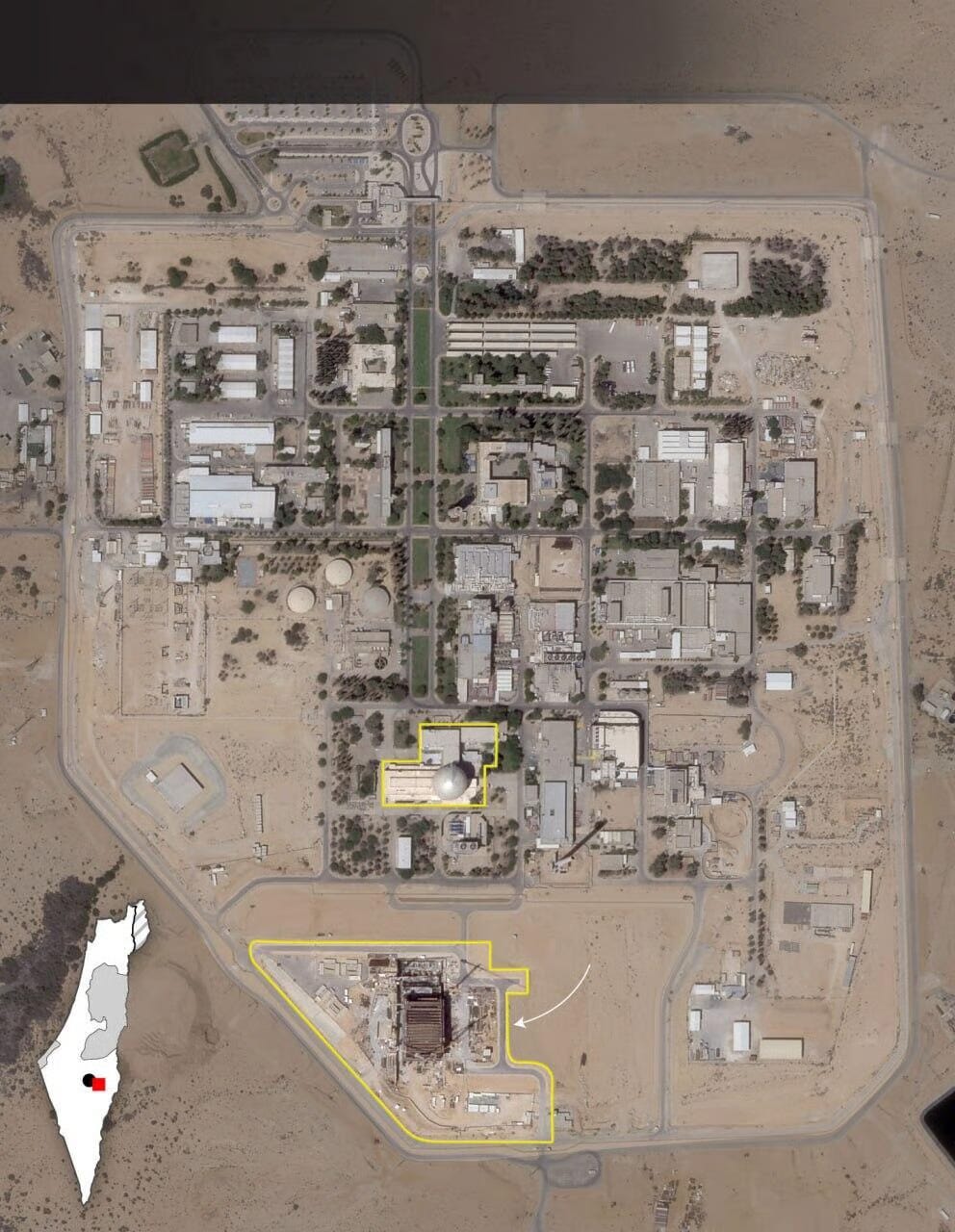
American intelligence discovered the complex in 1960. The incoming Kennedy administration made Israeli nuclear intentions an important issue in the bilateral relationship. Ben-Gurion described Dimona as peaceful, occasionally qualifying the assertion with phrases such as “at present.” Kennedy demanded verification, concerned that an Israeli bomb would encourage Egypt and other regional powers to seek weapons of their own.
The American position was awkwardly asymmetric. In Western Europe, Washington had discouraged independent nuclear programs by extending its nuclear umbrella through NATO’s collective defense arrangements. Israel enjoyed no equivalent commitment. Kennedy sought to prevent Israel from acquiring nuclear weapons without offering the binding guarantee that might have persuaded Ben-Gurion to abandon it.
American scientific teams began visiting Dimona in 1961. By 1963, Kennedy was pressing for inspections frequent and thorough enough to detect diversion towards military purposes. The Israelis resisted a genuine safeguards arrangement and agreed instead to periodic visits under managed conditions. Scientists toured the complex and questioned its operators while Israeli personnel concealed the underground installations and prepared carefully for each visit. The inspectors returned frustrated, with suspicions but without decisive evidence of weapons production.
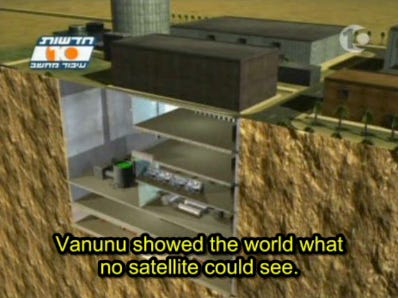
The reprocessing plant was completed by the middle of the decade, and plutonium production was under way or imminent by 1966. Yet an American inspection report in April 1967 still found no evidence of a reprocessing facility.
Within weeks, amidst an escalating crisis with Egypt, Israel would contemplate what it might do with the nuclear capability its most important ally had failed to detect.
1967: The Nuclear Tripwire
Egypt knew that Dimona was important. Nasser had warned that Egypt might launch a preventive war if Israel appeared close to acquiring nuclear weapons. For Israeli planners, the reactor complex represented an exposed and immensely expensive target whose destruction could set the program back years.
In the spring of 1967, Nasser faced pressure from several directions. His intervention in Yemen’s civil war, intended to install a friendly republican government on Saudi Arabia’s southern border, became a costly quagmire which came to be known as “Egypt’s Vietnam.” Meanwhile, Syria and Jordan questioned his claim to leadership of the Arab world accusing him of hiding behind UN peacekeepers while Israel struck its neighbours. A demonstration of military resolve offered political advantages, though Nasser appears to have hoped to avoid a general war.
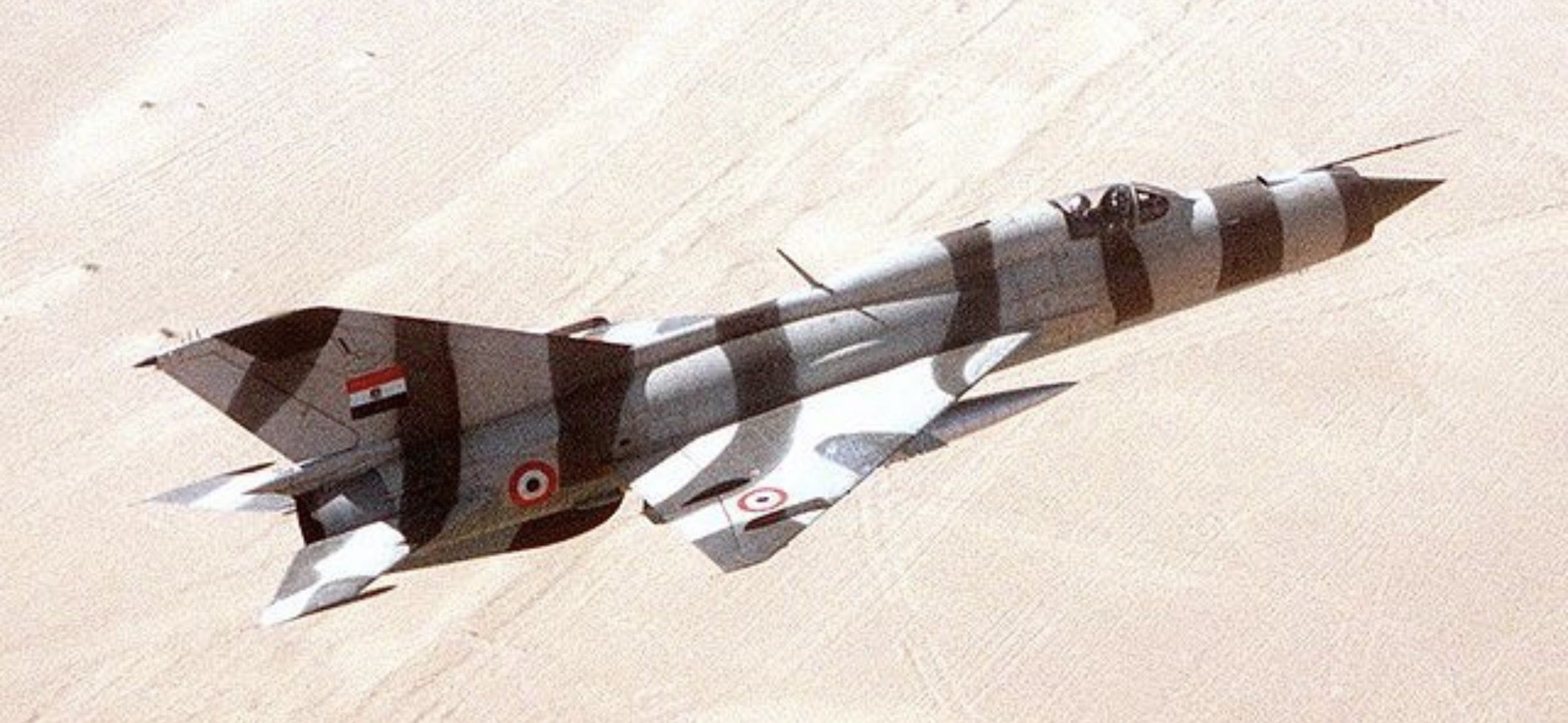
Egypt moved troops into Sinai, demanding the withdrawal of UN peacekeepers. Israel mobilised reservists at considerable economic cost. On May 17 and 26th, Egyptian MiG-21 reconnaissance aircraft flew over Dimona. Israeli Mirage fighters failed to intercept them and General Ezer Weizman urged Prime Minister Levi Eshkol to launch a pre-emptive attack, fearing that Egypt was preparing to destroy the nuclear complex. Israeli leaders knew that Egypt regarded the nuclear program as a possible casus belli but had no reliable means of determining whether the flights were intended as intimidation or preparation for a strike.
During the three-week crisis, Israeli scientists and engineers raced to improvise a rudimentary nuclear explosive package. It had never been tested, and its reliability was uncertain. Nevertheless, a contingency later described as Operation Shimson envisaged placing a device in the eastern Sinai and detonating it if Israel faced imminent national defeat.
The proposed explosion would have been a demonstration, away from major population centers. Its principal audience included Washington and Moscow. The sight of an Israeli nuclear detonation could force the superpowers to confront the possibility of further nuclear escalation or proliferation across the region and press urgently for an end to the fighting.
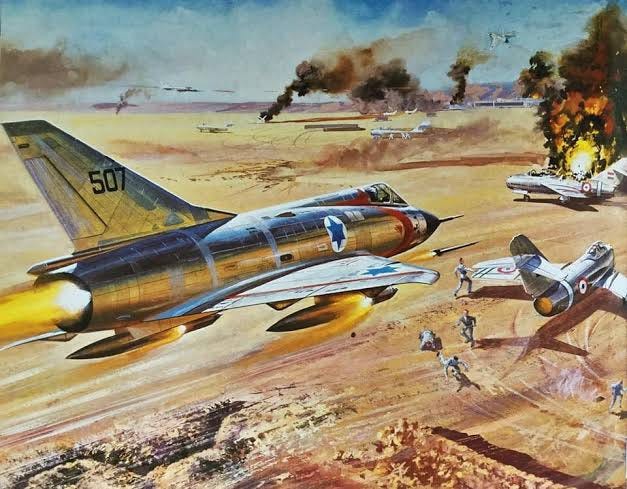
Ultimately, no such demonstration occurred, and the plan remained a contingency. On June 5th, Israeli aircraft surprised the Egyptians by attacking their airfields at low altitude, disabling runways and destroying planes on the ground. The subsequent Israeli victory removed the immediate fear of defeat. It remains an intriguing question whether Dimona’s vulnerability contributed to Israel's decision to strike first.
The Birth of Nuclear Opacity
Israel’s successful work at Dimona meant it now had to decide how to navigate the repercussions of its weapons capability. Declaration would have created serious diplomatic problems for a country still dependent on American support. Egypt might accelerate its own nuclear efforts, perhaps with Soviet assistance. The United States would have to reconcile its relationship with Israel with its opposition to further proliferation. An openly nuclear Israel could also face pressure for inspections, disarmament negotiations and new restrictions on military assistance.
As a result, Israel developed the policy known as amimut, or opacity. It would neither confirm nor deny possession of nuclear weapons, undertake no public test, and repeat its promise not to be the first country to “introduce” them into the Middle East.
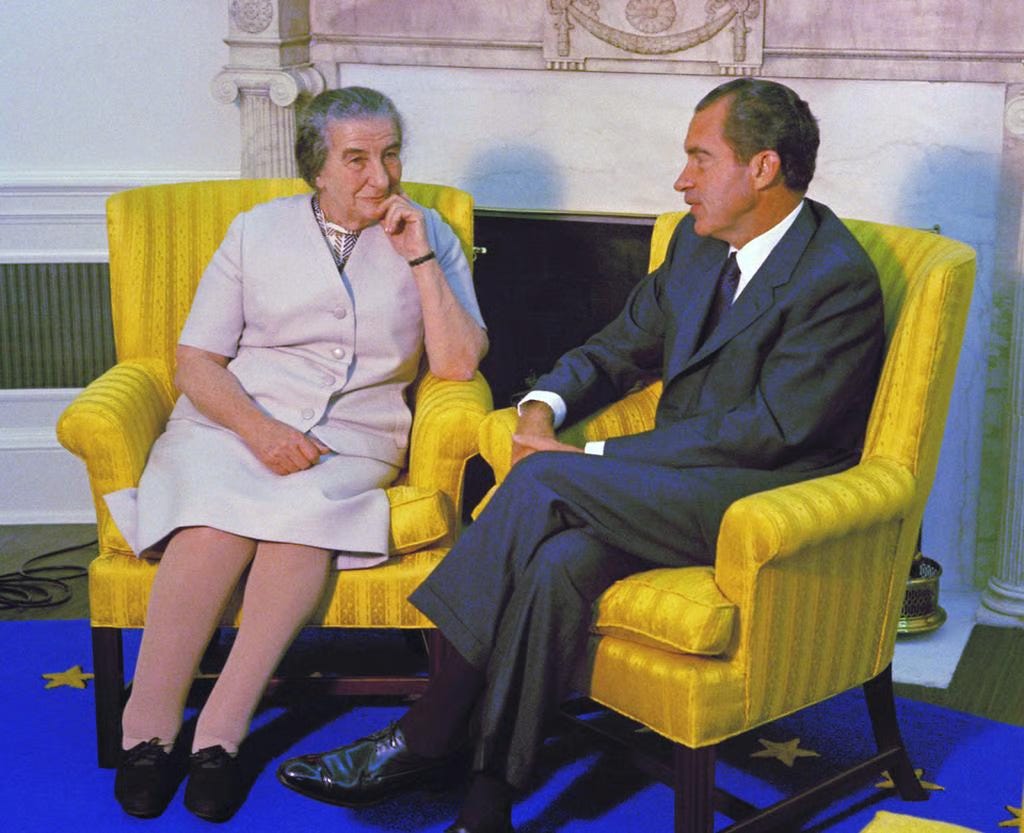
The policy acquired American support in September 1969, when Prime Minister Golda Meir met Richard Nixon privately at the White House. No public transcript exists of the decisive part of their conversation, but the subsequent conduct of both governments reveals an informal accommodation. Israel would avoid overt nuclear displays, and Washington would end its visits to Dimona and cease pressing Israel to join the NPT.
Did Israeli Nuclear Blackmail cause the OPEC crisis?
Six years after the Six-Day War, Israel was believed to possess a small arsenal of nuclear weapons deliverable by aircraft, a considerable advance over the improvised, untested device it had contemplated using in operation Shimshon. On Yom Kippur in October 1973, Egyptian troops launched a surprise attack across the Suez Canal behind a dense surface-to-air missile umbrella while Syrian armour attacked the Golan Heights. Israel’s initial defenses buckled. Defense Minister Moshe Dayan feared that Syrian forces might break through into northern Israel and warned of the possible “fall of the Third Temple.”
On October 7, Dayan urged Golda Meir to consider preparations for a nuclear demonstration. She refused, supported by senior ministers who remained confident in Israel’s conventional forces. The extent of subsequent nuclear-related activity and its purpose remain subjects of historical disagreement.
Pulitzer Prize-winning journalist Seymour Hersh later argued that Israel deliberately placed its nuclear forces on alert, preparing eight nuclear-capable F-4 Phantoms at Tel Nof airbase and readying Jericho ballistic missile launchers, with Egyptian and Syrian military headquarters among their intended targets, to pressure Washington into resupplying its battered ally. Cohen confirms that nuclear-related preparations likely occurred at several Israeli sites and that American intelligence detected some of them, but considers Hersh’s account of a coordinated nuclear blackmail operation exaggerated.
Washington had powerful reasons of its own to intervene. The Soviet Union was supplying Egypt and Syria, and Nixon and Henry Kissinger had no wish to see Soviet clients emerge victorious. Yet the possibility that an Israeli defeat might provoke nuclear escalation existed as part of the strategic calculus confronting the United States.

On October 14, American transports began arriving under Operation Nickel Grass. Over the following month, C-5 Galaxy and C-141 Starlifter aircraft flew 567 missions and delivered about 22,300 tons of equipment, including tanks, artillery, ammunition and replacement aircraft. Israeli forces had already begun reversing their early defeats before the first transports arrived, but the airlift replenished their losses and assured them of sustained American support.
The consequences spread beyond the battlefield into the international energy system. On October 17, Arab oil producers announced production cuts in response to Western support for Israel. Two days later, after Nixon requested $2.2 billion in emergency military assistance, they imposed an embargo on oil shipments to the United States. Oil prices nearly quadrupled.
A Flash at the Bottom of the World
In March 1979, Israel achieved a major diplomatic breakthrough. Begin, and Egypt’s Anwar Sadat signed a peace treaty that ended three decades of war between Israel and its strongest Arab adversary. Israel agreed to return the Sinai Peninsula, and Egypt became the first Arab country to recognize the Jewish state. During negotiations, Egypt had demanded that Israel join the NPT. Israel refused with President Carter’s support, and thus Israel obtained peace without conceding anything concerning its nuclear arsenal.
Six months later, Israel may have taken an extraordinary diplomatic risk. An American Vela satellite, purpose-built to detect atmospheric nuclear explosions, identified a distinctive double flash over the remote southern ocean between South Africa and Antarctica.
Initial suspicion fell on South Africa, which was assembling a small arsenal of independently developed, relatively simple gun-type uranium bombs, expected to produce considerably larger explosions than the Vela signal suggested. Attention soon shifted to Israel, whose more sophisticated nuclear program was capable of such a low-yield test. The two countries had established close defense ties, including cooperation on missiles and nuclear materials, raising the possibility that South Africa had provided logistical assistance for a clandestine Israeli test in the remote southern ocean.

But why would Israel risk compromising its carefully cultivated nuclear opacity? Cohen believes it was seeking to validate a new generation of boosted-fission or thermonuclear weapons, whose development required experimental data.
A scientific panel commissioned by Carter favoured a non-nuclear explanation, though some American weapons scientists disagreed. Carter later wrote in his memoirs that he believed Israel had been responsible.
An acknowledged Israeli test, or U.S. confirmation of one, would have endangered the understanding with Washington and embarrassed Sadat, whose peace treaty had been signed only months earlier. The incident remains unresolved in the public record, a fitting scenario for Israel’s ongoing nuclear opacity.
Maintaining a Nuclear Monopoly
On June 7, 1981, eight Israeli F-16s flew into Iraq and destroyed the French-built Osirak research reactor. It was designed to use highly enriched uranium, and Italian firms had provided laboratory-scale plutonium separation equipment. The Iraqi regime was investigating routes towards nuclear weapons, although the reactor itself was under IAEA safeguards and French technicians participated in its operation.
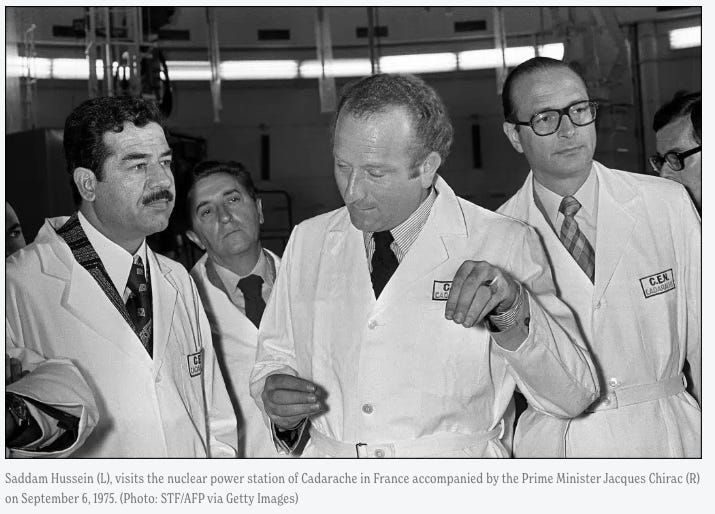
Israeli prime minister Menachem Begin defended the attack on grounds of national survival, insisting that Israel could never permit a hostile regional power to acquire nuclear weapons. The principle became known as the Begin Doctrine. Israel struck a Syrian reactor at al-Kibar in 2007, and the same reasoning has informed its long-standing campaign against Iran’s nuclear program, including sabotage, assassinations, cyber operations and direct attacks.
Israel’s hostility to regional proliferation reflects the geographic vulnerabilities that drove Ben-Gurion’s original project. Former Iranian president Akbar Hashemi Rafsanjani once described Israel as a “one-bomb state.” Its small territory and concentrated population could suffer catastrophic damage from even a limited nuclear strike.
There is more at stake. American cover alongside Israel’s conventional military superiority and intelligence capabilities have given it enormous freedom of action to strike targets across the region, destroy nuclear installations and assassinate senior commanders and scientists inside hostile states. The possibility of retaliation has remained a manageable concern. Nuclear proliferation would alter the possible scale of escalation following such operations.
An Iranian bomb could constrain Israeli strikes on Iranian territory by raising the prospect that a conventional exchange might reach the nuclear threshold. Washington would have stronger incentives to discourage operations capable of producing a direct war between nuclear powers. Tehran might also feel safer conducting proxy operations or mounting conventional provocations if it believed a nuclear deterrent reduced the danger of an Israeli attack on the Iranian homeland.
Such a relationship could produce what strategists call the stability-instability paradox. Nuclear weapons might discourage all-out war while encouraging competition below the nuclear threshold.
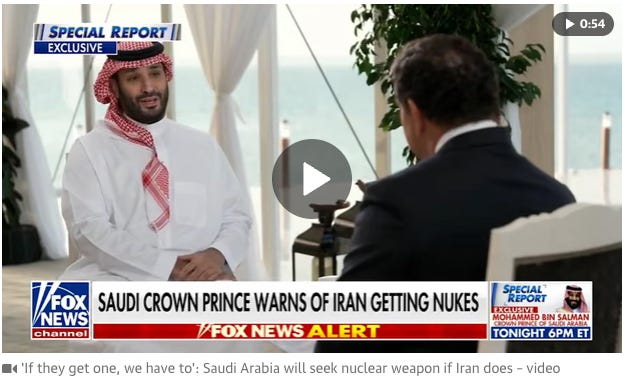
In addition, a domino effect of proliferation could complicate the regional balance. Saudi Crown Prince Mohammed bin Salman has publicly said that Saudi Arabia would seek nuclear weapons if Iran acquired them. Turkey and Egypt would face growing pressure to reconsider their own options. For Israel, the resulting loss of regional nuclear monopoly would affect its freedom to employ conventional military force and its calculations about national survival. The Begin Doctrine has sought to preserve both advantages.
A Fiction of Mutual Convenience
In 1986, Mordechai Vanunu, a former Dimona technician, gave the Sunday Times photographs and detailed descriptions of the facility. Independent analysts have subsequently estimated Israel’s plutonium production, warhead stockpile and delivery systems with increasing confidence. The government’s public relations formula has scarcely changed.
How can such a widely known fiction be maintained?
A fiction of this magnitude requires its audience's cooperation. Israel’s nuclear opacity has endured because it serves different interests. Washington can sustain its relationship with Israel without openly reconciling the exception with its nonproliferation policy, while Israeli leaders avoid the obligations and diplomatic confrontations that would follow formal acknowledgment. Arab governments have often criticized Israel’s nuclear status and called for a nuclear-weapons-free Middle East, but pressing the question to a decisive confrontation might impose costs of their own, complicating negotiations and intensifying domestic demands for an Arab bomb.

Opacity may also influence how the arsenal is organized. Israeli nuclear weapons are believed to remain under exceptional civilian control and, remarkably, Cohen believes that the fissile pits are largely kept separated from their means of delivery.
Such arrangements make the transition from possession to operational employment a deliberate political act. The language of “introduction,” however artificial it may seem, has thereby acquired an institutional as well as diplomatic meaning.
Ultimately, for Israel, the bomb that does not exist is unlikely to ever be surrendered, and the policy of opacity that has facilitated its possession has proved to be extraordinarily durable.
Like this post. Your endorsement will remain officially unacknowledged.
You can purchase Professor Cohen’s books here. https://www.amazon.ca/Israel-Bomb-Avner-Cohen/dp/0231104839
Good article
What a demonically tangled web you've unravelled here! I believe Israel imprisoned Vanunu for attempting to replace opacity with transparency--a deterrence policy against whistleblowers!