

“If I have seen further, it is by standing on the shoulders of Giants.”
Isaac Newton 1676
In August 2025, South Korea was confronted with the humiliating details of an agreement its state-owned nuclear companies had negotiated with America’s Westinghouse Electric Company.
According to Korean media reports, the settlement, intended to resolve a longstanding intellectual property dispute, barred Korea Hydro & Nuclear Power (KHNP) from independently pursuing reactor exports across much of Europe and all of North America. It reportedly imposed substantial licensing fees and equipment purchases for each reactor exported to markets where Korea remained permitted to compete.
These restrictions followed one of the most impressive accomplishments in recent nuclear construction history. South Korea had successfully exported four APR1400 reactors to the United Arab Emirates, completing the Barakah nuclear power plant while American nuclear construction struggled through the disastrous Vogtle and V.C. Summer projects.
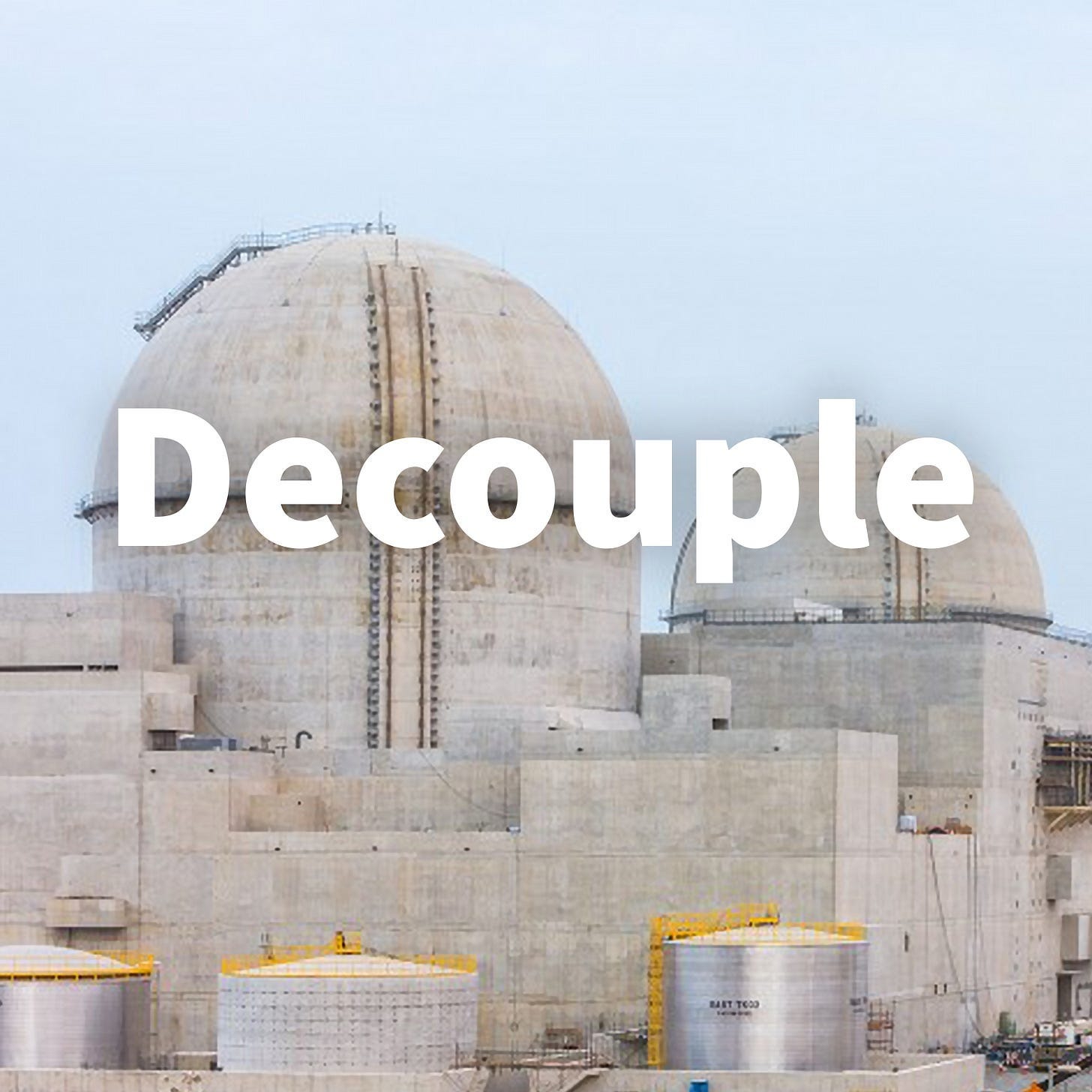
South Korea became the world’s most successful adopter of Combustion Engineering’s American reactor technology, building sixteen CE-derived reactors in Korea and surpassing the fifteen built in the United States. Yet despite nearly four decades of technological development and substantial indigenous engineering, Korea has never fully escaped the intellectual property constraints inherited from its original licensing agreement. Westinghouse, which acquired Combustion Engineering’s nuclear business in 2000, retains considerable commercial leverage.
The Korean experience raises a larger question about how nuclear technology spreads and what it takes for a nation to achieve genuine independence from the companies and countries that originally developed it.
France, which began its commercial PWR program under licence from Westinghouse, succeeded in progressively freeing itself from American proprietary control. Germany and Sweden followed their own paths to independent reactor development, while China has more recently pursued an extraordinarily ambitious program of technological absorption.
The contrasting fortunes of these nuclear industries, explored in a recent Decouple conversation with Michael Seely of Atomic Blender, illustrate the immense accumulation of scientific knowledge, engineering expertise and institutional capacity required to become an independent reactor designer.
An Exclusive Club of Reactor Designers
The commercial aircraft engine industry serves as a useful comparator to nuclear design authority. Airlines worldwide operate and maintain sophisticated turbofan engines, supported by an international network of component manufacturers, much as countries operating imported nuclear reactors develop considerable expertise in maintenance, refurbishment, and component manufacture without acquiring the capacity to design reactors independently.
Yet the capacity to independently design, certify and manufacture modern large commercial turbofans remains concentrated in just three Western industrial centres, represented principally by General Electric and Pratt & Whitney in America, Rolls-Royce in Britain, and the Franco-American CFM partnership involving Safran. Manufacturing components for these engines confers little of the accumulated engineering expertise necessary to develop a competing product.
Nuclear technology has a similarly concentrated industrial ancestry. The dominant pressurized water reactor lineage emerged from the American naval propulsion program led by Admiral Hyman Rickover and commercialized by Westinghouse, with Combustion Engineering and Babcock & Wilcox subsequently developing competing designs. General Electric pioneered commercial boiling water reactors, while the Soviet Union independently developed the VVER from its naval reactor tradition. Canada’s CANDU and Britain’s gas-cooled reactors represented alternative indigenous technological families.
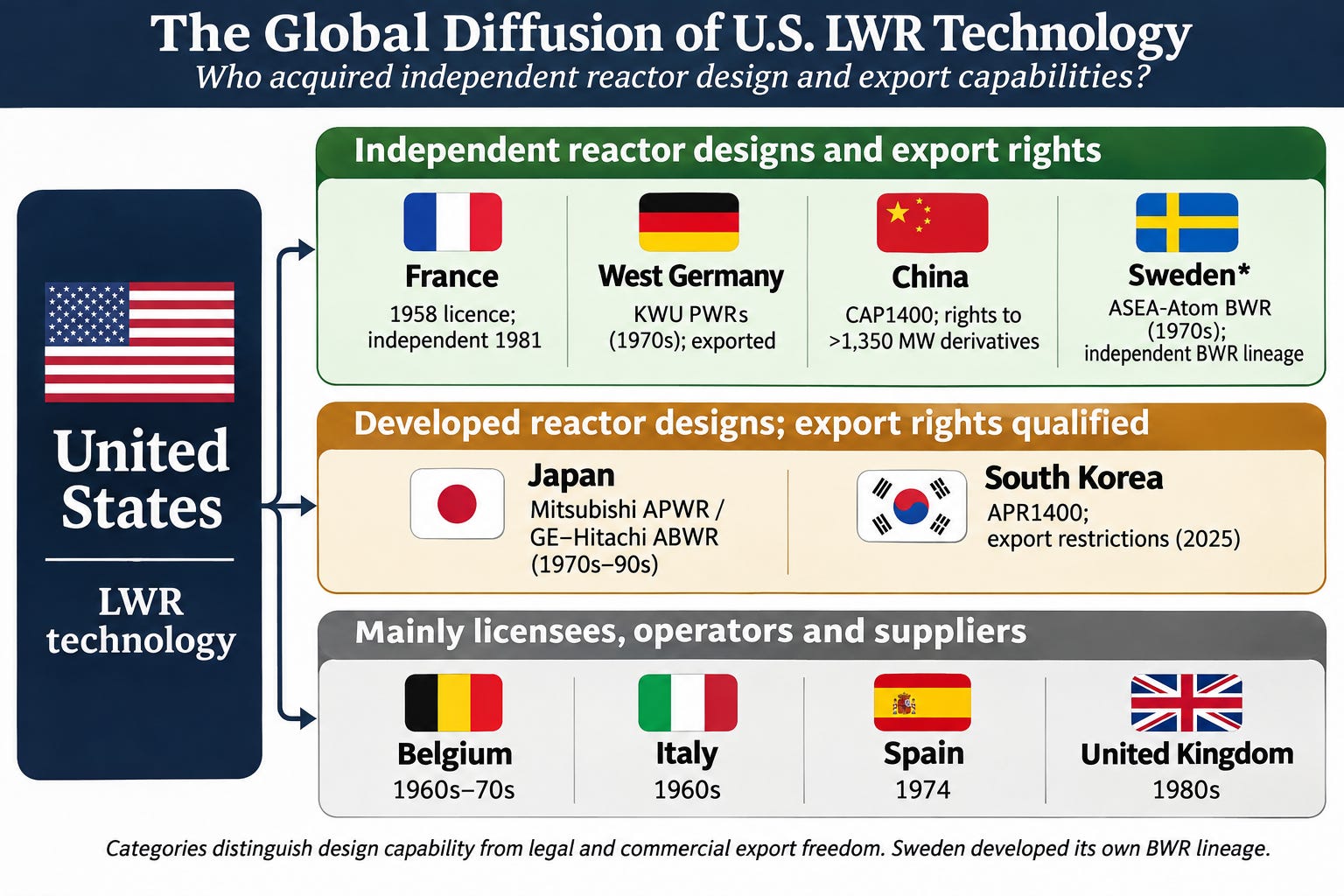
As these technologies spread internationally, some countries purchased turnkey generating stations while others acquired manufacturing licences. Far fewer developed the scientific and engineering capabilities necessary to independently modify, redesign and eventually export reactors.
The intellectual property underpinning a reactor extends far beyond its engineering drawings. Decades of experimental research and operating experience are embedded in the computational methods and safety analyses used to establish its licensing basis. Consider replacing a pump in an operating reactor. Differences in materials, hydraulic characteristics or operating tolerances can affect assumptions underpinning the plant’s original safety analysis. Demonstrating that the modification preserves its licensing basis may require proprietary analytical tools and the expertise to interpret their results.
For utilities operating only a handful of reactors, maintaining these specialized capabilities independently can be prohibitively expensive. The original designer can consequently retain a commercially valuable role throughout the plant’s operating life, providing engineering services and technical support decades after the initial sale. Much of the relevant knowledge also resides in experienced engineers whose understanding of earlier design decisions and operating problems cannot readily be recovered from technical documentation.
France’s Long Emancipation from Westinghouse
France entered the commercial nuclear age by pursuing indigenous gas-cooled, graphite-moderated reactor technology. By the late 1960s, however, the superior commercial prospects of American light-water reactors had persuaded French industry to adopt Westinghouse’s PWR design, licensed through Framatome.
The oil shocks of the 1970s transformed nuclear power into a central instrument of French energy and industrial policy. Under the Messmer Plan, France embarked on an ambitious program of standardized construction, commissioning as many as eight reactors in a single year and adding nearly 38 GW of nuclear capacity in a single decade. The scale and sustained pace of this expansion remain among the most remarkable achievements in the history of nuclear power.
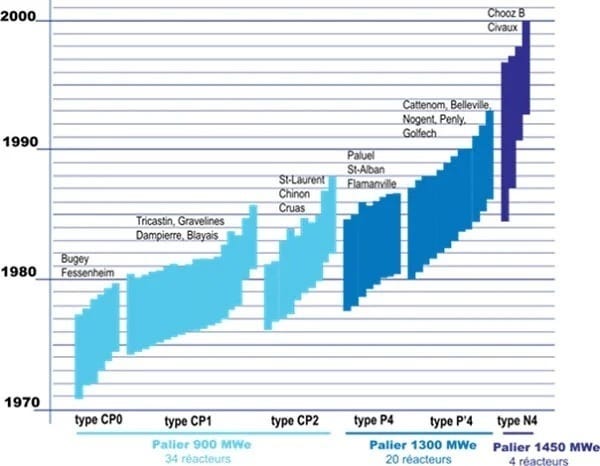
Repeated construction proved essential to the accumulation of indigenous capability. Framatome’s engineering organizations progressively assumed responsibilities previously exercised by Westinghouse, supported by EDF’s expanding operating expertise and the experimental capabilities of the Commissariat à l’énergie atomique (CEA).
In January 1981, Framatome finally ended its licensing agreement with Westinghouse. The achievement rested on a national ecosystem of research laboratories, materials-testing programs, analytical methods and manufacturing processes developed over decades. Its engineers could eventually demonstrate the safety and performance of French modifications using independently developed and validated engineering tools.
France was not, however, the only country to achieve such independence.
The extraordinary achievements of Germany and Sweden
West Germany’s Siemens and Kraftwerk Union developed indigenous PWR designs that increasingly diverged from their American origins, incorporating German engineering standards, materials, manufacturing methods and operating requirements. This independence was put to the test during the Cold War.
In the mid-1970s, well before France had achieved full independence from Westinghouse, West Germany’s KWU pursued an agreement to supply the Soviet Union with a 1,300 MW reactor at Kaliningrad, the Soviet enclave on the Baltic Sea. The proposed commercial arrangement envisaged Soviet electricity exports through Poland and East Germany to West Berlin.
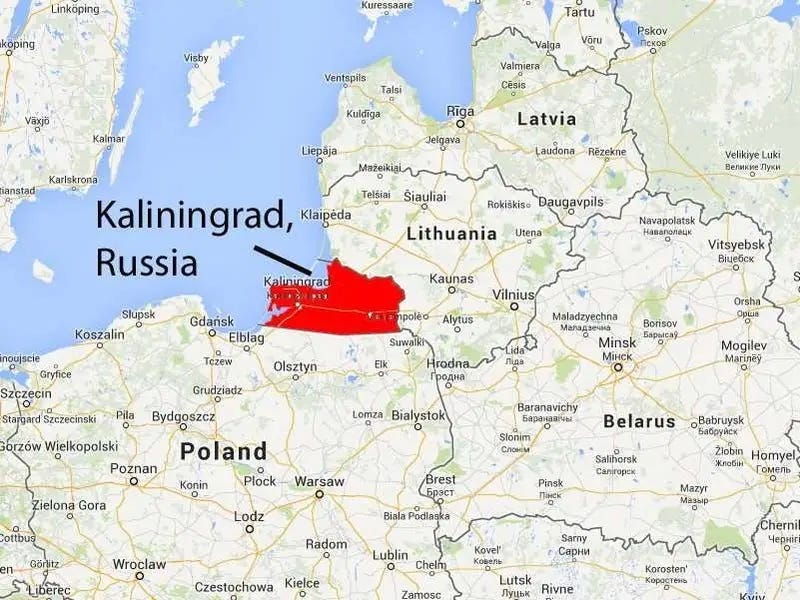
Washington objected, particularly concerned that advanced Western welding techniques could be transferred to the Soviet submarine fleet. Yet the Germans maintained that the reactor contained no equipment or technology of direct American origin or manufactured under American licence. The United States was consequently compelled to pursue its objections through the Coordinating Committee for Multilateral Export Controls (COCOM), rather than through Westinghouse’s proprietary rights.
President Gerald Ford eventually authorized a conditional exemption in June 1975, but the reactor was never built. The project collapsed over Soviet demands for excessively high electricity prices and East German opposition to allowing electricity exports to West Berlin across its territory.
Sweden achieved comparable independence in boiling water reactors. ASEA developed its own BWR designs, beginning with Oskarshamn 1, and subsequently exported reactors to Finland. Together, these European experiences demonstrated that the technological inheritance of the original American reactor vendors could be absorbed, improved upon and ultimately superseded.
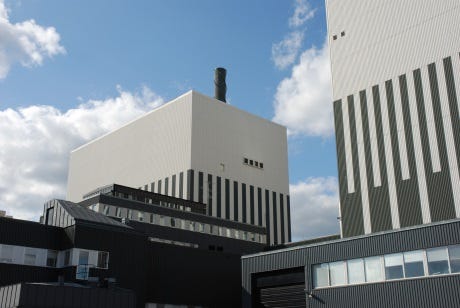
The squandering of Germany’s and Sweden’s hard-won nuclear capabilities through partial or complete phaseout policies represents an extraordinary act of industrial self-sabotage. Particularly remarkable is Sweden’s regression from an independent reactor designer and exporter, following its 1980 referendum to phase out nuclear power, to a prospective customer of foreign technology. Having now reversed course and embraced new nuclear construction, Sweden is turning to Britain’s Rolls-Royce after considering an American design from GE Hitachi, rather than reviving its own indigenous reactor technology.
South Korea’s Unfinished Nuclear Independence
South Korea entered the nuclear industry under considerably less favourable circumstances. Following decades of poverty, dictatorship and extraordinarily rapid industrialization, the country faced rising electricity demand and chronic dependence on imported energy.
By the late 1980s, the American reactor industry was experiencing the opposite trend in electricity demand. Combustion Engineering had accumulated decades of nuclear design experience, but the collapse of American reactor orders and difficulties with its existing projects had weakened its commercial position.
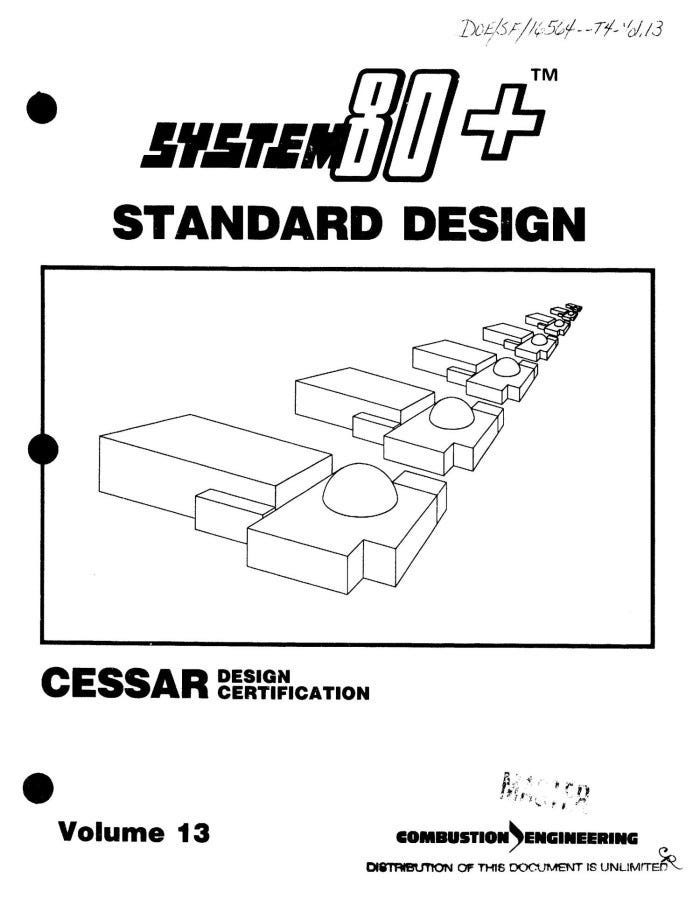
Under these circumstances, Korea negotiated an extensive technology-transfer agreement for domestic deployment centred on Combustion Engineering’s System 80 lineage. Korean engineers travelled to the company’s Connecticut headquarters to absorb the expertise their American counterparts had accumulated. Designs derived from Arkansas Nuclear One Unit 2 and the larger Palo Verde reactors became the foundation of the Korean Standard Nuclear Plant, subsequently developed into the OPR1000.
As Korea repeated these designs across its domestic program, it developed formidable manufacturing, construction and operating capabilities. The larger APR1400 incorporated significant Korean improvements, and the successful Barakah project established Korea as a serious international nuclear competitor.
Yet an important difference separated the Korean and French experiences.
Korea’s engineering organizations became extraordinarily proficient at improving and delivering a technological inheritance whose underlying design basis remained substantially dependent upon Combustion Engineering. Despite considerable domestic research capabilities, Korean reactor development continued to rely on proprietary methods and technical support inherited from the American vendor, with Korean engineers acknowledging as recently as 2016 that the APR1400 retained the major design concepts, safety analysis codes, and methodologies of Combustion Engineering’s System 80+.
This dependence proved commercially consequential when Combustion Engineering’s nuclear business passed through ABB into Westinghouse’s ownership.
When Korea began competing aggressively for international nuclear projects, the American company still retained valuable proprietary rights over a reactor lineage that Korean industry had spent decades developing. Westinghouse’s involvement in Barakah reflected those continuing dependencies, while subsequent disputes over Korean exports exposed the limits of the country’s technological independence.
China’s Technology Transfer Bargain
China entered the international nuclear marketplace with the benefit of observing these earlier experiences and an enormous prospective domestic market that gave its negotiators considerable leverage.
Rather than concentrating exclusively on one foreign supplier, China acquired technologies from France, Russia, Canada and the United States, gradually assembling a broad technological and manufacturing base.
One might have expected China to standardize around the VVER technology of its Russian partner. Relations between the former communist rivals normalized in 1989 following the Sino-Soviet split, culminating in a strategic partnership in 1996 and a friendship treaty in 2001. Yet despite decades of Soviet and Russian reactor exports, no VVER-importing country had developed and exported an independently designed VVER derivative.
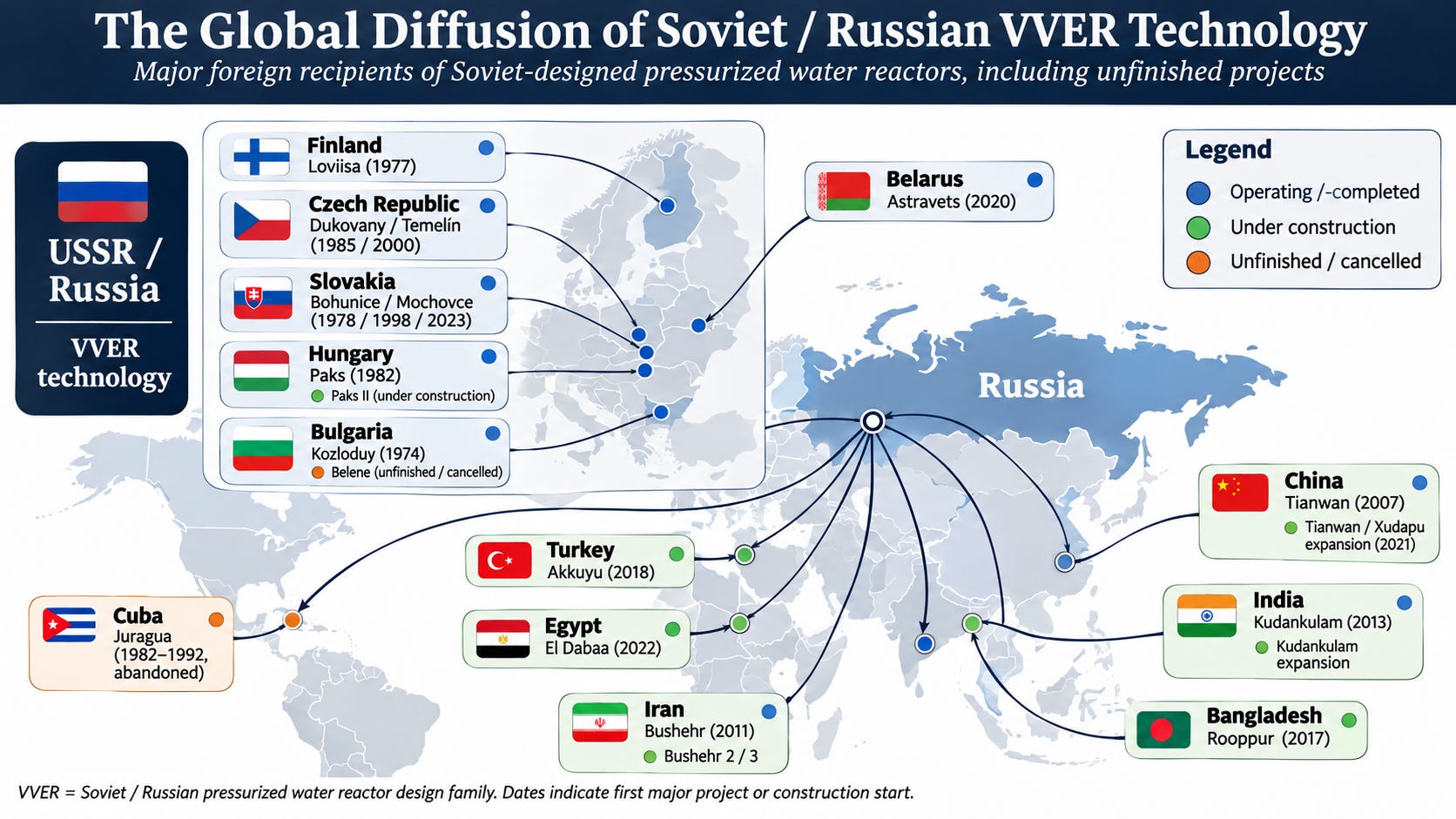
Even Czechoslovakia’s Škoda, which manufactured reactor pressure vessels and major components for Soviet-designed plants, never achieved independent reactor design authority. Western technology transfers, by contrast, had helped establish independent reactor industries in France, West Germany and Sweden.
When Westinghouse, Areva and Russia’s Atomstroyexport competed for China’s next generation of reactors in the mid-2000s, technology transfer became a decisive consideration. The 2007 agreement to purchase four Westinghouse AP1000 reactors was particularly consequential. Westinghouse anticipated that these first projects would open access to a Chinese market that could encompass dozens of additional reactors.
A remarkable contractual provision granted China intellectual property rights over derivative reactors exceeding 1,350 MWe. Westinghouse had already uprated its original AP600 design to create the AP1000 and considered further increases in power output unlikely.
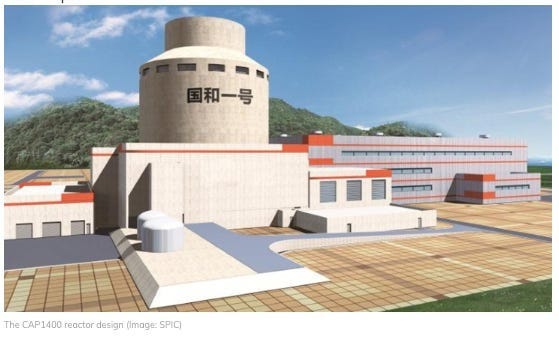
Chinese engineers nevertheless developed the larger CAP1400, incorporating substantial modifications and crossing the contractual threshold. China also developed the indigenous CAP1000 derivative, reducing Westinghouse’s participation in subsequent domestic construction.
Meanwhile, the Hualong One emerged from China’s separate, substantially French-derived PWR lineage and has since been exported to Pakistan.
NuScale, X-energy and the Responsibilities of a Reactor Vendor
The history of nuclear technology transfer provides a sobering perspective on advanced nuclear startups aspiring to become international reactor vendors.
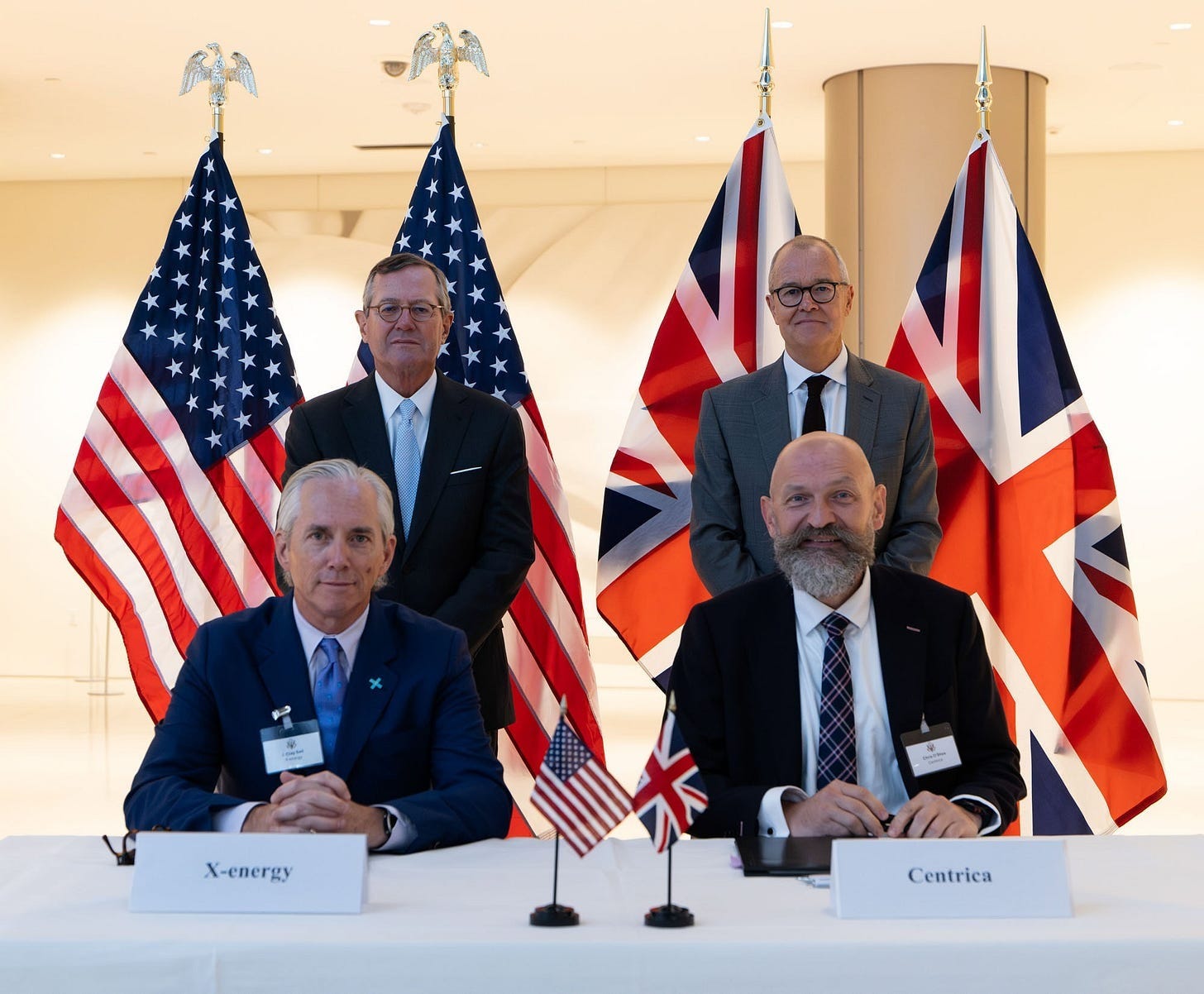
NuScale has pursued reactor exports to Romania, while X-energy is developing its Xe-100 reactor with Dow in Texas and pursuing further opportunities with Centrica in the UK. Both have made progress in engineering and licensing, including X-energy’s recent construction permit, yet neither has delivered an operating commercial reactor.
Defenders of advanced nuclear startups sometimes observe that the original American vendors began exporting before establishing extensive domestic operating fleets. While historically accurate, this overlooks the industrial institutions from which the American reactor industry emerged.
Westinghouse, General Electric, Combustion Engineering and Babcock & Wilcox were already enormous, vertically integrated industrial enterprises when they entered commercial nuclear power. Their origins lay in America’s electrification, large steam-generating equipment, fossil-fuel boilers, turbines, pressure vessels, and heavy industrial machinery.
Their engineering organizations had accumulated decades of experience designing and manufacturing coal-fired stations operating under high temperatures, pressures and mechanical stresses. Extensive research laboratories, manufacturing works and established supplier networks supported their transition into nuclear technology. Immense federal investment in nuclear research and naval propulsion provided an additional foundation of reactor-specific expertise.
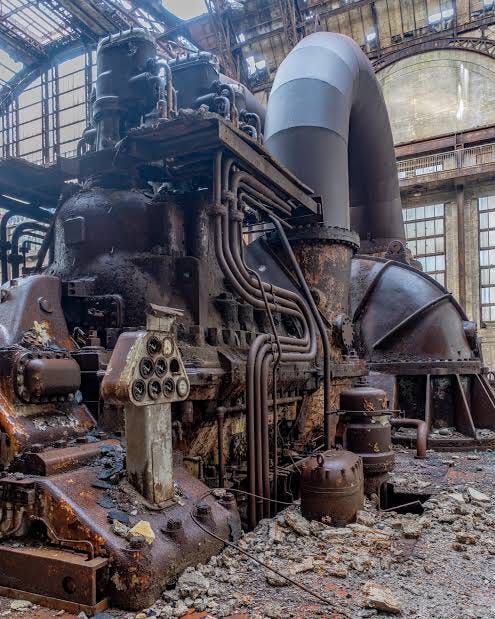
Neither NuScale nor X-energy possesses comparable in-house manufacturing and engineering capabilities. Both must assemble much of the industrial infrastructure necessary to deliver their reactors through partnerships with external nuclear engineering firms, equipment manufacturers and construction contractors, many of which have themselves suffered decades of industrial decline. X-energy faces the additional challenge of commercializing less mature and less extensively characterized technologies, including high-temperature helium circulators rather than the well-established water pumps used in conventional reactors.
These challenges extend well beyond completing a first reactor. An owner must be confident that a vendor will maintain the analytical capabilities, experimental data, and specialist personnel required to support its technology through decades of operation, component replacement, and regulatory modification. For NuScale and X-energy, this future capability remains in question.
Conclusion
The history of nuclear technology transfer is remarkable for how few countries have progressed from importing reactor designs to independently developing and exporting them. They can be counted on two hands. France, West Germany and Sweden joined the original American, Soviet, British and Canadian reactor traditions, while China has more recently established substantial independent export capabilities.
Some of these national industries have since disappeared as active reactor vendors, casualties of declining domestic construction, antinuclearism and the gradual dissolution of their engineering corps.
South Korea’s continuing entanglement with Westinghouse illustrates just how difficult it is to achieve full technological independence from an original reactor designer.
The ambitions of contemporary reactor startups deserve scrutiny extending well beyond the novelty of their designs or the enthusiasm of their financial backers. As with commercial jet engines, the ability to independently design, certify, and support nuclear reactors rests on generations of accumulated engineering experience, much of it embodied in people and institutions that can't be easily recreated.
Like this post if you’ve got designs on nuclear.
CANDU is BEST! Run wiith Th 90 and Canada's CANDU reactors can run on a blend of thorium and enriched uranium using ANEEL fuel (Advanced Nuclear Energy for Enriched Life).
Developed by Chicago-based Clean Core Thorium Energy (CCTE), ANEEL is a patented fuel that blends thorium with High-Assay Low-Enriched Uranium (HALEU). Because it matches the exact physical dimensions of standard CANDU fuel bundles, existing heavy-water reactors can use it as a drop-in replacement without major hardware or core modifications.
can Korea leverage american interest in their various engineering and construction technologies to move toward escape from the reactor proprietary control over exports? does a country have to substantially change design in order to avoid controls over its derivatives? is the pattern of engineering autonomy substantially the same as fission electric in other major productive technologies?