

“We’re going to make sure the next generation of life-changing products are invented and manufactured here in the United States of America.”
Barack Obama
As Canada considers how to deploy its considerable nuclear industrial capabilities in a new era of global nuclear expansion, a heated rivalry is emerging between two reactor technologies: Canada’s homegrown CANDU and the American-designed Westinghouse AP1000. At the heart of this contest lies a curious disagreement over what constitutes Canadian nuclear technology.
Against the backdrop of an escalating trade war with the United States, Ottawa is rediscovering the importance of strategic autonomy, seeking to revive Canadian reactor exports and, through its recently announced Nuclear Energy Strategy, signalling a renewed preference for Canada’s CANDU technology.
Enter Tim Gitzel, CEO of Cameco, one of Canada’s great industrial success stories, which now owns a 49% stake in Westinghouse. In recent testimony before Parliament’s Natural Resources Committee, Gitzel invoked Cameco’s Canadian credentials to argue that Ottawa should accord the American AP1000 reactor the same standing as CANDU in its national nuclear industrial policy.
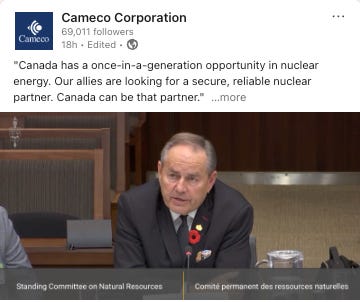
There is a certain irony here. Cameco’s own Canadian identity is the product of precisely the kind of deliberate industrial policy now being revived in Ottawa. As a legacy of its Crown corporation origins, its corporate charter requires that its headquarters remain in Saskatchewan and that its senior executives reside there.
The provincial government retains a special golden share protecting these provisions, ensuring that Saskatchewan captures more than mining jobs and royalties. The strategic decision-making and well-paid professional employment associated with managing a global nuclear enterprise remain firmly rooted in the province.
Gitzel’s argument thus raises a fundamental question: does Canadian ownership of a foreign reactor manufacturer confer the same national industrial benefits as possessing the technology itself?
National Industrial Policy Forged Cameco, CANDU and Westinghouse
To understand what distinguishes Canadian from American nuclear technology, it helps to examine the origins of the three companies at the heart of this dispute: Cameco, Candu Energy and Westinghouse. Their histories reveal two parallel national nuclear enterprises, each cultivated through decades of deliberate public investment, whose industrial capabilities remain deeply rooted in their countries of origin despite subsequent changes in corporate ownership.
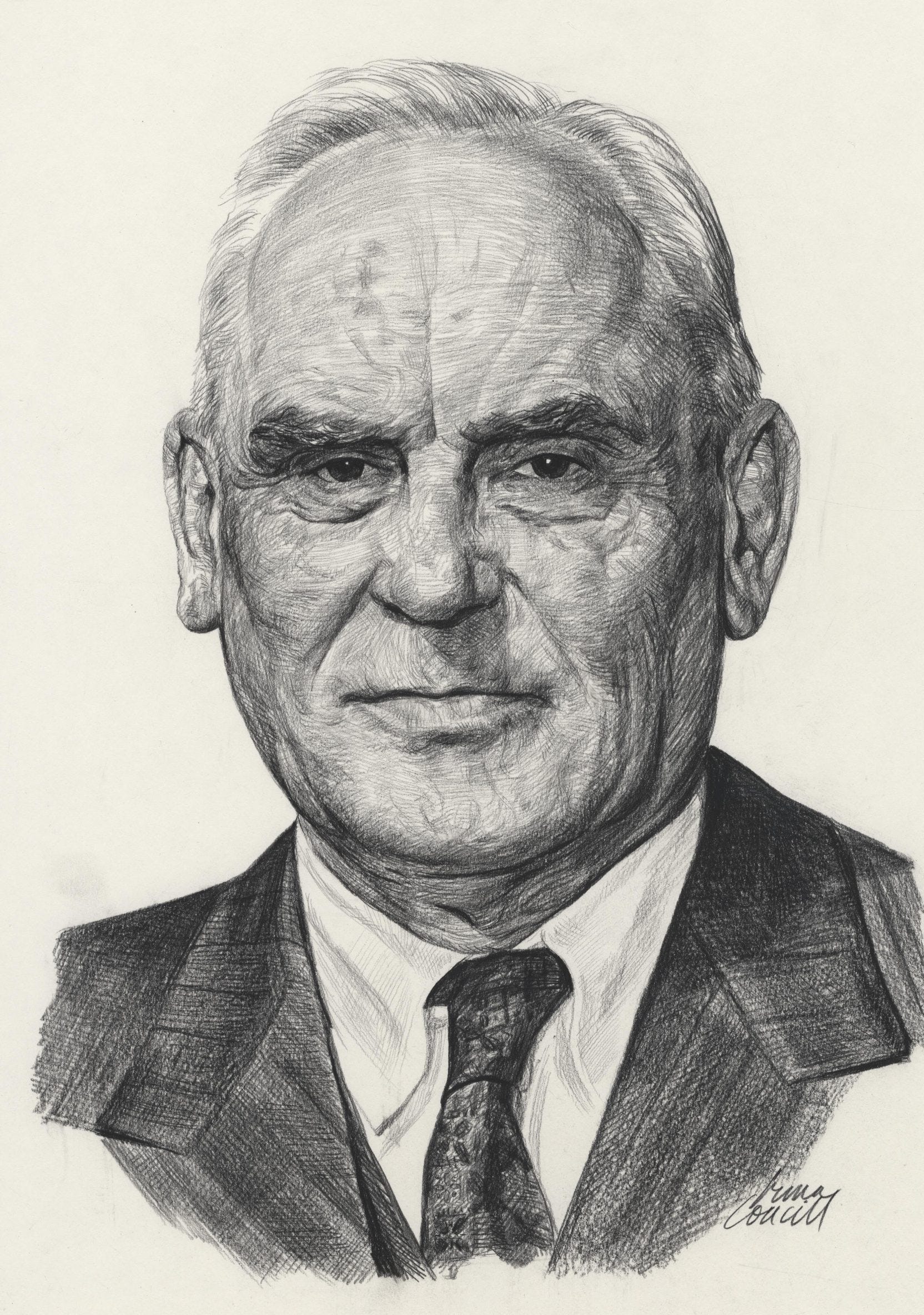
Cameco and Candu Energy share an extraordinary origin story. Both companies trace their origins to Canada’s wartime nuclear program, championed by C.D. Howe, and the publicly funded nuclear enterprise that later centered on Chalk River and Atomic Energy of Canada Limited.
Cameco emerged in 1988 from the merger of Eldorado Nuclear, a federal Crown corporation, and the Saskatchewan Mining Development Corporation, its provincial counterpart, while Candu Energy Inc. inherited the AECL commercial reactor business in 2011, with the underlying intellectual property remaining in Canadian public ownership.
Canadian public policy cultivated these enterprises, anchoring their headquarters, management, engineering talent, research capabilities and supply chains firmly in Canada. Over time, they attracted international customers, investors and industrial partners into Canadian-centred nuclear ecosystems.
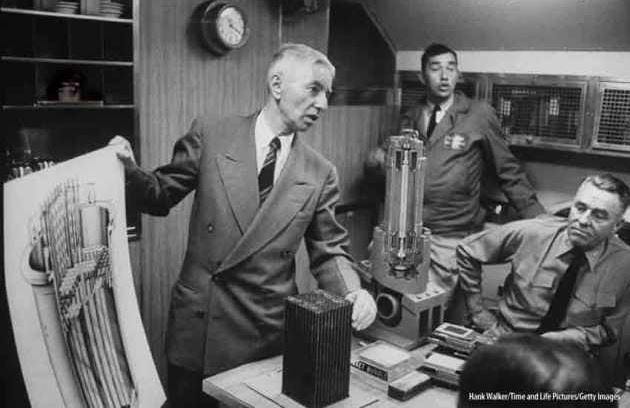
Westinghouse represents a parallel American history. Its pressurized-water reactor technology emerged from the American naval nuclear program under Admiral Hyman Rickover, developed in close collaboration with the US Navy, Atomic Energy Commission and national laboratories. It subsequently became one of America’s most successful nuclear exports, backed by American diplomacy, financing and industrial might.
More recently, as nuclear power fell out of favour and market fundamentalism eclipsed industrial strategy, Westinghouse was allowed to pass through British, Japanese and now Canadian ownership. Yet through these successive changes of shareholders, its institutional centre of gravity has remained firmly in the United States.
Cameco’s acquisition of a 49% stake in Westinghouse, alongside Brookfield’s 51%, brought Canadian capital into an American industrial ecosystem. It did not, however, bring that ecosystem into Canada.
The United States Is Treating Westinghouse as a Strategic National Asset
American industrial nationalism did not begin with Donald Trump, nor is it likely to end with him. Barack Obama preached the importance of keeping advanced technologies, manufacturing, and the jobs they sustain on American soil. Today, in a more overtly nationalist political climate, Washington is mobilizing the machinery of the American state behind Westinghouse and the AP1000.
A landmark agreement with Cameco and Brookfield contemplates at least US $80 billion in American reactor projects, with federal financing and regulatory support. The US Department of Energy has separately offered conditional financing of US $17.5 billion for long-lead equipment supporting up to ten AP1000 reactors.
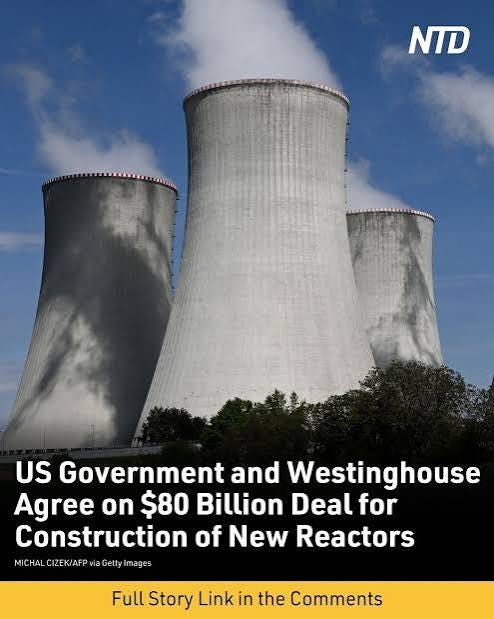
Even Westinghouse’s current Canadian corporate ownership structure may be about to change, with the company having confidentially filed for an IPO. Under its agreement with Cameco and Brookfield, the US government could acquire a substantial equity interest after a qualifying IPO.
South Korean government disclosures have also described plans for an American golden share, potentially granting Washington veto rights over major corporate decisions. Korean companies are meanwhile exploring their own equity stake as part of the emerging $120 billion US–South Korea nuclear partnership, which envisions Korean industry playing a major role in the construction and supply chains of American-designed reactors.
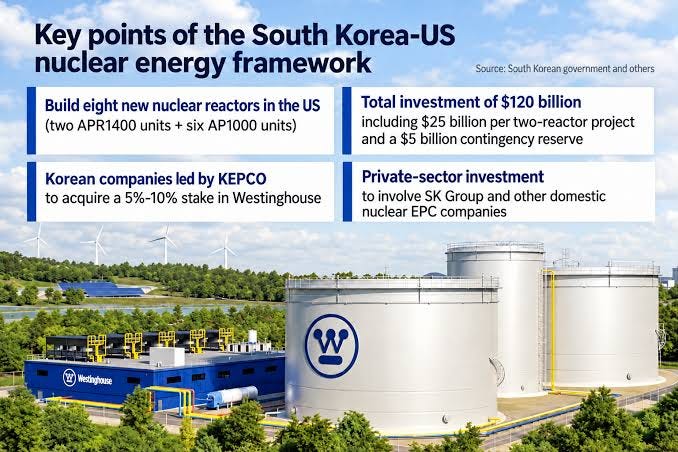
These arrangements remain contingent, and their final terms are unsettled. Nevertheless, it would be naïve to imagine that Cameco’s ownership stake will trump, no pun intended, the strategic interests of Washington and Seoul, particularly as both governments mobilize their industrial and financial resources behind the AP1000.
American influence does not depend entirely on share ownership percentages. Washington possesses powerful regulatory, export-control, diplomatic and financial instruments.
Consider Poland’s selection of the AP1000. The project has been supported by the US Export-Import Bank, including financing for engineering work, and by American government diplomacy. American institutions are sensibly exporting this nuclear technology, which creates opportunities for American engineering and manufacturing.
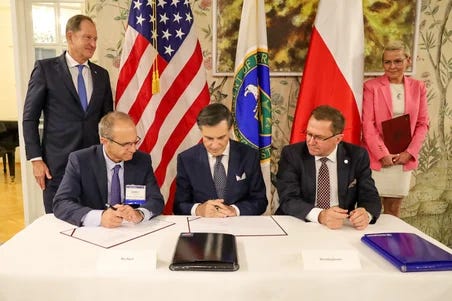
While Cameco objects to Ottawa’s recent moves to favour Canada’s indigenous reactor technology, it overlooks the unprecedented government support already flowing to Westinghouse. That support just happens to come from the United States of America.
If Washington is prepared to mobilize its industrial might behind Westinghouse, why shouldn’t Ottawa show the same strategic foresight in championing CANDU?
The Real Value of CANDU Lies Beyond the Construction Site
A nuclear reactor is much more than the concrete, steel, and components assembled at a construction site. Behind every reactor lies an ecosystem of intellectual property, design engineering, materials science, safety analysis, specialized manufacturing and scientific research. These capabilities generate high-value employment and export opportunities long after construction is complete.
With CANDU, Canada possesses the entirety of that ecosystem. AtkinsRéalis maintains Canadian reactor design and engineering capabilities. Canadian manufacturers produce sophisticated nuclear components. Cameco itself supplies the domestic fuel cycle, from uranium mining through conversion and CANDU fuel fabrication. Canadian universities, operating utilities and the research enterprise at Chalk River sustain expertise developed over generations.
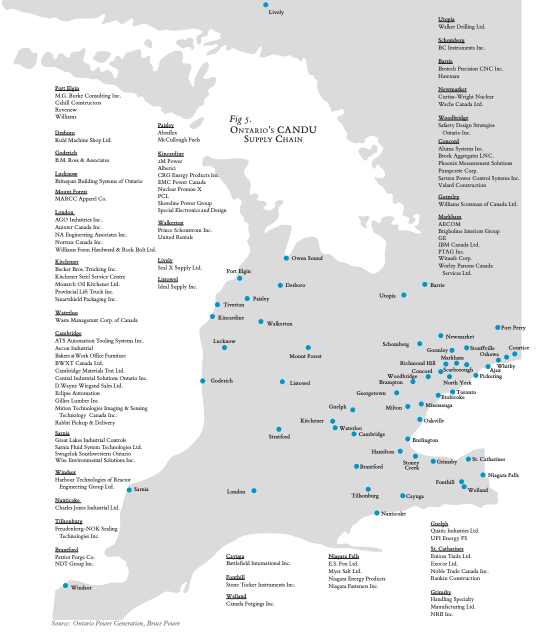
Crucially, the federal government, through AECL, retains ownership of CANDU intellectual property and has established royalty arrangements associated with its commercialization.
Canada therefore stands to benefit from CANDU deployment through engineering employment, manufacturing, research, tax revenues, intellectual-property returns and future reactor exports.
Westinghouse can certainly employ Canadians and purchase Canadian components; however, the United States is deliberately building an AP1000-centred industrial ecosystem, reinforced by South Korean investment, established heavy-component manufacturing capacity and engineering, procurement and construction partnerships.
These relationships will inevitably influence where the most valuable work is performed. Canada risks being relegated largely to pouring concrete and laying rebar while the high-value engineering, intellectual property, advanced manufacturing and strategic decision-making remain elsewhere. We would become a subcontractor in another country’s nuclear renaissance, rather than an architect of our own.
The Return of Industrial Policy
For decades, Canada operated under a post-Cold War globalization consensus that subordinated national technological sovereignty and industrial strategy to the imperatives of global markets. Foreign ownership, the sale of technological assets and the migration of sophisticated manufacturing were treated as ordinary commercial developments.
That era of industrial-policy abdication is ending. Across defence, critical minerals, energy and advanced manufacturing, governments are rediscovering the importance of technological sovereignty. Canada already possesses precisely the kind of sovereign industrial capability that other nations are now spending billions to cultivate.
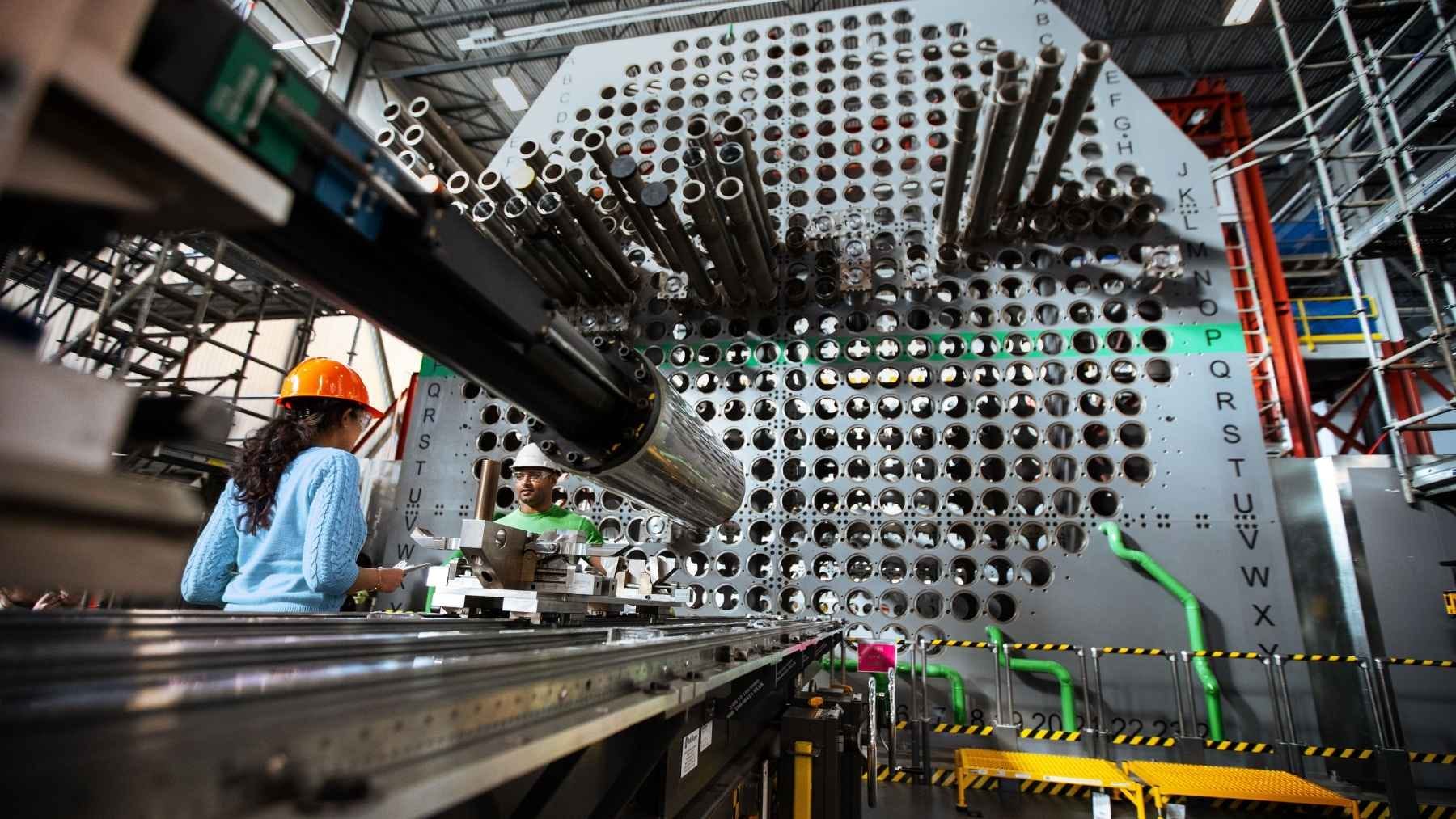
Consider the absurdity of a future Enhanced CANDU 6 competing directly against the AP1000 for an international reactor contract. Ottawa could find itself using Canadian public resources to strengthen an American competitor at the expense of Canada’s own reactor industry.
Cameco’s investment in Westinghouse may prove extraordinarily profitable for its shareholders, which include a globally dispersed group of institutional investors such as American financial giants BlackRock and Vanguard.
But the Canadian government’s responsibilities extend beyond maximizing the returns of any particular corporation, even a Canadian icon like Cameco. It must consider where the intellectual property resides, where the most sophisticated engineering takes place, which research institutions are sustained, and whether today’s procurement decisions strengthen Canada’s capacity to design and export tomorrow’s reactors.
What is to be done?
This is no time for the familiar Canadian reflex of excessive politeness, conflict avoidance and attempts to please everyone. We need something of C.D. Howe’s wartime ambition: the confidence to identify vital national interests, mobilize our industrial capabilities and pursue them unapologetically. Canada built its nuclear industry through precisely that kind of determination and should approach its future with the same resolve.
This means recognizing that Canada’s sovereign reactor technology deserves more than mere parity of treatment with a foreign competitor. That recognition must translate into a coherent national nuclear industrial strategy, one that treats domestic CANDU reactor deployment as the foundation of a competitive export industry.
Provinces should remain free to choose their reactor technologies, but federal financial support and financial backstopping should be reserved for CANDU. Ottawa should accelerate domestic deployment of the Enhanced CANDU 6, perhaps in Saskatchewan, establishing a reference plant to support export bids underway in Turkey, Poland and Southeast Asia.
Finally, Ottawa should establish a Team CANDU consortium bringing together Atkins Realis, utilities, national laboratories, engineering firms and the Canadian supply chain. Independent governance, competitive procurement, and performance-based funding would ensure commercial discipline and shared accountability, building on the integrated project-delivery model that made Ontario’s nuclear refurbishments so successful. Let America champion the AP1000. Canada should champion CANDU.
Like this post if you think Canada should mind its own nuclear business.
CANDU is a terrific asset to Canada and the world. It deserves to be supported into another generation that will keep the option available for decades to come.