

The tired joke that fusion is always twenty years away is being challenged by billions of dollars of private investment and an ecosystem of peppy startups racing into prototyping a dizzying variety of approaches to the age-old problem of how to harness the Sun’s energy on earth.
Fusion was experimentally demonstrated four years before nuclear fission, yet fission moved from laboratory discovery to a self-sustaining chain reaction, weapons, naval propulsion and commercial electricity within roughly two decades.
Almost a century after the first laboratory fusion reactions demonstrated in 1933 by Ernest Lawrence and his Berkley cyclotron team, there is still no fusion power plant.
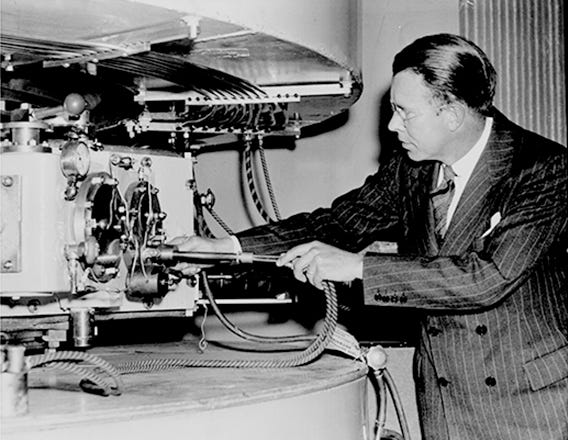
Producing fusion reactions was never particularly difficult. The challenge is to make them self-sustaining, to produce more energy than the machines that produce the challenging conditions for fusion reactions consume and finally to surround them with machinery capable of reliably converting their energy into useful electricity.
The National Ignition Facility’s achievement in December 2022 marked a significant change in that history. Its 192 laser beams delivered just over two megajoules (MJ) to a tiny capsule of deuterium and tritium, producing 8 MJ of energy from fusion. The problem is that the lasers consumed 300 MJ of electricity and perhaps more importantly that the reaction lasted only a few trillionths of a second.
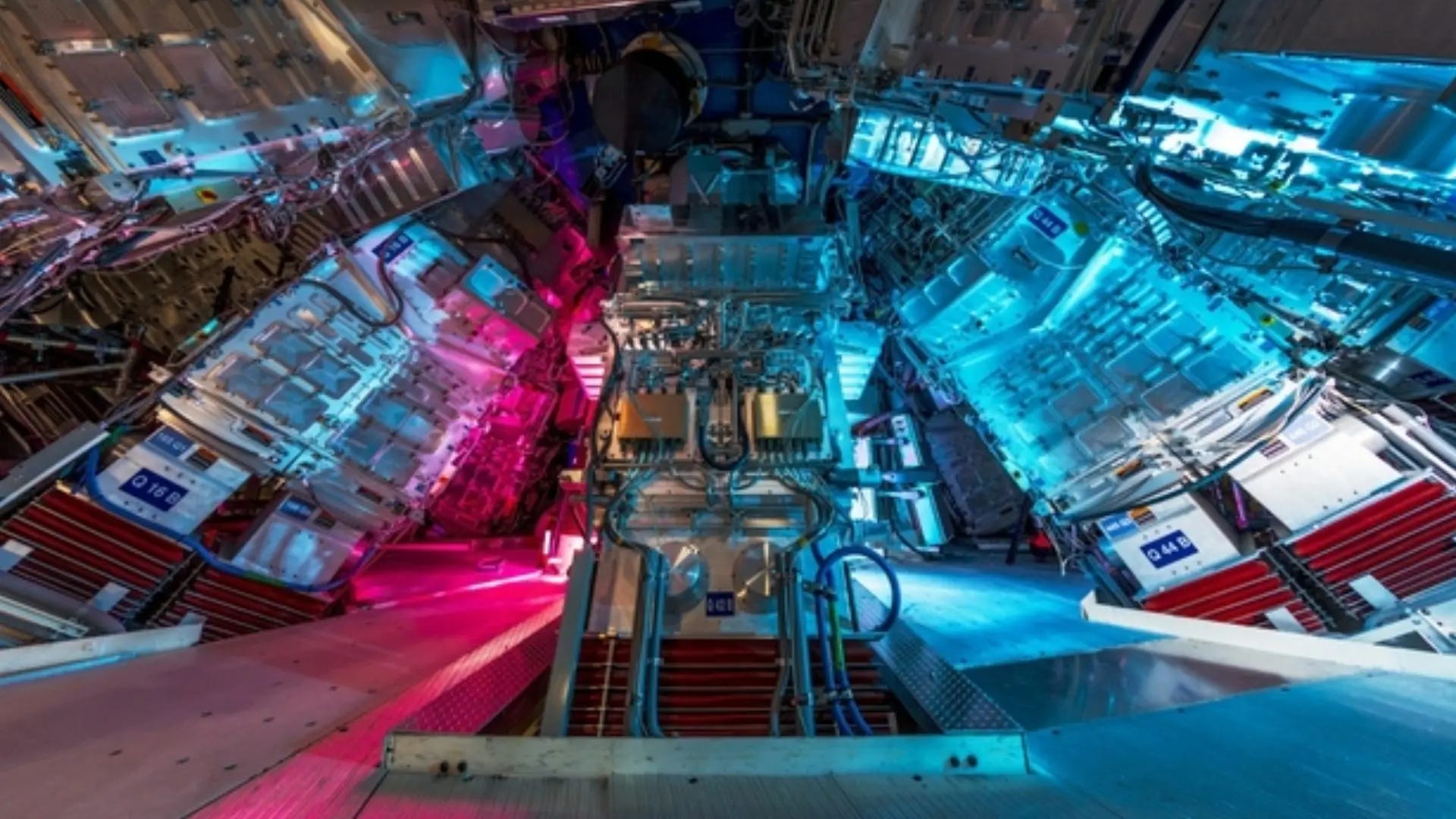
It was nevertheless the first laboratory demonstration of an ignited fusion reaction in which the energy released by fusion products, roughly 20% alpha and 80% neutrons, substantially heated the remaining fuel in order to drive additional fusion in a self-sustaining fashion.
The appropriate historical comparison is Chicago Pile-1, Enrico Fermi’s graphite and uranium assembly beneath the stands of the University of Chicago’s football stadium. Its first criticality in 1942 reached 28 minutes before operators shut it down having demonstrated the world’s first controlled fission chain reaction.
The Chicago Pile produced no useful power and the light bulbs in the building consumed far more electricity than the reactor released as heat, however, Its importance lay in demonstrating that a nuclear fission reaction could sustain itself.
NIF has now done something analogous for inertial fusion, although in a burst lasting picoseconds rather than a leisurely half hour chain reaction.
We are a long way from Fusion’s Shippingport moment.
The following essay is based upon my Decouple Podcast interview with Gerrit Bruhaug, Senior Experimental Target Physicist at Xcimer Energy Corporation.
Really hard fire
The basic idea of fusion is in one respect more intuitive and familiar than fission. After all, physicists in the 1930’s worked out that the Sun is powered by light nuclei releasing energy when combined into heavier ones. Fission, by comparison, resembles witchcraft: arranging the rocks in the correct geometry, introducing a neutron source, and unleashing nuclear reactions.

Fission, however, takes place at room temperature because an uncharged neutron can enter a heavy nucleus without having to overcome its positive electrical charge. The resulting instability and splitting releases additional neutrons which can continue the chain reaction if the geometry of the reactor is adequate.
Fusion requires positively charged nuclei to approach one another closely enough for the strong nuclear force to overcome their electrostatic repulsion. At nuclear distances, the electrical repulsion between just two protons can amount to hundreds of newtons, equivalent to the weight of tens of kilograms, acting between unimaginably small particles.
The fuel must therefore be heated until nuclei vibrate and move at extraordinary speeds. At the same time, the resulting plasma must be held together at sufficient density, and for sufficient duration, to generate and retain more heat internally than it loses to its surroundings.
These requirements are summarized by the Lawson criterion, which combines temperature, density and confinement time.
The Sun achieves fusion due to its immense gravity. Its temperature is very modest by terrestrial fusion standards, the volumetric power density at its core is surprisingly low, less than that of a human body, but gravitational pressure confines a colossal volume of fuel over astronomical time periods while the Sun’s size traps much of the radiation produced in its interior.
A terrestrial reactor must reproduce the necessary combination of heat, pressure and time inside an engineered machine rather than a star.
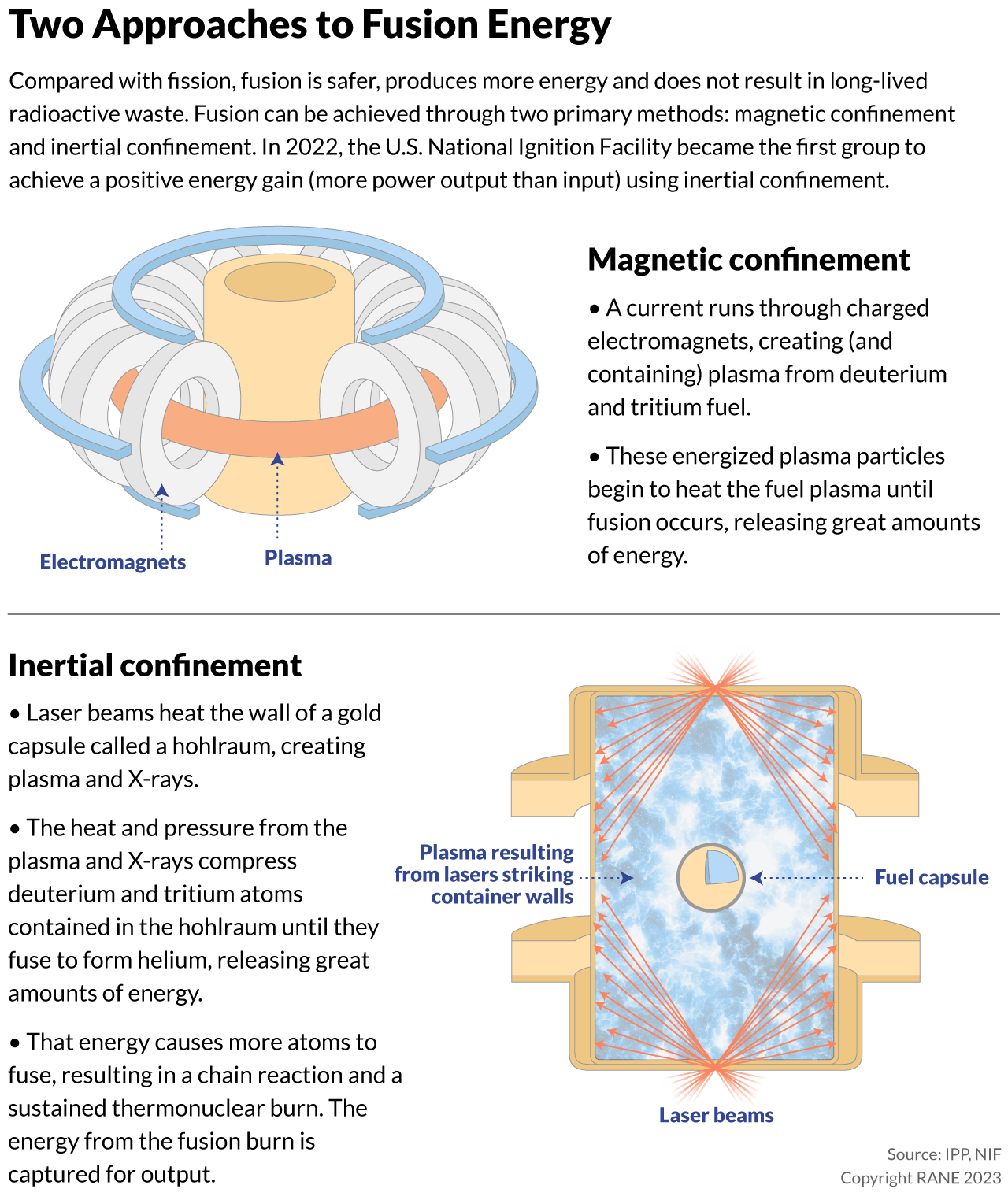
The two leading approaches occupy opposite ends of this trade-off.
Magnetic confinement heats a diffuse plasma to temperatures well beyond those in the solar core and attempts to hold it using powerful magnetic fields.
Inertial confinement compresses a tiny amount of fuel to extreme density for a fraction of a billionth of a second. The first is an attempt to hold an impossibly hot fire in a magnetic bottle; the second is closer to a microscopic internal combustion engine whose laser spark plugs ignite microscopic hydrogen bombs rather than gasoline.
A diamond capsule in a gold oven
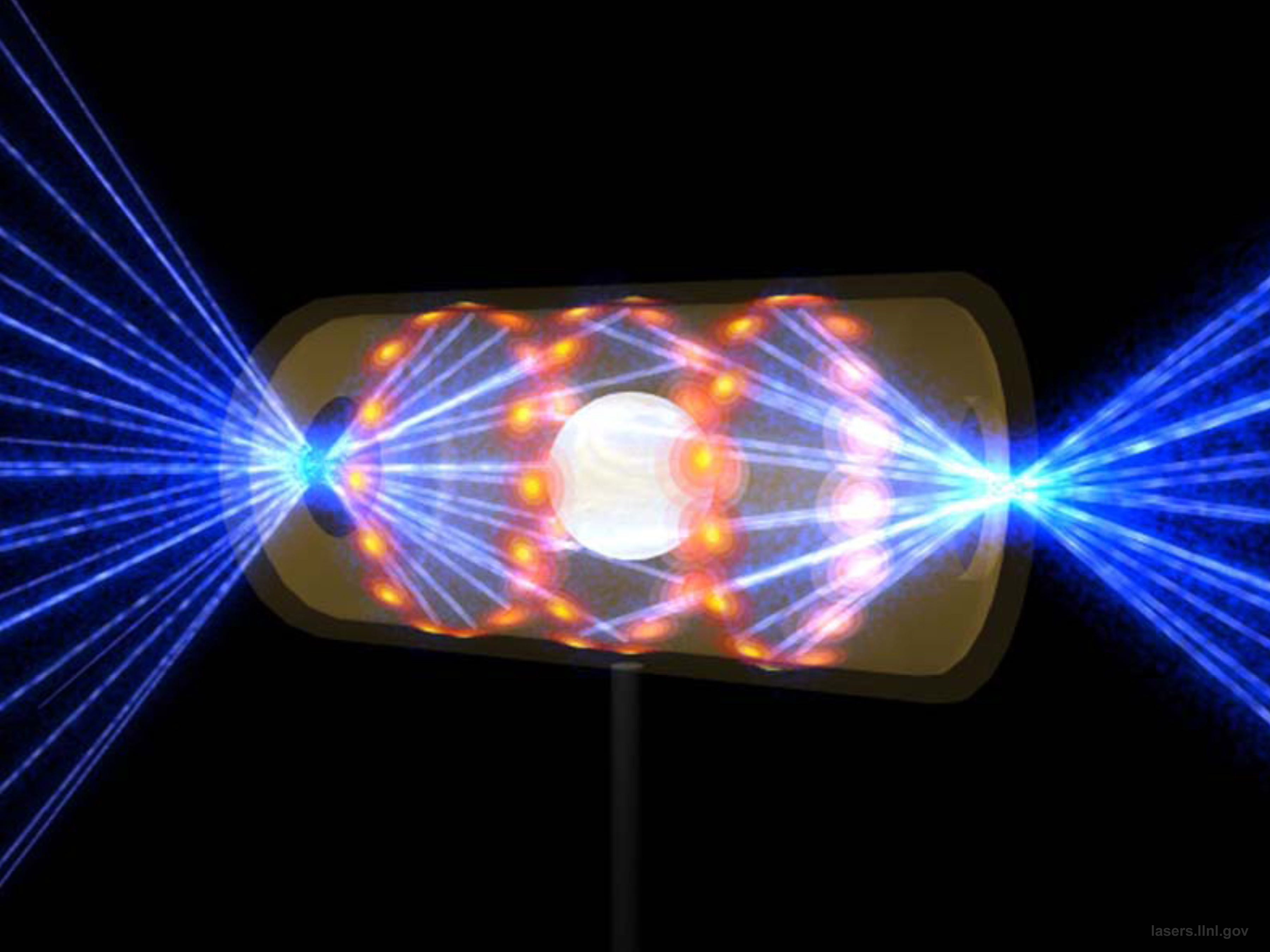
The National Ignition Facility illustrates both how far fusion physics has advanced and yet how much engineering separates an experiment from a viable power plant. At the centre of its target chamber sits a hollow diamond capsule fuel element only a few millimetres across, filled with deuterium and tritium and cooled to approximately 18 kelvin so that the fuel freezes into a precise layer along its interior. The capsule is mounted inside a small gold cylinder known as a hohlraum, the German word for a hollow space.
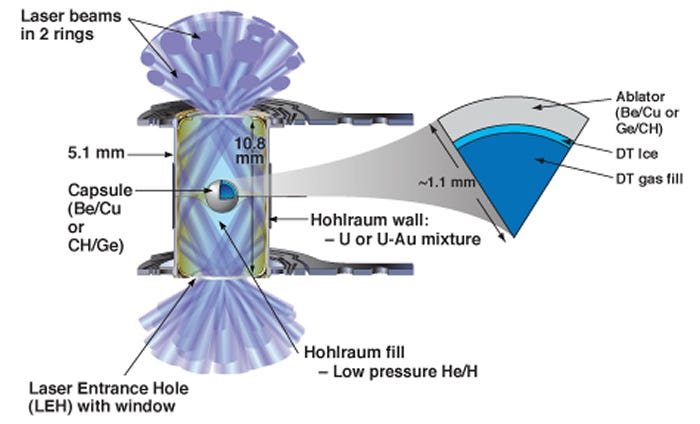
NIF’s lasers do not directly strike and heat the fusion fuel. They enter the hohlraum and hit its gold lined inner wall, converting laser light into X-rays. Those X-rays ablate the outer surface of the diamond capsule, sending material outward and driving the rest of the capsule inward in accordance with Newton’s third law.
The arrangement functions like a rocket firing spherically toward its own centre. If the implosion remains sufficiently symmetrical, the compressed core reaches fusion conditions and a burn wave begins moving into the surrounding fuel.
The capsule’s surface must be manufactured to extraordinary tolerances and the frozen fuel layer must be highly uniform. The target must be positioned precisely at the centre of a large chamber and struck almost simultaneously from many directions. Slight imperfections in the capsule, ice layer, laser pulse or X-ray field can amplify during compression and prevent ignition.
NIF performs approximately 400 individual experimental shots per year using equipment designed around national-security science rather than electricity generation. A power plant would have to produce targets cheaply in large quantities, inject them several times per second, track their position, hit each one accurately, clear the chamber and repeat the process continuously. To run at a 90% capacity factor that would require more than 85 million shots per year.
The scale of each event would also increase. NIF has deliberately been built near the minimum size believed capable of ignition, which leaves it operating close to the threshold where small imperfections can determine success or failure.
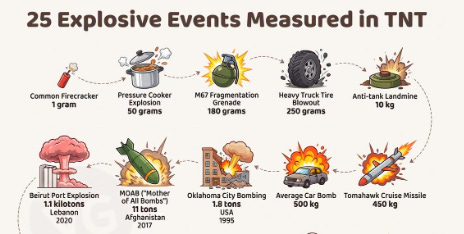
A commercial inertial-fusion machine would probably use larger drivers and targets to obtain far higher gain. Individual pulses could release gigajoules of energy, the equivalent of hundreds of kilograms of TNT, inside the reaction chamber. The chamber would have to absorb the resulting X-ray and neutron pulse without eroding rapidly, while delivering the heat into a working fluid and remaining clear enough for the next target to arrive.
Magnetic fusion avoids the need to manufacture and detonate precision targets, but substitutes a different group of problems. Its plasma must remain stable despite a range of instabilities that cause heat and particles to escape confinement. Helium produced by the fusion reaction must be removed while fresh fuel is added.
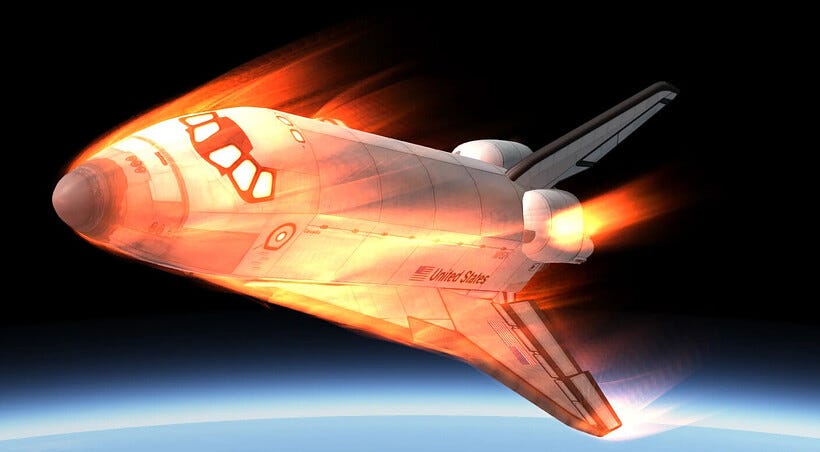
The exhaust is directed toward a divertor whose surfaces can experience heat fluxes comparable to those encountered during spacecraft re-entry. Superconducting magnets must operate near absolute zero temperatures close enough to confine the plasma while being protected from high-energy neutrons that damage materials and degrade electrical insulation.
Fusion has taken so long because the reaction occurs under conditions that destroy the machine producing it. Gas turbines waited for alloys, cooling passages and manufacturing precision capable of allowing turbine blades to operate in gas hotter than the metal’s melting point.
Fusion faces an analogous materials challenge, but with plasma temperatures measured in millions of degrees, intense neutron bombardment and components that may have to be replaced remotely from inside an neutron activated radioactive structure.
Breakeven’s moving boundary
The word “breakeven” obscures these distinctions by applying the same label to several different development milestones.
The lowest threshold is sometimes called scientific breakeven: the fusion energy released equals the energy delivered directly to the target or plasma. This is a deliberately narrow accounting boundary.
Ignition describes the physical character of the reaction rather than the overall energy balance. In deuterium-tritium fusion, the reaction produces a helium nucleus, or alpha particle, and a high-energy neutron. The charged alpha remains within the fuel long enough to deposit its energy, raising the temperature and causing more fusion. When that internal heating becomes sufficient to sustain or propagate the burn, the fuel has ignited. Scientific breakeven and ignition are related, but one is an accounting threshold and the other describes the onset of substantial self-propogation of the fusion reaction.
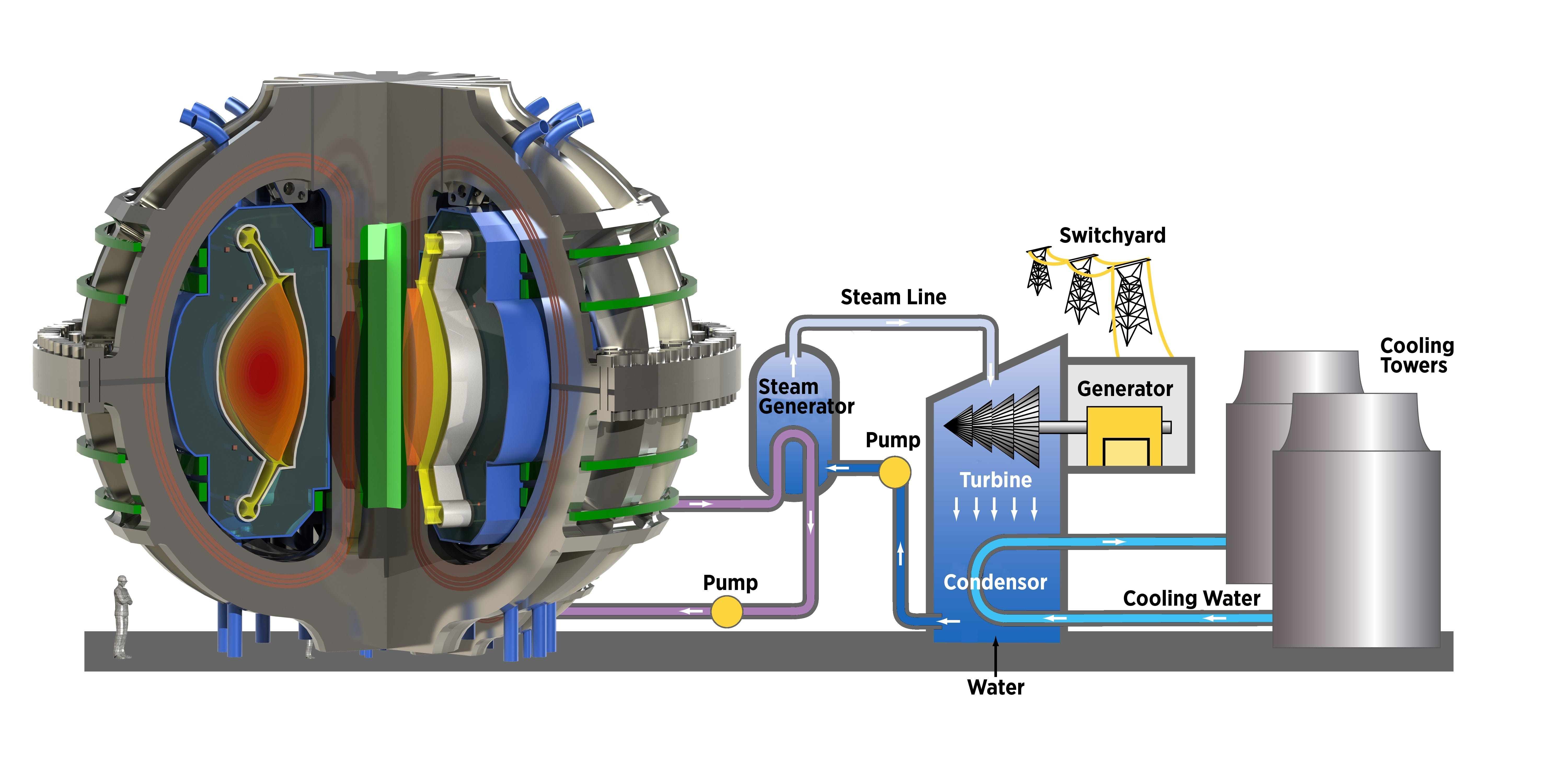
Engineering breakeven expands the boundary to the whole facility. The plant must produce enough usable energy to operate its plasma heaters or lasers, superconducting magnets, cryogenic systems, vacuum pumps, cooling circuits, fuel-processing equipment and other auxiliary loads. It must then overcome the losses involved in converting heat into electricity through a rankine or brayton cycle. NIF is nowhere near this threshold. Magnetic confinement has not yet achieved an ignited plasma, although several proposed machines intend to move directly toward facilities with much more integrated engineering objectives.
Commercial breakeven lies further away again. A machine could produce more electricity than it consumed while remaining economically useless because its targets, magnets or internal components were too expensive, its maintenance outages too long or its capital cost too high.
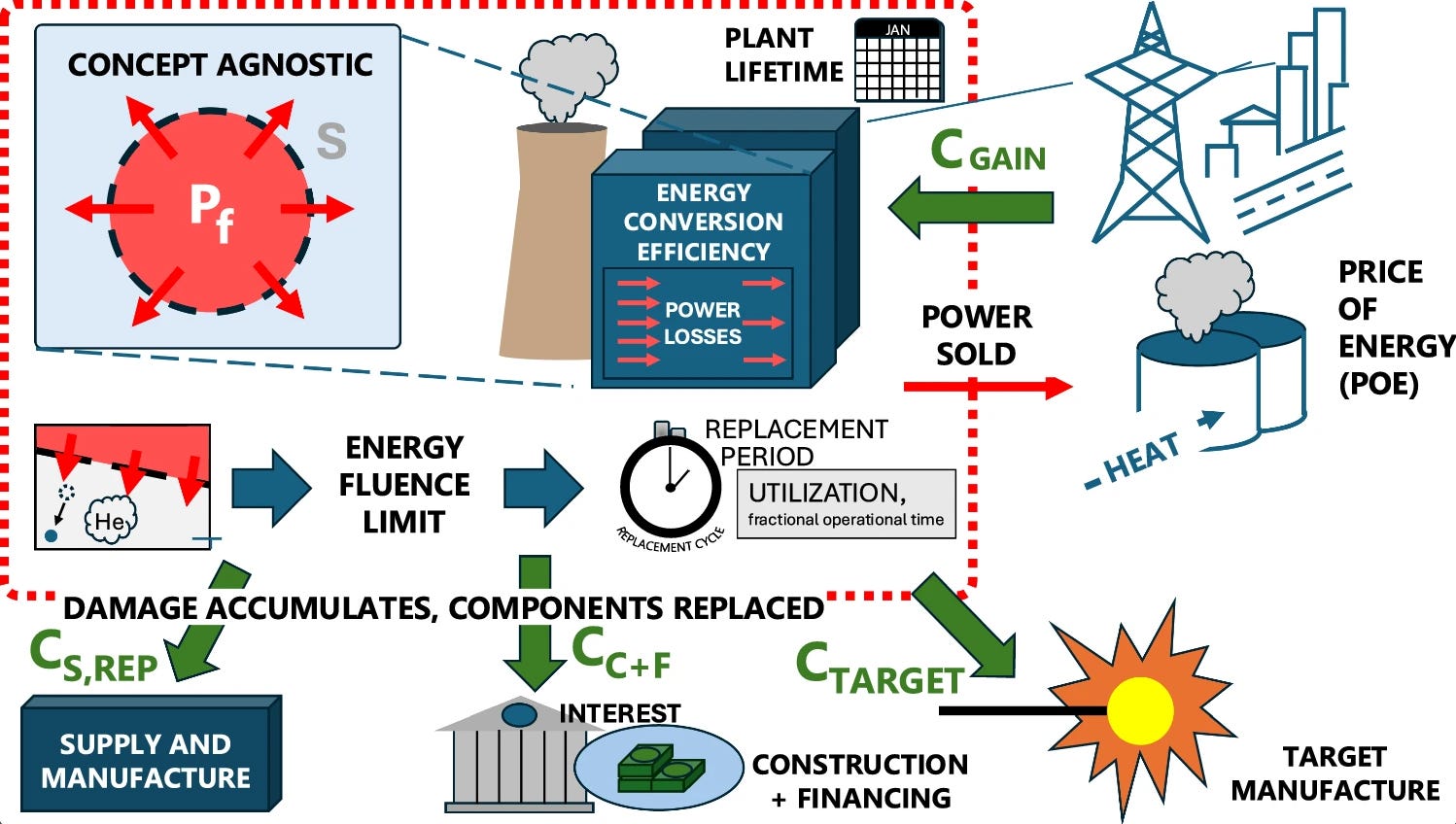
A commercial plant must be sufficiently profitable, while competing against mature, established forms of power generation, to recover its construction and financing costs while providing reliable output over decades. It is the difference between an engine that turns over on a test stand and one that can be manufactured, certified, maintained and operated profitably across a fleet.
Fusion has therefore remained early in the technology-development cycle. It has demonstrated individual fusion reactions for many decades, achieved target-level gain and ignition in inertial confinement, but has not yet achieved engineering breakeven, closed its fuel cycle or operated an integrated pilot plant.
The reactor as fuel factory
The fuel cycle is a particularly important example of the distance between the physics experiment and the power plant. Fusion is commonly described as burning hydrogen extracted from water, creating an impression of almost effortless fuel abundance.
Deuterium is indeed present in seawater in a 1:6420 ratio and there are a variety of commercial processes by which to concentrate it. The most favourable fusion reaction available on Earth, however, combines deuterium with tritium, a very rare radioactive isotope of hydrogen with a half-life of roughly twelve years.
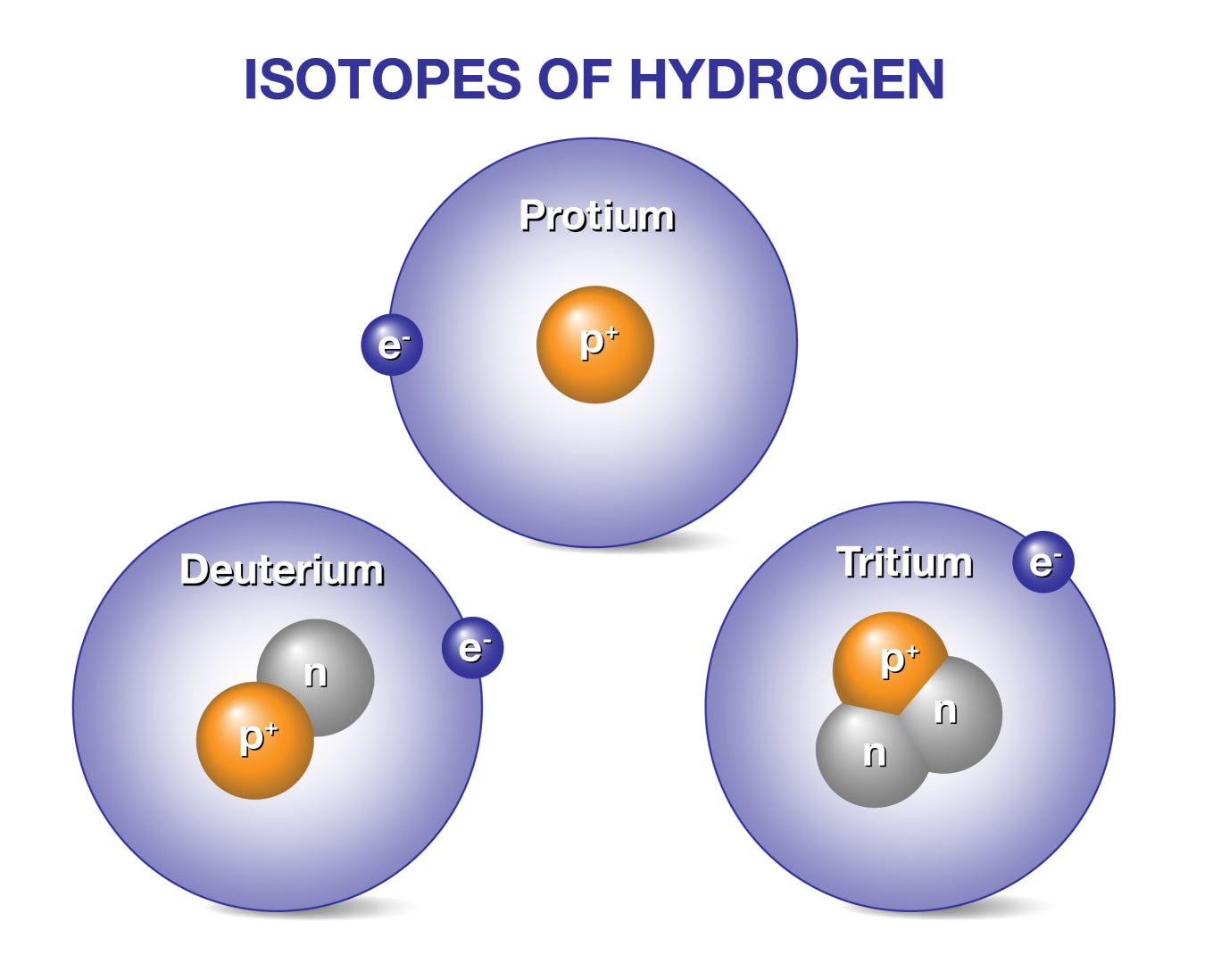
Tritium exists naturally only in trace quantities. Heavy-water reactors, including Canada’s CANDU fleet, produce it as a by-product and could provide startup inventories for early fusion machines, but not enough to fuel a large global industry.
Indeed it is estimated that if the world’s entire existing heavy water reactor tritium production were entirely diverted to fusion it could support about 20MW of power.
Therefore, a deuterium-tritium reactor must ultimately breed its own tritium by capturing fusion neutrons in lithium surrounding the reaction chamber. The newly created tritium must then be extracted from the blanket, separated chemically, purified and fed back into the machine.
This turns the breeding blanket into one of the reactor’s most heavily burdened components. It must capture neutrons efficiently enough to replace every tritium atom consumed after allowing for leakage, processing losses and radioactive decay.
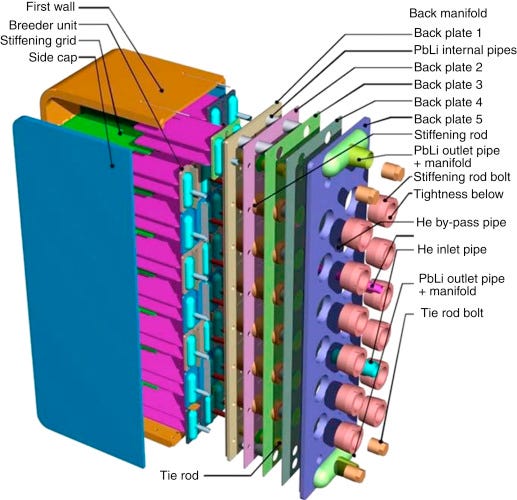
It also must absorb fusion heat, protect magnets and other equipment from radiation, retain structural integrity under neutron bombardment and permit the tritium to be removed continuously. Tritium itself readily permeates metals and becomes trapped in components, making the total inventory and processing time important constraints on how rapidly a fleet could expand.
Unlike fission where fissile uranium is abundant and breeder reactors are a long term hedge against eventual depletion, fusion depends on a breeder cycle. Compared to other forms of fusion reactions like deuterium-deuterium, the deuterium-tritium reaction is comparatively easy to ignite, but it transfers complexity into the fuel cycle.
This means that a practical fusion plant must simultaneously be a plasma device, neutron source, heat engine, lithium breeder and radioactive hydrogen processing facility.
From early confidence to engineering reality
The slow timeline was not anticipated by fusion’s pioneers. The rapid progress from fission discovery through the Manhattan Project encouraged a belief that controlled fusion would follow on a similar schedule. Early magnetic programs were initially classified because governments expected the technology to arrive quickly enough to carry strategic value. Once researchers began encountering the depth of plasma instabilities, secrecy became less useful than international collaboration.
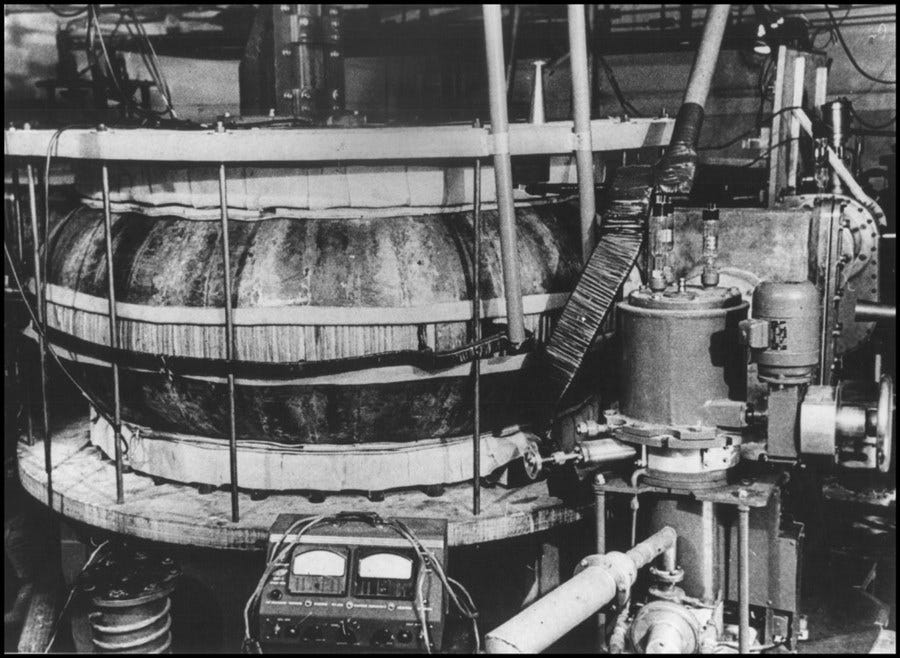
Laser fusion passed through its own early period of exuberance. KMS Fusion, founded in 1969, was the first private fusion startup and emerged shortly after the first major proposals for laser-driven inertial confinement. Its backers believed the approach might achieve useful fusion within a decade and overtake the magnetic programs that were already struggling with plasma confinement.
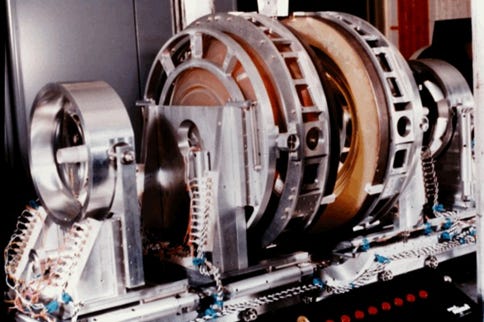
The history is strikingly modern: private capital, ambitious timelines and the expectation that a novel technical approach could leapfrog slow government laboratories. The principal difference is that this occurred more than half a century ago.
Those researchers were not necessarily dishonest about the promise of their work. They were operating before experiments had exposed the full set of coupled constraints. Producing a compressed plasma did not by itself solve implosion symmetry, target fabrication, driver efficiency, chamber survival, tritium breeding or repetitive operation. Each advance revealed the next system that had to be developed, tested and integrated.
The present fusion boom rests on a stronger scientific and industrial foundation than its predecessors. Ignition has been demonstrated. High-temperature superconductors permit stronger magnetic fields. Lasers, pulsed-power systems, simulation and precision manufacturing have advanced substantially.
Private companies are testing a much wider range of approaches with levels of capital unavailable to earlier programs. The field is no longer asking whether controlled fusion reactions are possible, but which machine architecture can turn them into an energy system.
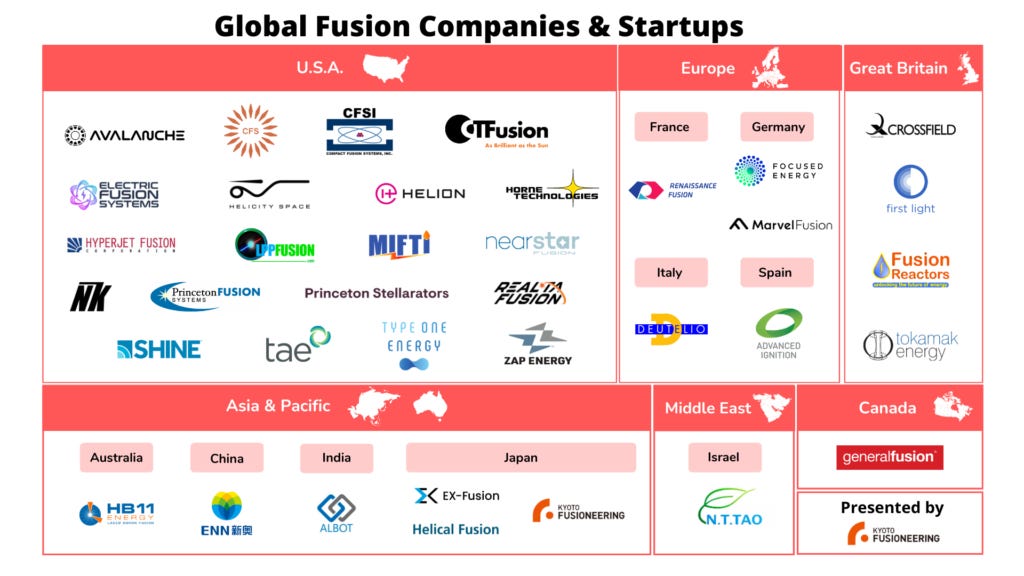
This remains, however, a long-term industrial wager rather than a near-term electricity solution.
The engineering work to get to commercial power production, much like space programs, will produce valuable secondary capabilities in magnets, lasers, materials, computation and high-energy-density physics. These benefits justify serious public and private investment even if the first plants are expensive and arrive later than their developers predict.
What fusion should not provide is an excuse to neglect existing sources of firm, low-carbon electricity. Germany’s willingness to fund fusion research while dismantling operating fission reactors is a bizarre paradox. The prospect of eventually burning hydrogen isotopes competitively does not compensate for destroying one of the world’s best operating nuclear fleets.
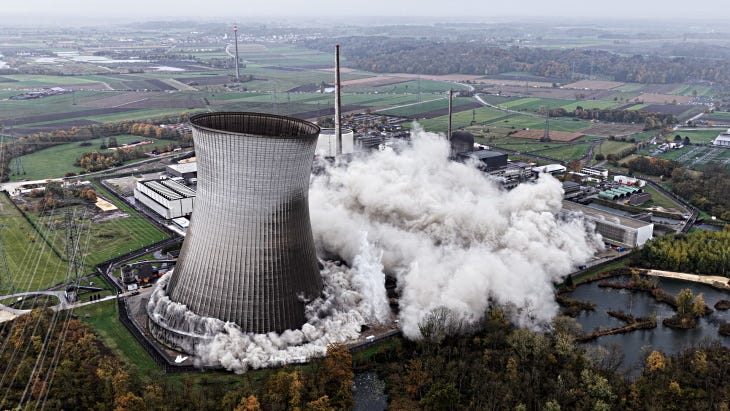
NIF’s ignition result deserves celebration but also should generate humility. A decisive physics threshold has been crossed in inertial confinement. The work now moves outward from the fuel capsule into the chamber walls, breeding blanket, coolant system, turbine hall, maintenance program and supply chain.
That may well take twenty more years.
Thanks, Chris, for this great article. I worked in or near fusion for 40 years, both magnetic and inertial, but mostly the latter. Your article is among the best summaries I have seen.
I don't see fusion ever working, but I hope I'm wrong.