

“Yeah now, well, the thing about the old days... they the old days.”
Slim Charles, The Wire, Season 4, Episode 3.
British Columbia’s centre-left premier, David Eby, a former Vancouver human-rights lawyer, has just been driven from office by his Conservative opponent, Lorne Doerkson, a former rodeo cowboy from the resource-rich interior of Canada’s westernmost province.
The extraordinary reversal of fortunes offers a particularly vivid window onto one dimension of the political realignment sweeping Western democracies: the growing estrangement between the traditional parties of industrial labour and the workers they once represented, as the values of university-educated metropolitan progressives gain influence within the left and blue-collar voters increasingly make common cause with the business interests of the populist right.

The election itself was an astonishing act of political self-immolation. With two years remaining in his mandate, Eby called a snap election hoping to exploit the spectacular collapse of his Conservative opposition. The party had come within three seats of defeating Eby’s centre-left New Democratic Party (NDP) in 2024, but had since descended into bitter infighting. Its leader, John Rustad, had been forced out, his successor Kerry-Lynne Findlay had resigned after just 113 days, and defections and expulsions had reduced its parliamentary ranks to barely half their former strength. Eby saw an opportunity to crush a divided opposition and secure another four years in power.
Instead, the Conservatives rallied behind Doerkson, who led the party to a crushing victory just five weeks later. The Conservatives won or led in 64 of the province’s 93 electoral districts, reducing the NDP to 27 seats and prompting Eby’s resignation.
Eby’s defeat reflected frustrations extending well beyond industrial policy, from the cost of living and housing to healthcare and public safety. But Doerkson’s victory speech revealed something more enduring than the immediate grievances of an election campaign: a changing conception of which party speaks for the people who produce British Columbia’s wealth.
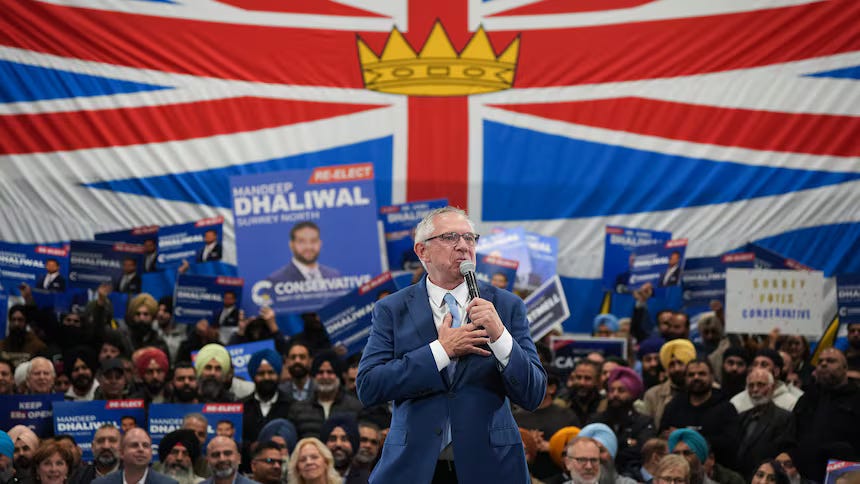
“It happens in Kitimat, where B.C. natural gas leaves to power the world. It happens in Fort St. John, where the gas comes out of the ground. In Prince George, Quesnel, and Williams Lake, where a mill job should still pay a family nicely.” He continued his tour through the orchards of the Okanagan, the fishing fleets of Vancouver Island and the century-old smelter in Trail, before arriving in Surrey and, finally, Vancouver, “where the ideas and the head offices are.”
The ordering was evocative. Vancouver, the province’s financial and cultural capital, came last. This political geography had an almost Hunger Games quality, with the prosperous metropolitan Capitol resting on the productive capacity of the surrounding districts. Yet Doerkson’s account went beyond the familiar populist denunciation of urban elites. He described an integrated industrial economy in which a mill running in Quesnel supports a trucker working in Surrey, while a mine opening in the north keeps a port busy in Delta.
It was a celebration of productive labour that might once have been delivered by a socialist trade-union leader. Instead, it came from the newly victorious leader of British Columbia’s Conservative Party.
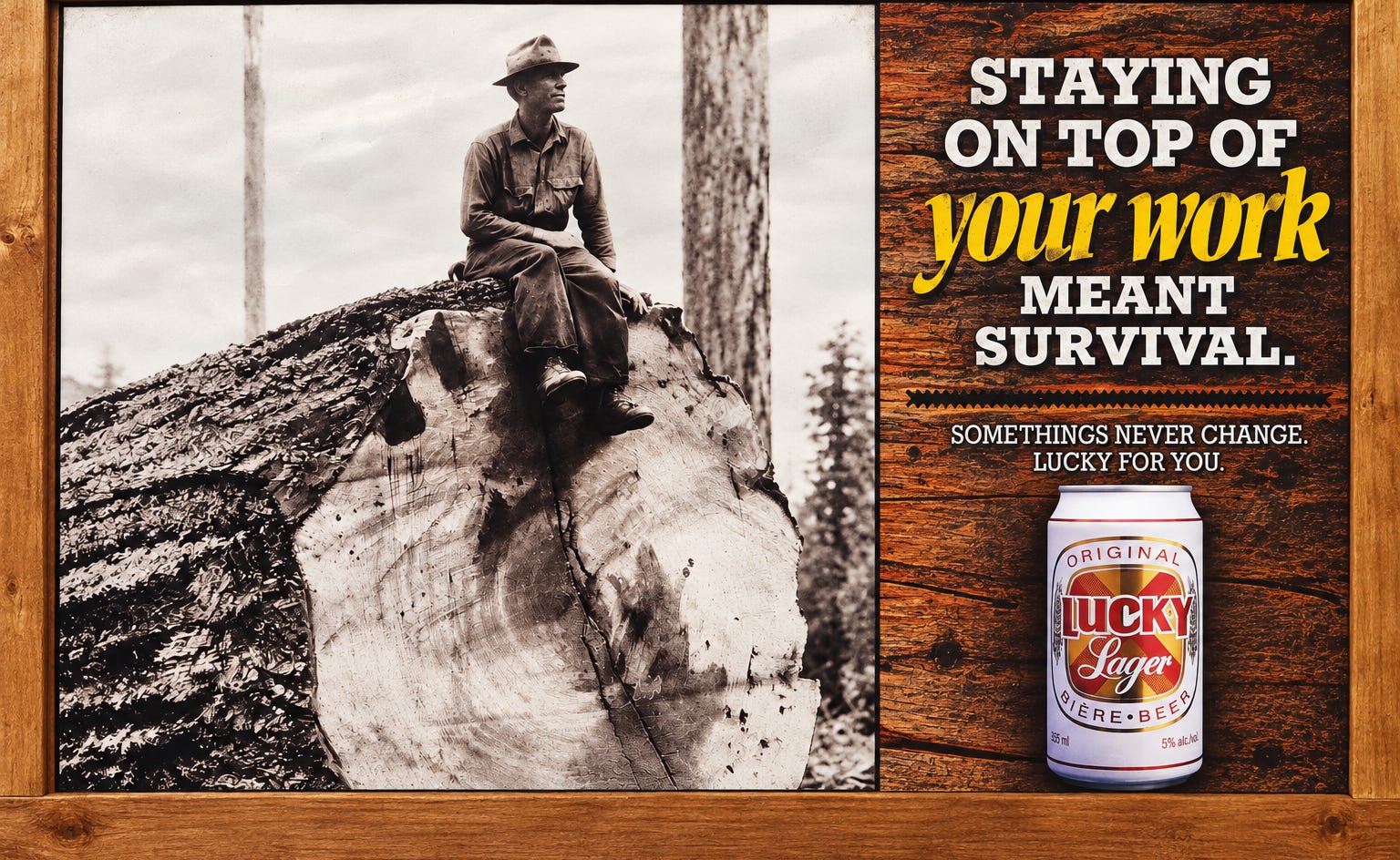
French economist Thomas Piketty offers a useful framework for understanding the deeper political realignment reflected in Doerkson's rhetoric. His account of the emergence of the Brahmin left and merchant right describes a profound transformation in the electoral coalitions of Western democracies over the past half-century.
Historically, social-democratic parties drew disproportionate support from lower-income, less-educated voters, particularly industrial workers, while conservatives more reliably represented business owners and a more compact professional class. Today, educational attainment has become a defining predictor of political allegiance, with a seemingly ever-growing flux of university graduates gravitating toward the left while economic elites remain more closely aligned with the right.
The resulting Brahmin left, named for India’s traditional priestly caste, draws heavily from the professional-managerial class, whose cultural authority derives from educational credentials rather than wealth. Its preoccupation with gender and racial identity, politically correct language, and progressive social attitudes, often grouped under the label wokeness, can seem distant from industrial workers' material concerns and cultural sensibilities. Meanwhile, the merchant right, historically the political adversary of organized labour, has found growing common cause with blue-collar voters alienated by the divergent priorities of the contemporary left.
British Columbia provides fertile ground for this realignment. Its resource economy sustains communities scattered across an enormous territory, while much of its political, administrative and cultural power is concentrated in Vancouver and Victoria. The environmentalist priorities of a metropolitan professional can sit uneasily alongside the economic interests of a forestry worker whose livelihood depends upon continued access to timber.
For decades, the BC NDP accommodated these competing constituencies within a broad social-democratic coalition. John Horgan, premier from 2017 to 2022, was raised by a single mother in a working-class household and worked in a pulp mill before entering politics.
He represented an older tradition of labour-oriented social democracy, comfortable with the industrial economy that sustained the province. Though a vocal opponent of Christy Clark’s Site C hydroelectric dam, he ultimately authorized its completion on economic grounds. His government also championed the massive LNG Canada project despite fierce environmental opposition. The conflict over old-growth logging, culminating in the Fairy Creek protests of 2021, further exposed tensions between the NDP’s industrial union constituency and its increasingly influential environmental wing.
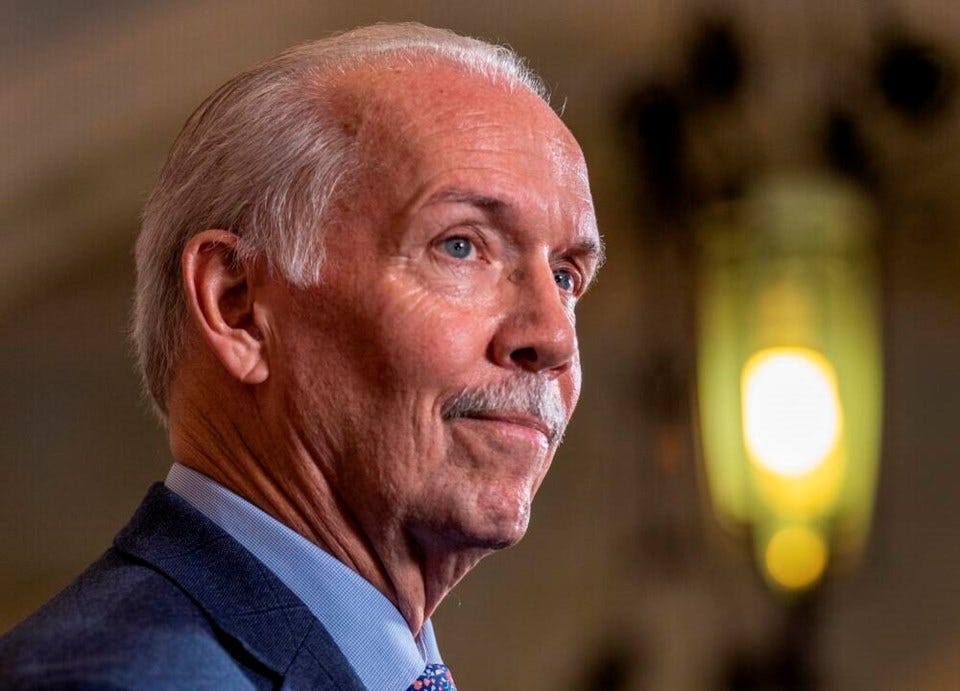
Horgan was prepared to disappoint environmentalists in defence of industrial development. His successor inherited both the contradictions of the NDP’s increasingly divided coalition and the benefits of Horgan’s willingness to confront them. With Site C and LNG Canada already committed, Eby could preside over some of the province’s largest industrial investments without fighting the political battles that made them possible.
A former civil-liberties lawyer and housing advocate from Vancouver’s Downtown Eastside, Eby was more closely identified with the urban progressive constituencies that had become increasingly influential within the NDP. His government approved major LNG projects, and amid Trump’s trade-war maneuvers, Eby advanced mining investment and sought to speed up industrial permitting. However, he struggled to shake the perception that the party’s sympathies lay elsewhere.
Across resource-dependent communities, mill closures, regulatory uncertainty and disputes over Indigenous land rights and resource development reinforced a sense of estrangement from the political establishment in Victoria. The grievances were not merely cultural, nor could they all be laid at the government’s feet. But Doerkson saw an opportunity to give them a common political voice, celebrating the miners, loggers, gas workers, and other producers who had once occupied a more central place in social democracy’s conception of the working class.
Eby tried to broker compromises between his party’s divided constituencies, but the educational and cultural realignment Piketty describes makes the NDP’s political identity increasingly difficult to reconcile with its industrial heritage.
A mill worker in Quesnel and an environmental activist in Vancouver might share a commitment to “a living wage,” but what happens when the activist’s vision of environmental justice demands restrictions that threaten the mill providing the worker’s livelihood?
Doerkson offered a different conception of prosperity, one that sought to unite resource-industry employers, business owners and workers around their shared dependence on productive investment. Their success in Metro Vancouver also suggests the appeal extended beyond the resource-producing Interior to suburban communities concerned with affordability, employment, and public order.
This new Conservative coalition contains contradictions, but the growing political contest over the legitimacy of resource extraction has made them easier to reconcile. Historically, capital and labour fought over the distribution of industrial profits, with social democrats championing higher wages, stronger unions and improved working conditions.
However, when environmental restrictions threaten an industry’s continued operation, employers and employees can find themselves on the same side of the barricades. A logging company and its workers may disagree over profit sharing, but they share a powerful interest in keeping the mill running.
The merchant right need not promise workers a larger share of the pie when it can present itself as the defender of the bakery itself.
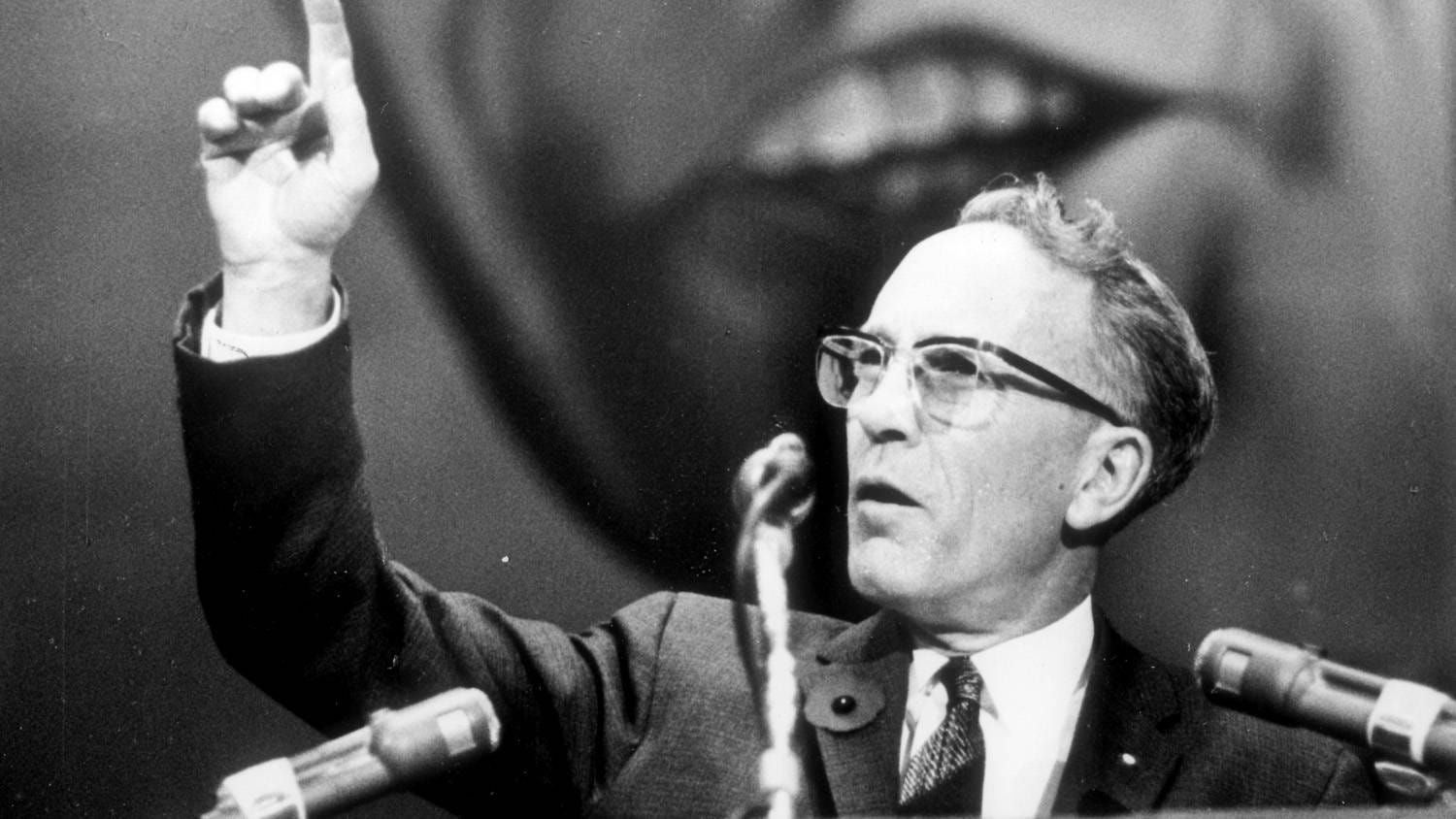
At the founding convention of the New Democratic Party in 1961, Tommy Douglas offered a simple statement of the movement’s purpose: “Our first task, therefore, is to show that we are united behind a program which will usher in a new day for those who produce the wealth of this country.”
Sixty-five years later, the question of who speaks for those producers has acquired a rather different political answer.
Like this post if you think the political parties have been switching barstools.
Well said.
I'm finally starting to understand how the working class has increasingly becoming supportive of conservative parties