

“Four-score years may not be more than a wink in eternity but a man who has sown himself for eighty years is the foodstuff for all who harvest his life.”
The Book of Mirdad by Mikhail Naimy
I have another life. Outside of energy journalism and advocacy I am an ER doctor. The other night, I had an interaction with an elderly patient that unexpectedly brought my two lives together. He was in his late 70s. He’d lost his house, was living out of his car and was drinking more than he should. He was in rough shape.
I asked him what he used to do for a living.
“Draftsman at Ontario Hydro.”
I probed further. Turns out his career included drawing up blueprints for every one of Ontario’s nuclear power plants. I told him I was interested in nuclear power; he understandably but rather depressingly interpreted “interested” as “anti”.
“Yeah, a lot of people don’t like it,” he said.
I clarified my position, thanking him for being part of the great generation who’d helped to build the infrastructure that underpins our health and prosperity to this day.
He was taken aback. It took a few seconds but his eyes lit up with pride and a sense of rediscovered dignity that shone through his matted hair and unwashed clothes as he lay vulnerable on that emergency room stretcher.
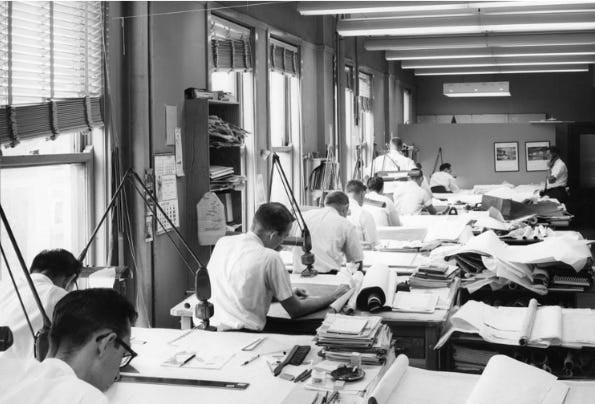
Before Computer Aided Design (CAD) arrived in the 1980s, draftsmen stood at drawing boards and used pencils, compasses, rulers, and protractors to translate engineering intent into buildable reality. They specified not just what each system needed to do but exactly where every pipe run, cable tray and penetration would sit in three-dimensional space, how it would connect to everything around it, what clearances it needed and how a tradesman standing in front of it with tools in hand would actually build it.
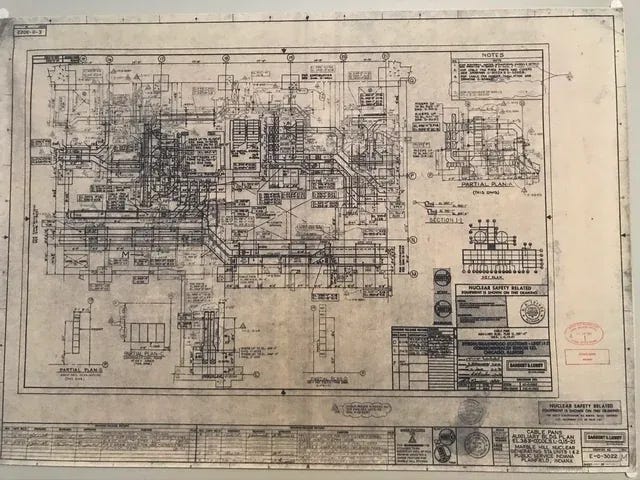
The drawings conducted a symphony of mechanical, electrical, and civil disciplines. If two systems conflicted, someone who understood both the design intent and the physical reality had to catch it at the drawing board before it became an expensive problem in the field.
The 16 reactors that now supply roughly half of Ontario’s electricity were built from hundreds of thousands of such drawings.
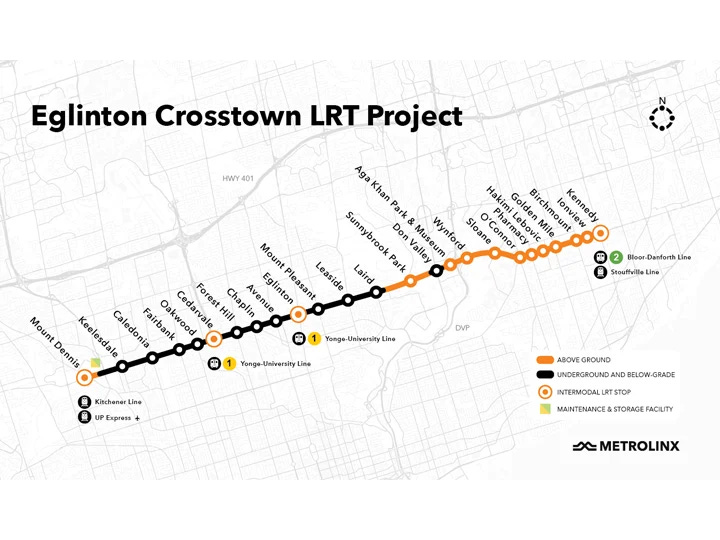
My generation struggles to build even modest infrastructure projects: The Toronto Eglinton Crosstown Light Rail Project began in 2011 and only went into service in February of this year. A series of technical problems and associated cost overruns meant that a 19-kilometre light rail line took 15 years to open. We seem to have forgotten how to build the infrastructure we need to renew and grow our cities.
In contrast our parents’ and grandparents’ generations performed miracles. Between 1966 and 1993 Ontario’s power demand nearly tripled, from 51 TWh to 135 TWh. Engineers and tradespeople managed to keep up by constructing 20 large CANDU reactors between Pickering, Darlington and Bruce nuclear generating stations, all in just 27 years. In the current moment we look to China with a mixture of awe and unease as they build highways, bridges and power plants at what feels like lightning speed. We once moved at that pace.
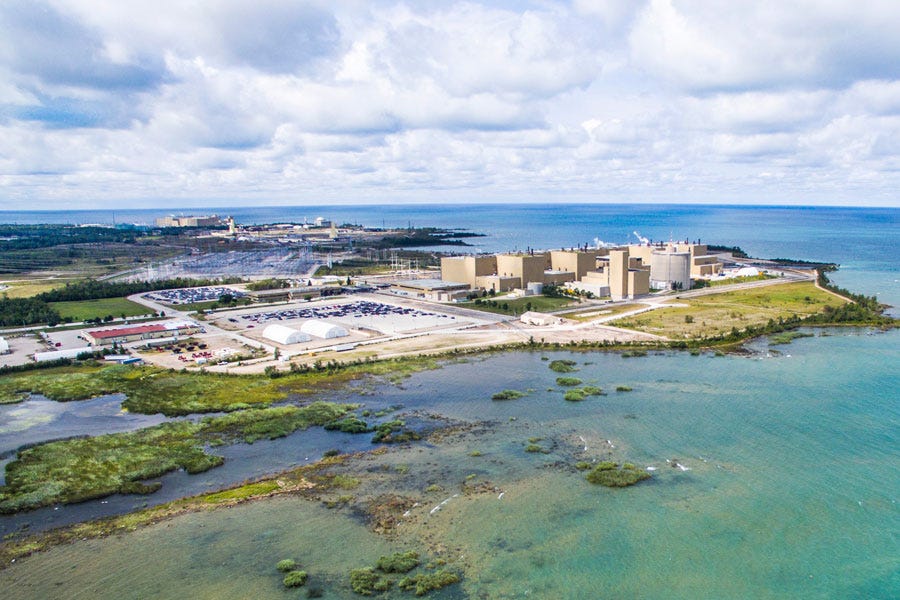
To visit the nuclear stations drafted by my patient, as I have done over the last 8 years, is to be struck both by their monumental size and the sheer volume of electricity they generate. Today these reactors produce power sufficient for 10 million households, all from four buildings the size of modest shopping malls. This energy base has underpinned our productive economy, enabling booming auto and steel sectors and the manufacturing base of Canada’s most industrialized province.
In that ER hallway, speaking about more than just his worn down body, I saw reflected in this man’s aging eyes the harsh hospital lights powered mostly by nuclear energy: literally, the fruits of his labour.
Our society seems finally to have reached a political consensus that we should not be tearing down what my friend and energy historian Emmet Penney refers to as our industrial cathedrals built for us by this great generation: edifices like our nuclear power plants at Pickering, Darlington and Bruce.
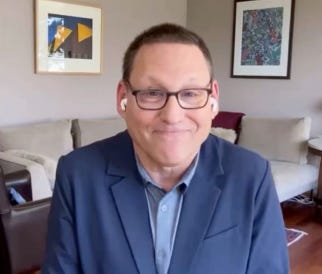
The champions of that kind of vandalism have been decisively defeated. Just this week Avi Lewis, the newly crowned Leader of Canada’s left wing New Democratic Party, once the historic party of labour representing the interests of workers like my patient, now the party of urban elites, renounced his previously firmly held position favouring nuclear phaseout.
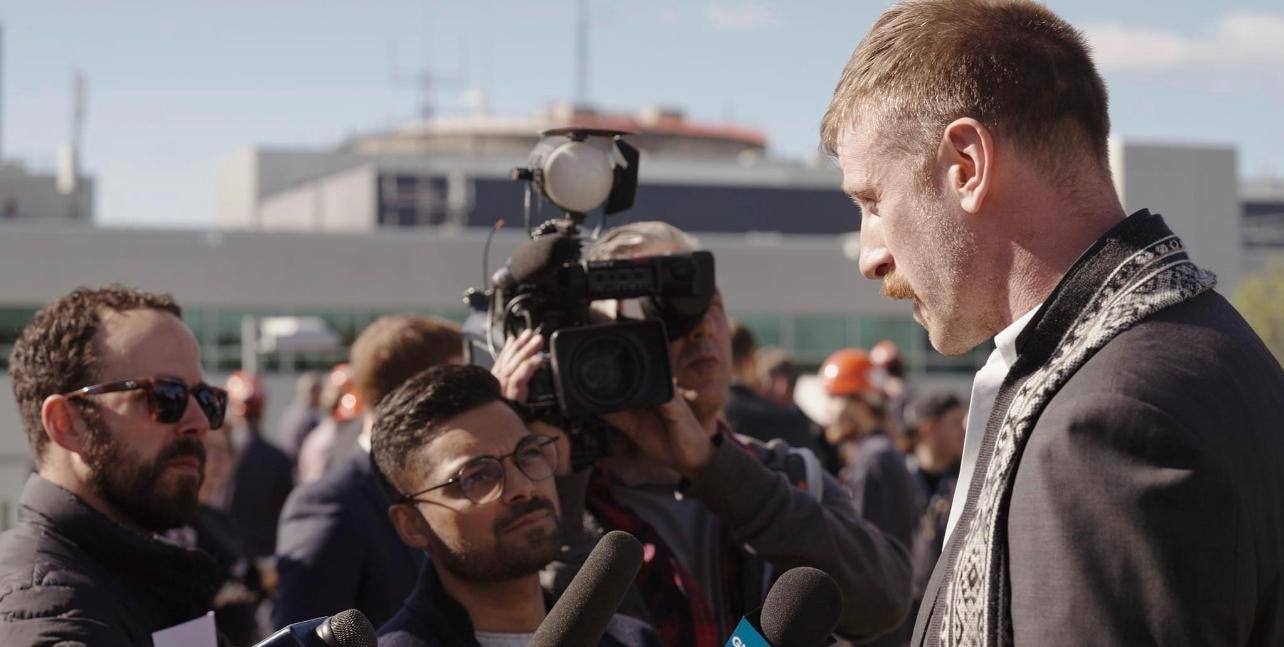
I’m glad to have played my role in these battles as co-founder and President of Canadians for Nuclear Energy. From 2020-2024 against what we were told were impossible odds, we led the successful campaign to save and refurbish the 2000 MW Pickering B nuclear station, which was drafted by my patient and had been slated for decommissioning in 2025. The result? The preservation of 7200 direct and indirect jobs and 15% of Ontario’s electricity production for another 30 years. The power plant will last at least 80 years and outlive the now grey haired environmentalists who made it their live’s work to tear it down.
It was an honour to provide clinical care for this man and satisfying that in my strange moonlighting career as a nuclear energy advocate I had also cared for and preserved his legacy.
As I grow into my mid forties and spend the best parts of my days trying to instill the values and lessons I’ve gathered into my 7 year-old son, I have become more sentimental when thinking of my elders and their contributions. Beyond displays of gratitude we owe them something deeper.
It starts with ensuring that our children and grandchildren understand and steward their inheritance, never take it for granted and draw inspiration to pick up their tools to leave their mark, continuing our never ending struggle against entropy and decay, to build healthy, wealthy societies worthy of our ancestors’ toil.
Like this post and share it, consider it a blueprint for intergenerational gratitude.
Very touching essay, Chris. When I saw the phrase "industrial cathedrals" in the last paragraph, I recognized the language used by Emmet Penney in his headline essay "A Republic of Industrial Cathedrals." I went back to reread that piece, and lo and behold, I find you're mentioned in it. We owe a great debt to people like the broken man you tended to in the E.R. I pray that we, and generations to follow, prove worthy stewards of the industrial commons bequeathed to us.
You are a very good person Mr. Keefer. Je vous salue de Montréal.