

“When I left you, I was but the learner; now I am the master.”
Darth Vader
The United States is turning to an unlikely partner to help rescue its nuclear renaissance: South Korea, a country that only half a century ago depended on American technology and expertise to build its first nuclear power plants.
Under a recently announced $120 billion nuclear cooperation framework, South Korea could help finance and construct up to eight reactors on American soil: six Westinghouse AP1000s and, remarkably, two Korean-designed APR1400s.
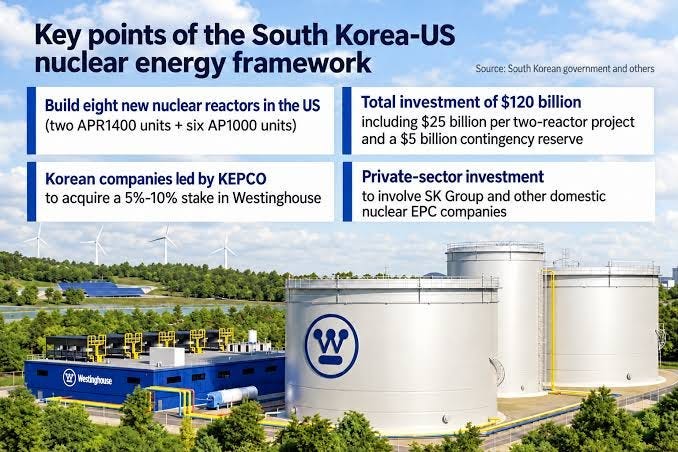
After decades of free-market orthodoxy, Washington has rediscovered industrial policy. The Biden administration’s CHIPS Act and Inflation Reduction Act marked a return to large-scale industrial intervention, while Donald Trump has gone further, taking an equity stake in Intel, negotiating a golden share in US Steel and promising billions in financing for the nuclear supply chain.
Korea has been practicing its own brand of industrial policy for decades. Its authoritarian developmental state mobilized capital and held industrial champions to exacting production and export targets, transforming an impoverished exporter of human-hair wigs, which once accounted for 10% of Korea’s export earnings, into a nuclear manufacturing powerhouse.
How did Korea acquire capabilities that the United States, a pioneer of commercial nuclear power, let atrophy? Can those capabilities be exported back to America?
This first of two essays traces Korea’s nuclear industrial odyssey, from domestic construction to its export breakthrough at Barakah in the United Arab Emirates. Part Two examines the contentious Westinghouse relationship, the proposed American partnership, and whether an ageing Korean workforce can still deliver on such enormous ambitions.
The history draws in part on my recent conversation with Dr. Eunjung Lim, a Korean political scientist and visiting scholar at Stanford’s Shorenstein Asia-Pacific Research Center.
Splitting Atoms Amongst the Ashes of the Korean War
The Korean War left millions dead or displaced and much of the peninsula in ruins. The division of Korea, entrenched by the 1953 armistice, had dealt the South a punishing economic hand.
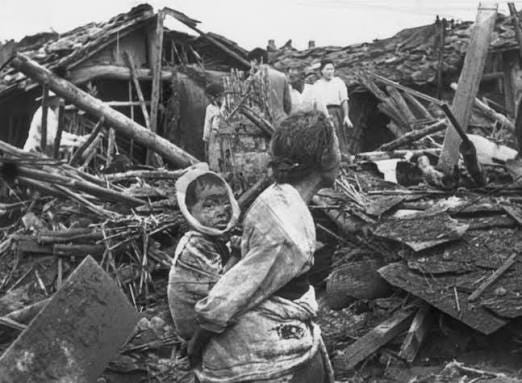
Under colonial rule, the Japanese concentrated most of Korea’s coal resources, heavy industry, and hydroelectric infrastructure in the mountainous North. The largely agricultural South was left with just 20% of coal production capacity and 18% of electrical generating capacity. With virtually no oil or natural gas and its northern frontier sealed, South Korea became a functional island dependent on maritime imports.
One American estimate suggests South Koreans survived on fewer than 1,500 calories per person per day in 1953. Looking north across the border, South Koreans could once see a richer country.
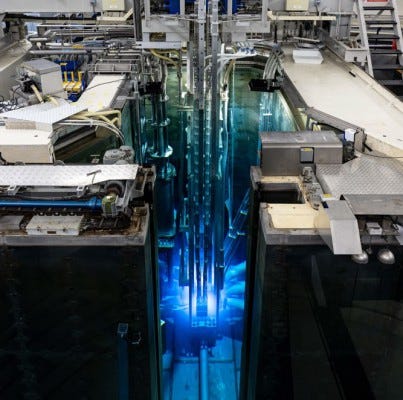
Yet even while dependent on American aid, South Korea established an atomic energy research institute in 1959 and began training personnel to operate an American-supplied TRIGA research reactor, which reached criticality in 1962. President Syngman Rhee embraced Eisenhower’s Atoms for Peace initiative, recognizing nuclear energy’s appeal for a country so poorly endowed with fossil fuels.
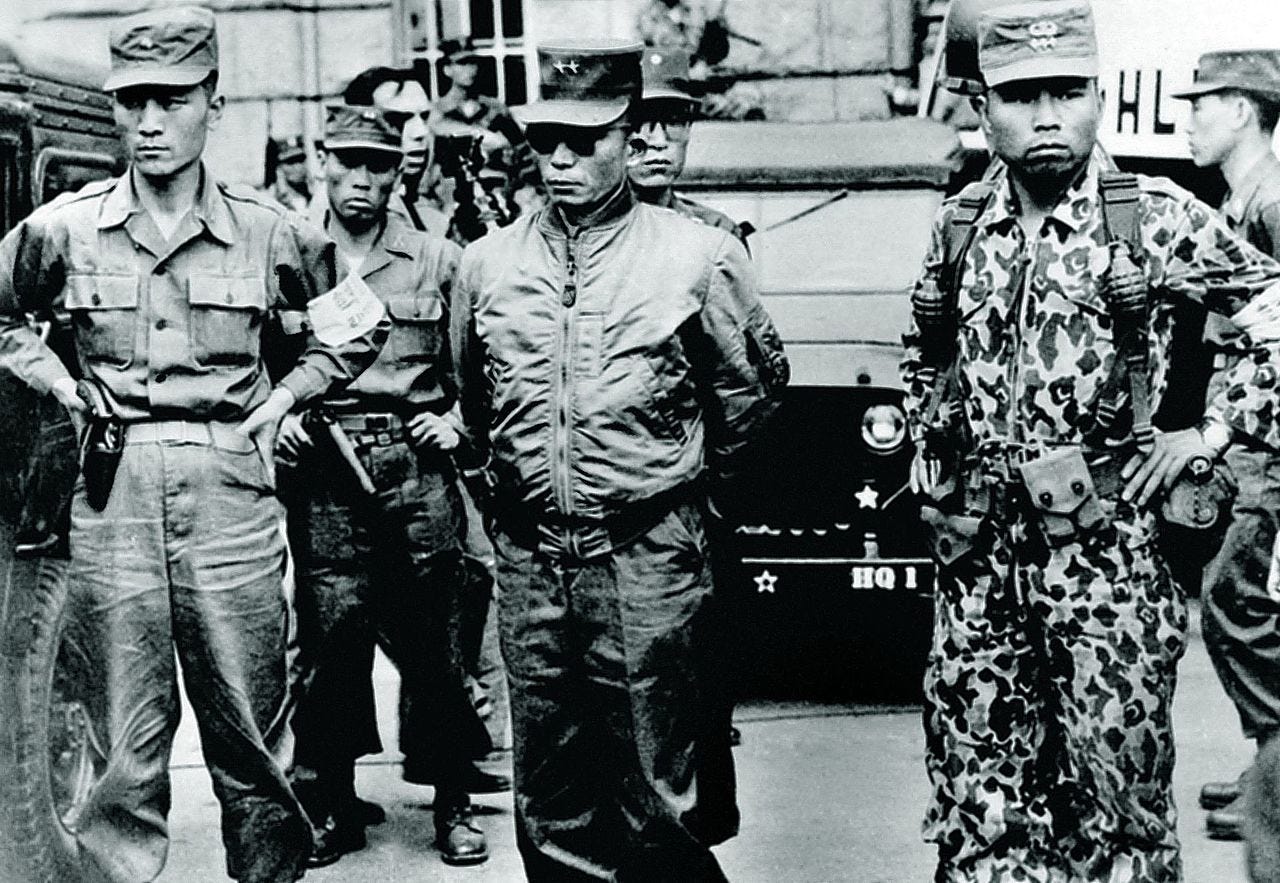
Park Chung-hee, who seized power in 1961 and ruled until his assassination in 1979, would take these ambitions much further. Park intended to propel Korea beyond labour-intensive exports into heavy industries that its impoverished economy appeared singularly ill-equipped to support. He also pursued a nuclear weapons capability, seeking reprocessing technology from France until American pressure forced him to abandon the acquisition.
The developmental state
Conventional economic wisdom, rooted in the classical doctrine of comparative advantage, held that Korea should specialize in labour-intensive goods such as garments, plywood and human-hair wigs, while importing capital-intensive, technologically sophisticated goods.
Park feared this would perpetuate technological dependence. When Korea proposed building an integrated steel mill at Pohang, the World Bank and American export-credit institutions rejected early financing proposals, regarding South Korea as an implausible candidate for competitive steelmaking.
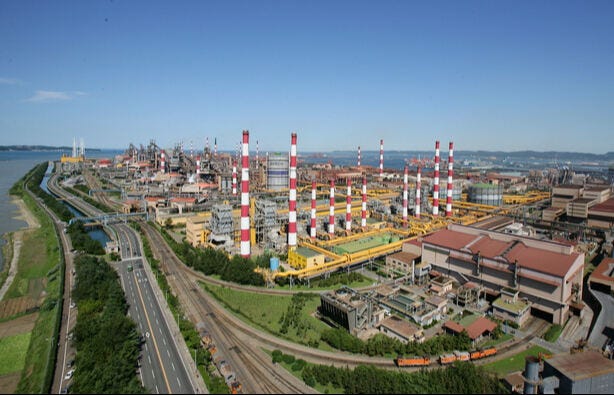
Park went ahead anyway. The Pohang steelworks laid the industrial foundations for Korea’s emerging shipbuilding, automobile and machinery industries. In 1973, his government launched the Heavy and Chemical Industry Drive, directing preferential financing toward capital-intensive industries and encouraging firms to acquire foreign technology and master increasingly sophisticated manufacturing.
The great chaebol, family-controlled conglomerates including Hyundai, Samsung and Daewoo, became national industrial champions, enjoying protected domestic markets and privileged credit in exchange for meeting the state’s industrial objectives. As Lim put it in our interview, Park acted like the chief executive of Korea Incorporated, setting priorities for private firms and monitoring their progress.
Why did Korea’s dirigisme produce such different results from central planning elsewhere? Much of the answer lies in export discipline where foreign customers provided a concrete test of industrial performance. Drawing on Confucian traditions that accord prestige to scholarship and public service, Korea also built a formidable economic bureaucracy, particularly its Economic Planning Board, which coordinated investment across industries.
Washington’s present experiment, which we have taken to calling “MAGA industrial socialism” on this podcast, looks rather different. Trump’s industrial policy proceeds through ad hoc tariffs, presidential negotiations and individual corporate deals, borrowing some of developmental capitalism’s instruments without comparably competent institutions to wield them.
Korea’s achievement came at substantial political and economic cost. Park’s government repressed labour and political opposition, while its close relationships with favoured conglomerates encouraged corruption and wasteful investment. Yet between 1965 and 1980, real GDP grew at an annual rate approaching 10%, and by 1983 heavy and chemical industries accounted for approximately 54% of exports.
From Turnkey Imports to The Standardized Korean Reactor
Korea’s first commercial nuclear plant, the 587 MW Westinghouse reactor at Kori, entered service in 1978. It was a turnkey project, with the foreign supplier responsible for design, equipment, and construction. Kori 2 and the Canadian-designed CANDU at Wolsong 1 followed in 1983. Korea later built three more CANDUs at Wolsong with substantially greater domestic participation.
KEPCO, the state electricity utility, then began taking over project management. At Kori 3 and 4, it divided the work into contracts awarded to Korean construction firms and equipment manufacturers, alongside foreign suppliers. This shifted more risk to the owner but allowed domestic companies to gain engineering, procurement, and construction expertise.
Korea’s expanding heavy industries could supply increasingly sophisticated components, while nuclear contracts imposed exacting documentation and quality-control standards. In 1987, Korea concluded a landmark technology-transfer agreement with Combustion Engineering, a major American reactor designer.
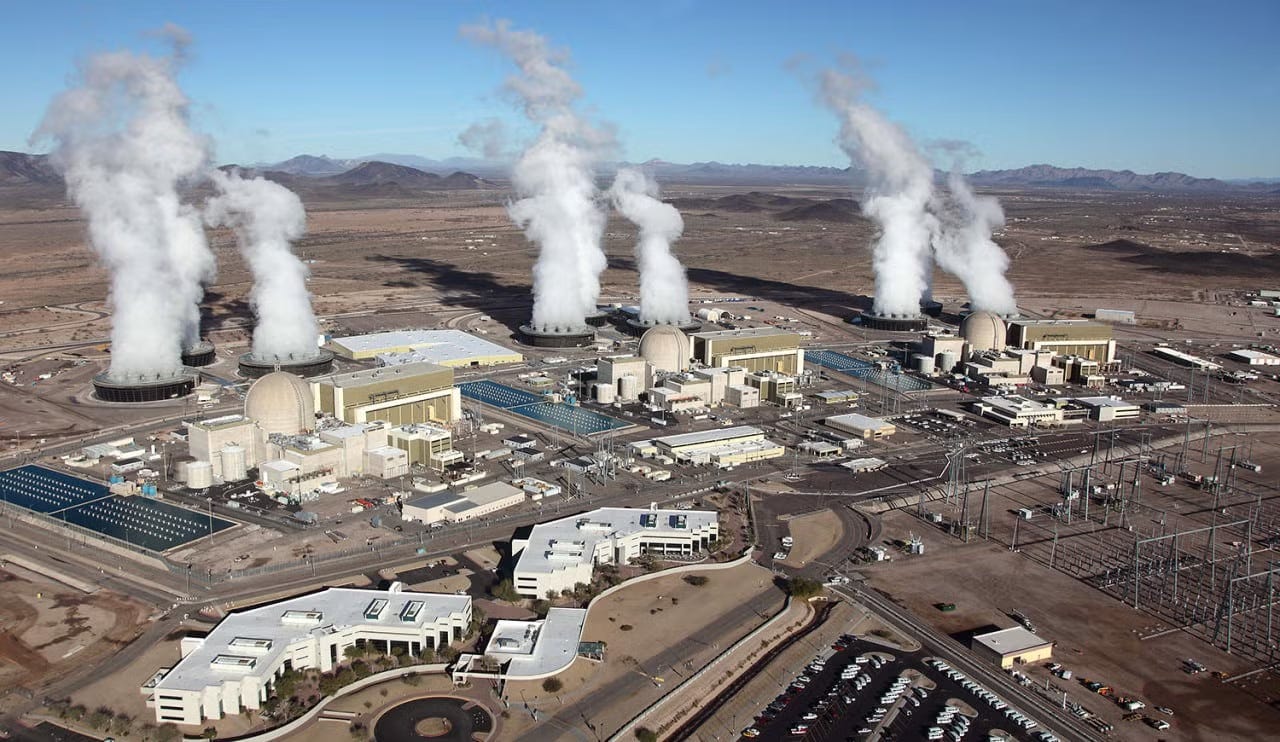
Combustion Engineering’s System 80 technology, already operating at Arizona’s Palo Verde plant, became the foundation for the Korean Standard Nuclear Plant, later developed as the OPR1000. Korean engineers progressively assumed responsibility for design and manufacturing, eventually developing the larger APR1400 that would power Barakah. By the late 1990s, Korea was directing construction of its own standardized reactor fleet.
The Korean cost miracle
Korea was now building reactors far cheaper than the Western nuclear industries it had learned from. The student had surpassed the master.
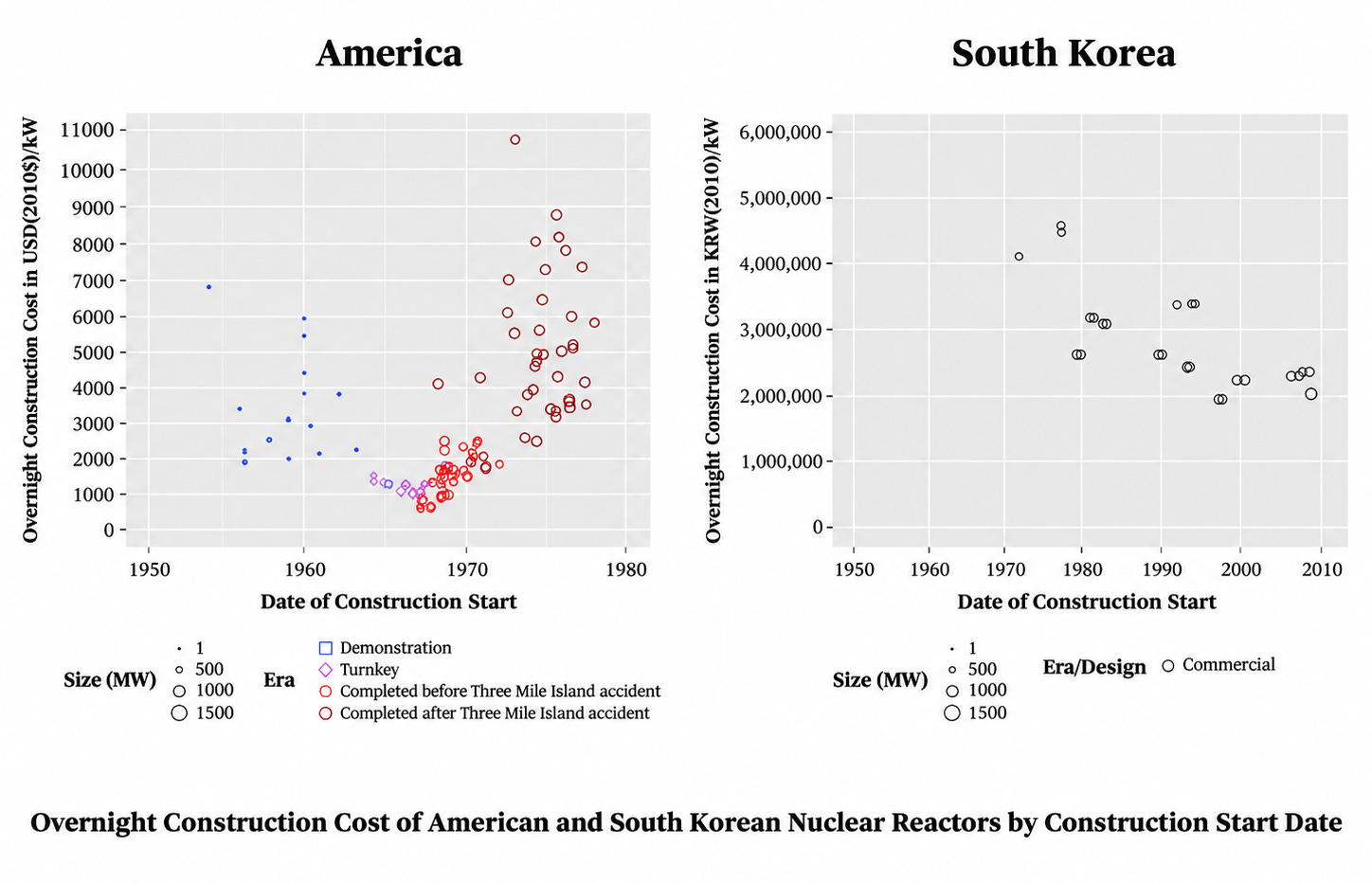
In a 2016 study, Jessica Lovering, Arthur Yip, and Ted Nordhaus found that overnight costs for a cohort of American reactors that began construction from 1967 to 1972 rose at an annualized rate of about 23%. By contrast, costs declined by around 1-2% annually for Korea’s foreign-designed and later domestically standardized reactors between 1972 and 2008.
Korea’s nuclear ascent was not without serious institutional failures. In 2012 and 2013, investigators uncovered widespread falsification of safety certifications, bribery and improperly certified components. Multiple reactors were shut down and 100 people indicted, including senior utility executives. The scandal exposed systemic corruption within Korea’s closely interconnected nuclear establishment, while the subsequent prosecutions and regulatory reforms demonstrated a capacity to confront institutional failures.
However, ruthless standardization and a sustained construction program allowed Korea to capture economies of multiples, refine construction techniques and preserve an ecosystem of experienced suppliers and tradespeople that atrophied in countries where nuclear orders dried up. This accumulated competence would soon face an unusual test across the border.
Building reactors for the enemy
On June 29, 2002, North and South Korean warships exchanged fire near Yeonpyeong Island in the Yellow Sea, killing six South Korean sailors. Less than six weeks later, officials gathered on North Korea’s eastern coast to mark the first major concrete pour for nuclear reactors being built under South Korean management. The two countries were still technically at war.
The project grew out of the 1994 US–North Korea Agreed Framework, under which Pyongyang agreed to freeze its nuclear weapons program in exchange for interim fuel oil and two civilian light-water reactors. KEPCO led construction of the reactors at Kumho under the auspices of the Korean Peninsula Energy Development Organization (KEDO).
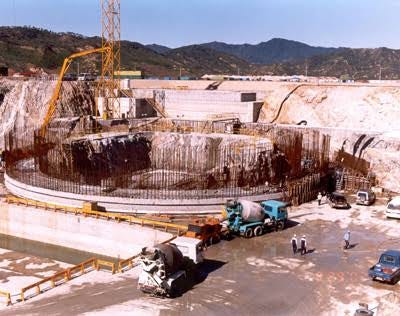
Building reactors in the isolated, hostile North required assembling multinational teams, navigating restrictions on worker movement, and producing the English-language documentation required by international partners.
The project collapsed amid renewed North Korean nuclear weapons activities. Work was suspended in December 2003 and formally terminated in May 2006, with roughly 35% of construction completed. North Korea conducted its first nuclear weapons test that October.
The billions spent had failed to avert a North Korean bomb, but the Korean contractors emerged with experience managing a nuclear megaproject outside their own country. Their next major international assignment would take them from North Korea’s heavily guarded coastline to the Persian Gulf.
Barakah: the export breakthrough
In December 2009, the United Arab Emirates awarded a Korean consortium led by KEPCO a roughly US$20 billion contract to build four APR1400 reactors, with a combined capacity of 5,600 MW. Korea prevailed over major French and American–Japanese competitors by offering an established design lineage, proven domestic construction experience, and a competitive price.
The Emiratis had good reason to weigh construction experience heavily. Their skilled technocrats quickly ruled out Westinghouse’s AP1000, concerned about its immature design and lack of construction experience. History proved they were right to have been wary.
Westinghouse received a substantial consolation prize: an estimated $2.8 billion in equipment, licensing and technical-support contracts at Barakah, generating considerable revenue without assuming the construction risks that would prove catastrophic for the company at Vogtle and Summer.
Korean builders also knew the Gulf. Since the 1970s, Korean companies had built industrial facilities and infrastructure across the Middle East, experience that proved valuable at Barakah, where extreme temperature swings and salty coastal conditions placed particular demands on construction materials, including containment concrete.
President Lee Myung-bak, formerly chief executive of Hyundai Engineering & Construction, personally championed the bid, another expression of Korea’s close relationship between political power and major industrial projects.
But this profitable collaboration would eventually give way to bitter commercial rivalry. The APR1400’s technological ancestry led back to Combustion Engineering, whose reactor business had passed into Westinghouse, leaving Korea’s flagship design entangled with American intellectual property.
As earlier licensing arrangements expired and Westinghouse sought to rebuild its reactor business after the Vogtle debacle, the relationship deteriorated into legal disputes, culminating in a controversial global settlement.
Part Two of this series examines that settlement, the proposed $120 billion partnership, and whether Korea, facing a deepening demographic crisis, can still deliver the nuclear construction capabilities America’s ambitions will require.
Like this post if you think America has to do a little Seoul-searching about its industrial future.