

Last week, Antares, a VC backed micro reactor company, took their micro reactor test rig critical one month before the July 4th deadline set out by Donald Trump in his Nuclear Executive Order #14301.
This achievement described by the DOE as “the rebirth of America’s nuclear industry” is part of a broader effort by the Trump administration to achieve its Nuclear Energy Dominance agenda.
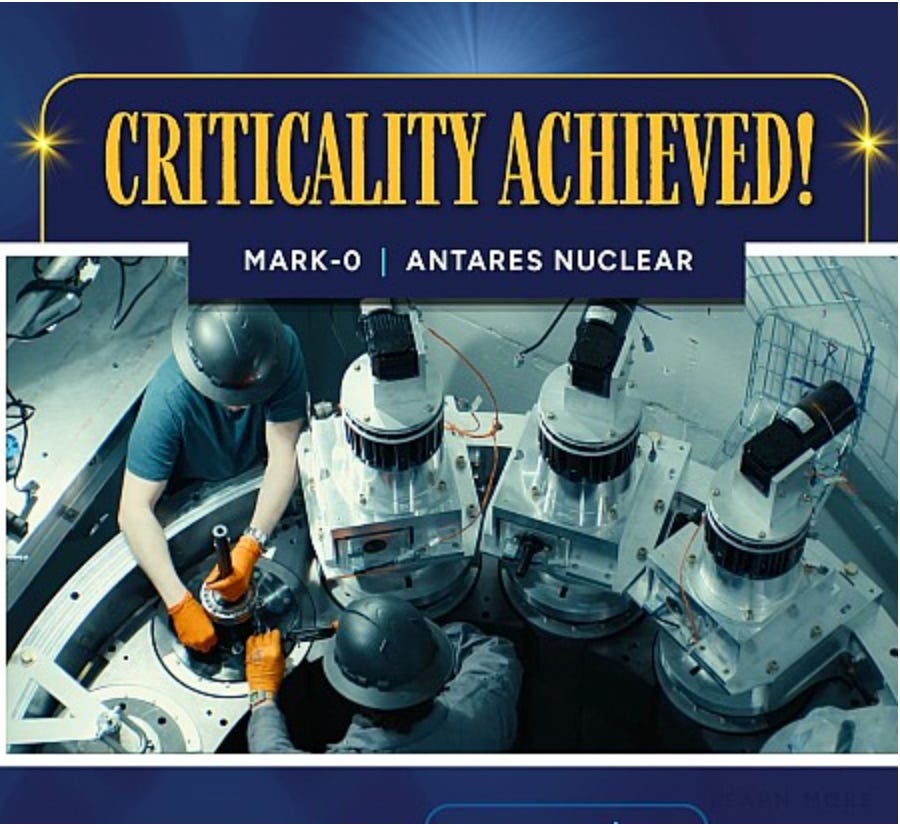
Energy Secretary Chris Wright used the following words on April 15th of this year to describe this milestone.
“We can have reactors critical, meaning running their full nuclear systems. They’re not turning it into electricity, but that’s the simple part… We will have multiple small modular reactors running… in the next three months.”
Wright’s enthusiasm is contagious but his framing of criticality needs some interrogation as it inverts where the real engineering difficulty lies.
Achieving criticality is an important milestone, but the engineering involved is comparatively straightforward. We have understood how to assemble fissile material into a self sustaining chain reaction for more than 80 years.
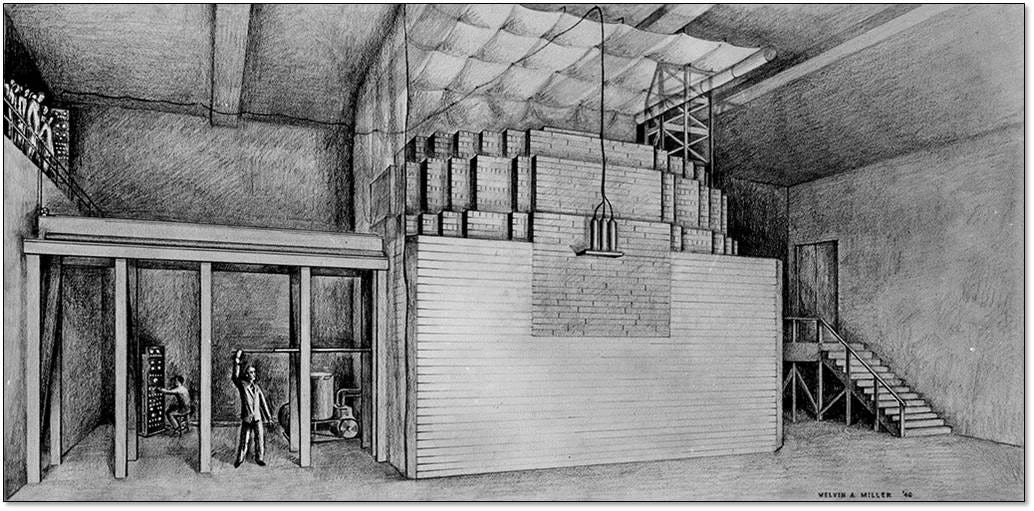
In just over two weeks in 1942, Italian-American physicist Enrico Fermi and his team arranged 42,000 bricks of ultra pure graphite and 40 tons of natural uranium into a spherical “pile” propped up by a massive wooden timber framework in an underground squash court at the University of Chicago. This was the world’s first man-made criticality.
The Antares test reactor used significantly more sophisticated materials: The fuel, HALEU containing TRISO fuel elements manufactured by BWXT, was arranged within a graphite moderated test core and if true to Antares conceptual design was regulated by control drums. Make no mistake though this was a barebones reactor.
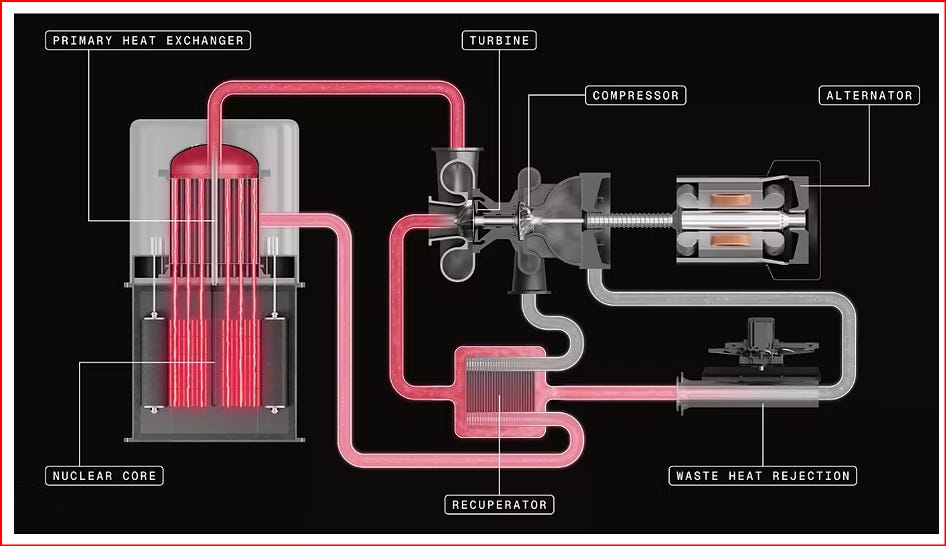
The sodium heat pipes and heat exchanger that Antares intends to use to remove heat from the core and the closed nitrogen Brayton cycle turbine to convert that heat into electricity were absent from the experiment. The framing of this flash in the pan as having “reactors running” is a stretch.
So what’s the best way to understand the significance of achieving criticality in such a pared down system?
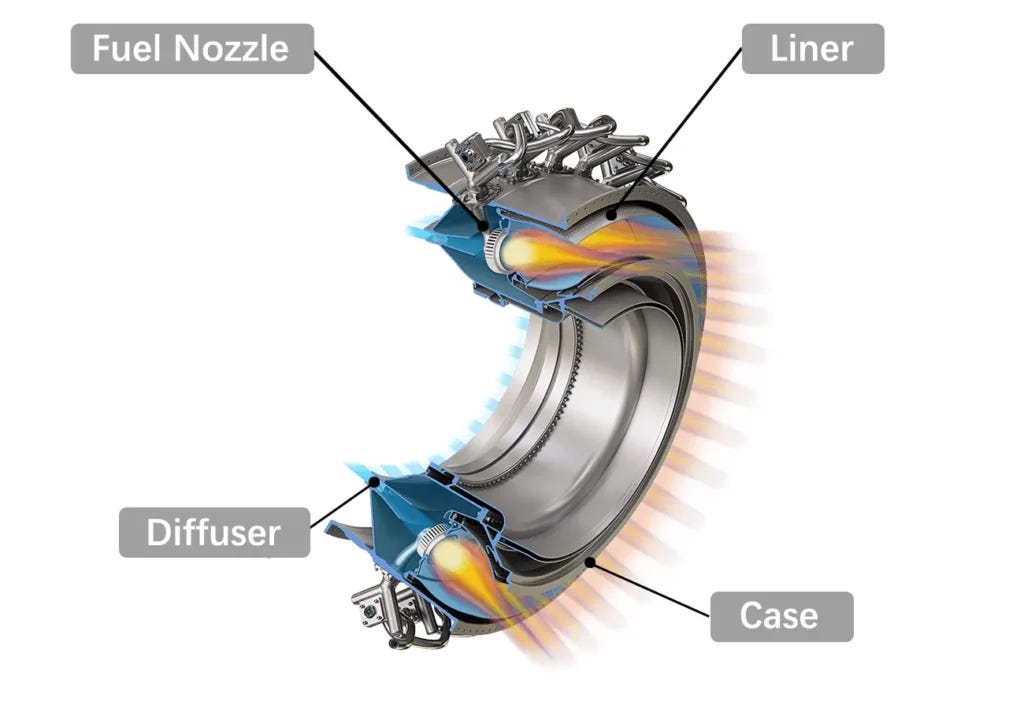
The combustor of a jet engine offers an illustrative analogy. Energy release is real but the combustor in isolation does not move an aircraft.
Without the precisely machined compressor feeding it air, the single crystal turbine blades extracting work from its exhaust alongside the multitude of systems and controls coordinating fuel delivery, lubrication, cooling and thrust management the combustor is simply a sophisticated flame thrower.
To run with the reliability required for commercial aviation these systems require years if not decades of design iteration, prototyping and testing.
A commercial reactor is fundamentally a heat engine, and the challenge lies in controlling, moving and converting significant quantities of heat into electricity.
Every component in that chain: fuel, cladding, pumps, valves, turbines, generators, control systems, instrumentation and safety systems, must function together with extraordinary precision under high temperatures, radiation fields, thermal cycling, and demanding operating conditions for years on end.
The June 4th criticality was an essential milestone to gather data validating reactor physics, fuel performance, and control system behaviour in the Antares core but it was a baby step on the long tedious march ahead towards a power producing reactor, let alone an economic one.
Nothing about this event has the ring of “dominance” about it. In the context of the Chinese approving 10GW of new large nuclear reactors per year and being responsible for 50% all new nuclear reactors currently under construction worldwide it was a footnote.
An empty vessel does however make the most noise.
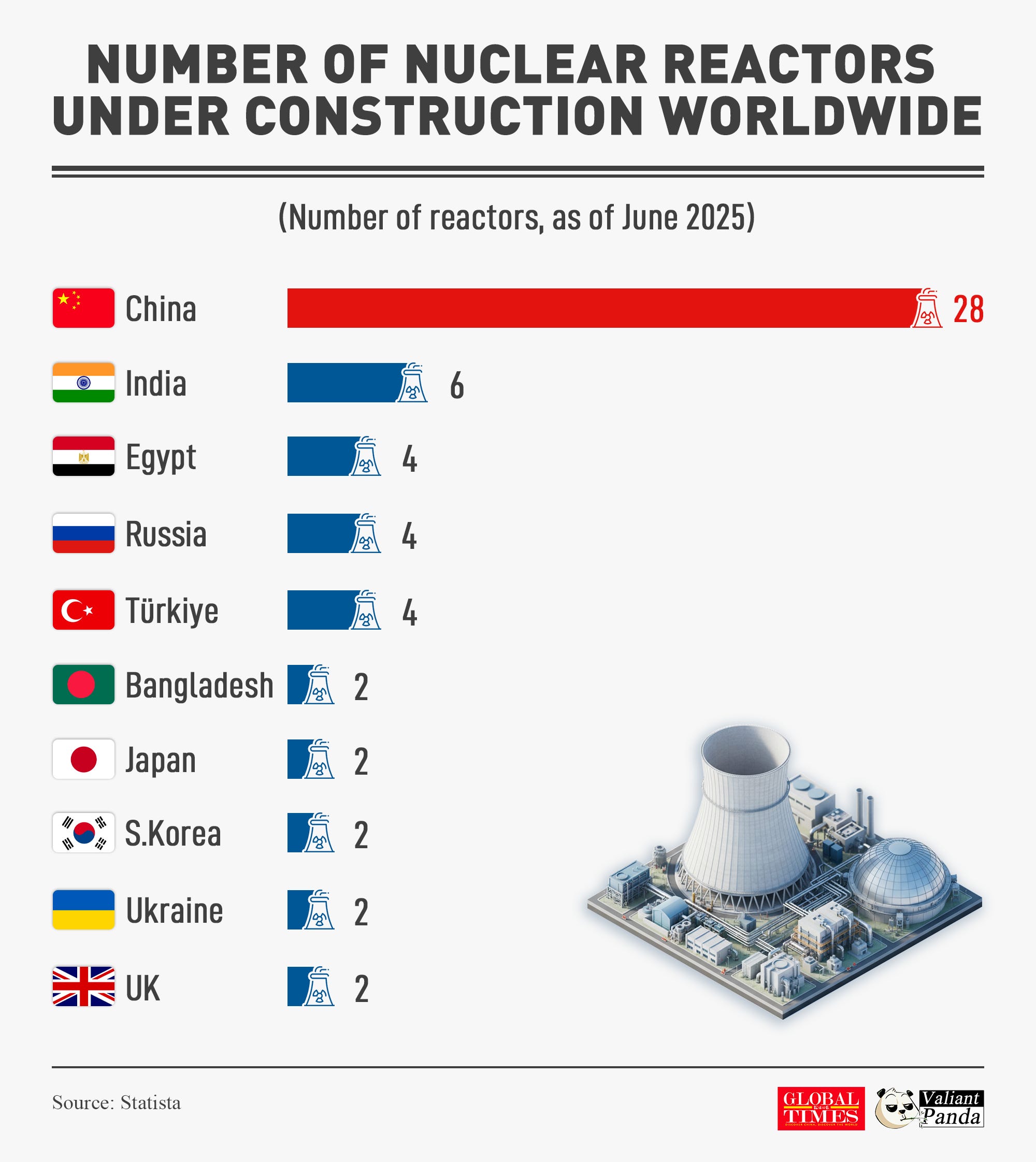
The fact that a VC funded start-up got to this stage so quickly is certainly a regulatory breakthrough, but much less a technological one.
The company’s challenge now is traversing the valley of death that has claimed many a reactor venture before. It must prove that it can engineer the remainder of the reactor’s systems, satisfy regulators, operate its full systems on a Project Janus military base deployment, and finally attract commercial customers.
The latter may be the most challenging of all given the extreme diseconomies of scale of microreactors, but that analysis is for another time.
Like this post to keep us going critical
The comparison with aircraft gas turbines is inaccurate. Only two or three countries are capable of making modern jet turbines, but eleven have designed and built reactors that are powering grids today. (Germany shut all its own excellent Konvoi plants, but German-engineered reactors still operate in Netherlands, Switzerland, Brazil and Argentina.) Light water reactor turbines run nearly a thousand degrees cooler than jet ones, steam is a much more forgiving medium than hot combustion gases, weight is largely irrelevant. Putting five foot thick concrete round a reactor is child's play, compared to making an engine that can swallow a goose at full power without spitting debris through the plane's cabin. Fuel cost matters, but much less than for airlines or gas turbine generators. The one major handicap for nuclear is regulation. Hopefully, that will change. If commercial aircraft industry rules were as onerous as those for the nuclear industry, nobody would be flying - the two 737 MAX crashes alone killed six times as many people as Chornobyl 4, arguably the only reactor to have killed members of the public.
Unfortunately this nuclear push is very reminiscent of the EV push with Tesla. It will make the initial investor astoundingly wealthy, will probably develop something that is commercialized but ultimately not last as the subsidies are themselves not sustainable and competition will erode their advantage. We may see this with SpaceX. Once you have $50,000,000+ and you turn 45-50, your interest in working super hard diminishes.