

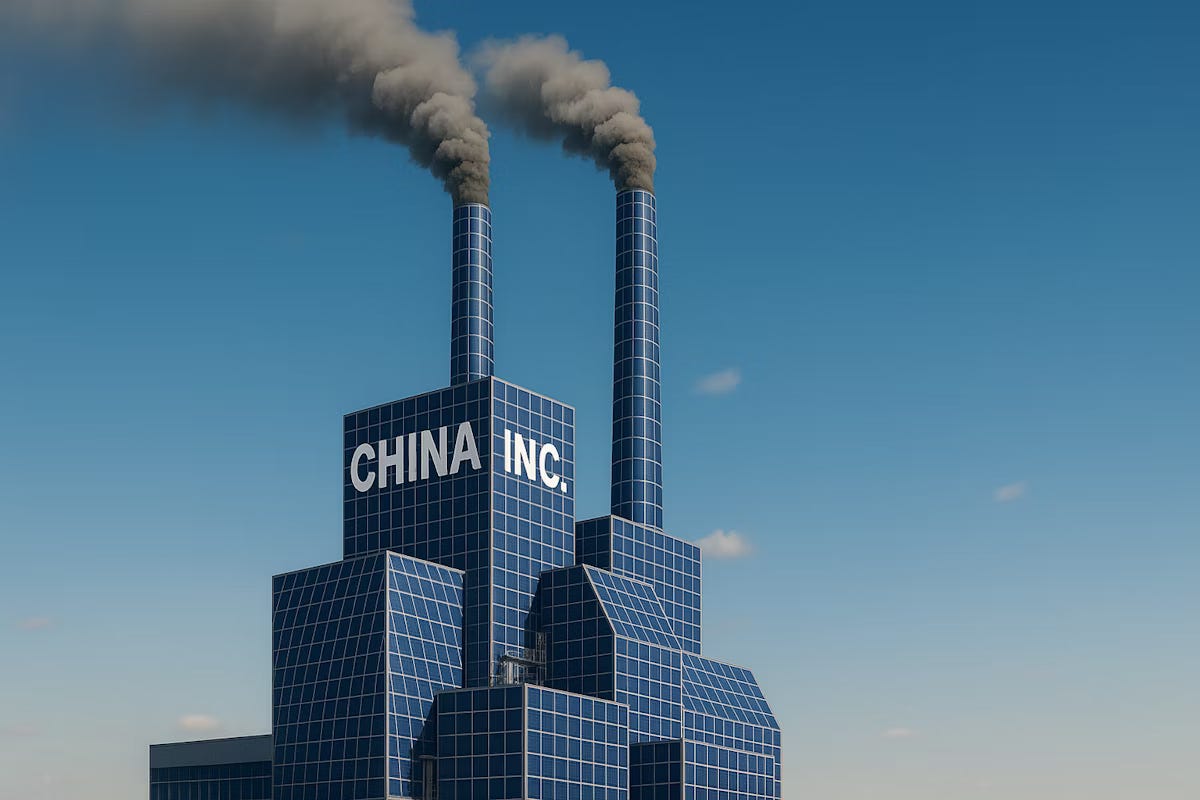
In the year or so since it became clear that the second Trump administration and Republican Congress were intent on dismantling the Inflation Reduction Act (IRA), a particular intellectual formation has hardened among climate-focused commentators in the West.
The argument runs as follows: China has identified that the industrial commodities of the 21st century as solar panels, batteries, electric vehicles, and the rare earth magnets inside wind turbines and EV drivetrains. By pouring state capital into manufacturing all of these at an overwhelming scale, China has positioned itself as the dominant industrial power of the coming era.
The United States, by contrast, has chosen fossil fuels and is becoming a museum of obsolete technologies, to use Bill McKibben’s phrase. China, in this reading, is not just winning an industrial competition. It is saving the climate.
Historian Nils Gilman, writing in Foreign Policy, envisions an “eco-ideological Cold War” pitting a potential Sino-European green entente against a US-led petro-bloc. Noah Smith writes that China is “quietly saving the world.” James Meadway declares that China has “obliterated” the argument that nothing can be done on climate because of China.
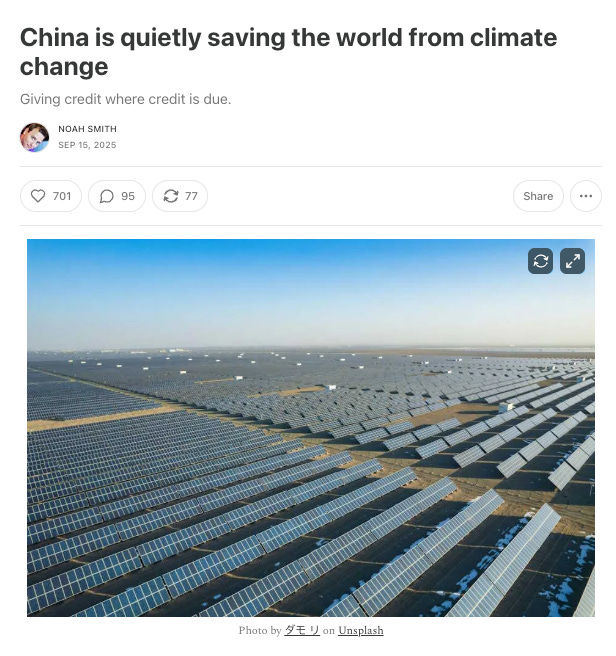
The electrostate thesis, as it has become known, holds that China is reorganizing its entire economy around electricity, increasingly sourced from wind and solar, and that this transformation is both a play for industrial supremacy and an inadvertent path to global decarbonization.
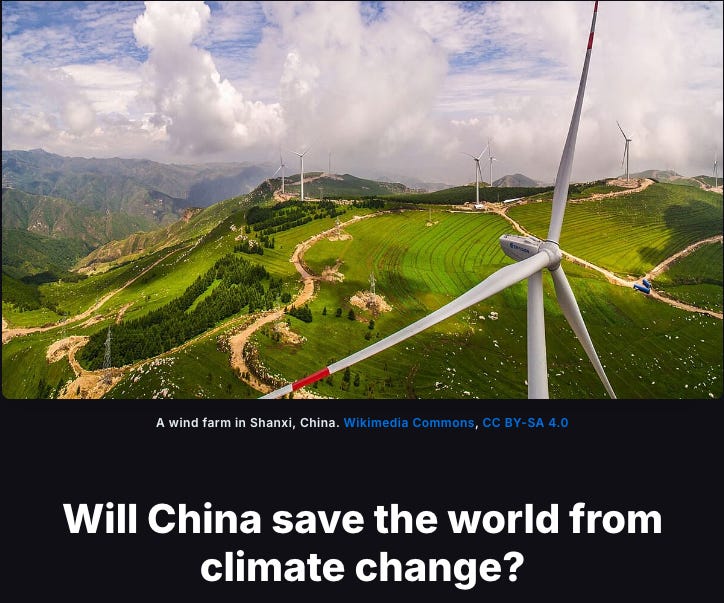
There is enough truth in this picture to make it influential. China installed 315 GW of new solar capacity in 2025 bringing its cumulative installed PV capacity to 1.2 TW nearly the entire installed capacity of the US grid. China’s solar manufacturing dominance is extraordinary. Its battery supply chain is, by most measures, unassailable on any near-term horizon. Its electric vehicle industry has crossed an inflection point that now looks permanent. These facts are not in dispute, and the cost reductions China has driven in solar and batteries have been genuinely transformative.
The problem is that the thesis is constructed almost entirely from what is visible at the output layer, from the finished solar panel, the EV on the road, the battery pack. Follow the supply chain upstream, ask what industrial system produced those things and what powered that system, and a very different picture emerges.
There is a Ford Motor Company promotional film from the mid-twentieth century that traces the full manufacture of an automobile from the first blast of explosives in an iron ore mine, through smelting, rolling, stamping, and final assembly. Its purpose was to celebrate American industrial integration. It functions equally well today as a corrective to how Western observers think about Chinese manufactured goods. We see the finished product and construct a story about the civilization that made it. We do not however ask what was burned to produce it.
The Ballast Rock
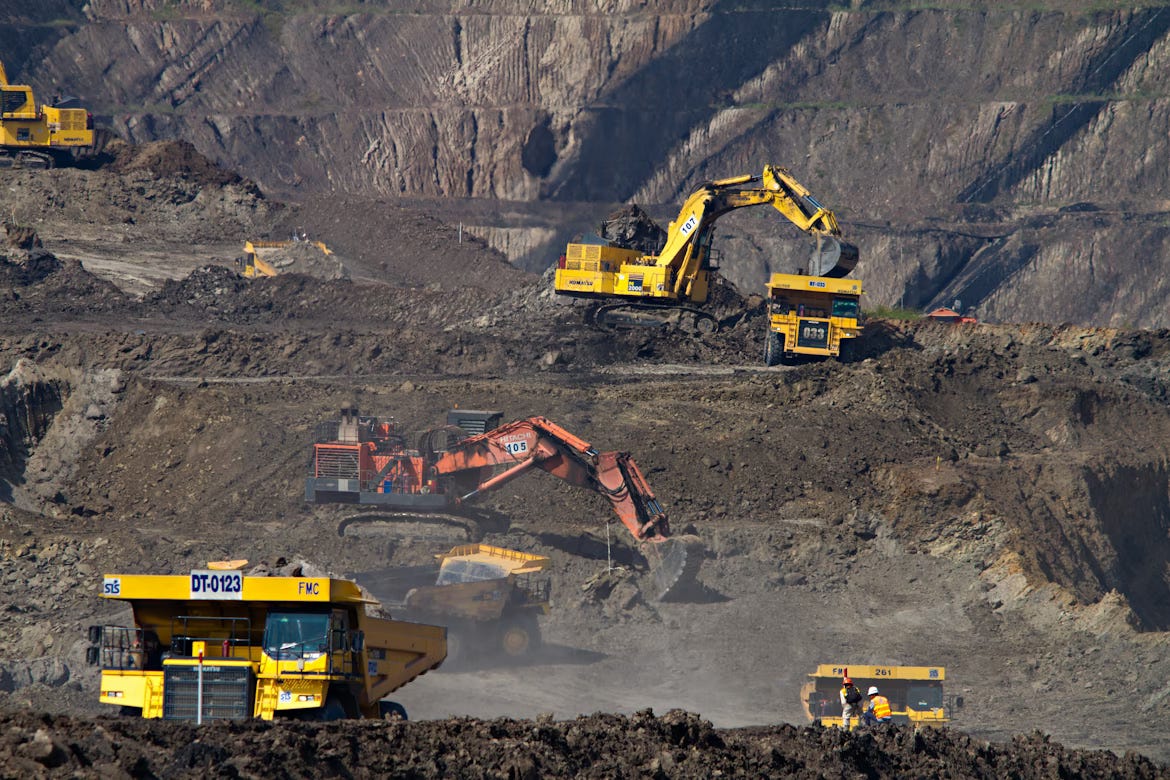
China’s own government is clearer about its energy system than its Western admirers tend to be. Official policy statements and domestic media describe coal as the “ballast rock” of China’s energy supply, providing cheap electricity, industrial heat, and chemical feedstocks for the bulk of the industrial economy. Coal generated 59 percent of Chinese electricity in 2024. China consumes 56 percent of all coal used globally. Vanishingly little coal capacity has been fully retired, only 2.5 GW in 2024.
The construction pipeline makes the trajectory plain. The desert industrial parks in Xinjiang tell the same story: more than half a dozen coal generation units, several of them commissioned since 2022, supplying aluminum reduction cells, metal silicon furnaces, and the ultra-pure polysilicon plants that feed China’s solar manufacturing supply chain.
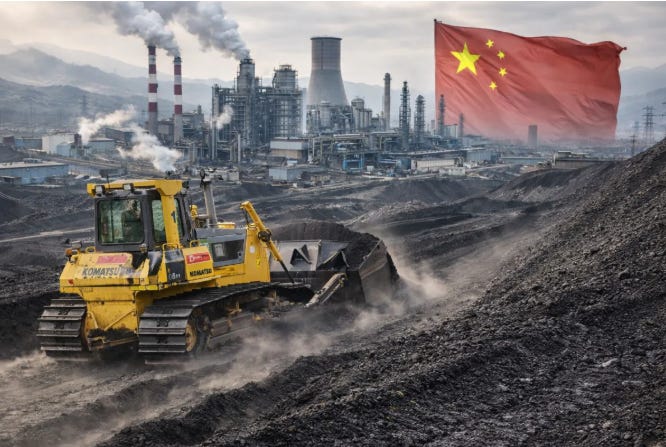
Shaanxi’s coal to chemicals industry, centered on the city of Yulin, continues to expand with government backing: the National Development and Reform Commission (NDRC) has classified coal-derived chemicals as a ‘new productive force’ in the same policy breath as solar panels and electric vehicles.
Here’s a fact for China’s climate cheerleaders to mull over. As Javier Blas has pointed out, if China’s coal to chemicals industry was a country it would rank as the world’s third largest consumer of coal, trumped only by the rest of the Chinese coal sector and India’s national consumption, but ahead of the major coal users like the US, Japan, Indonesia and Turkey.
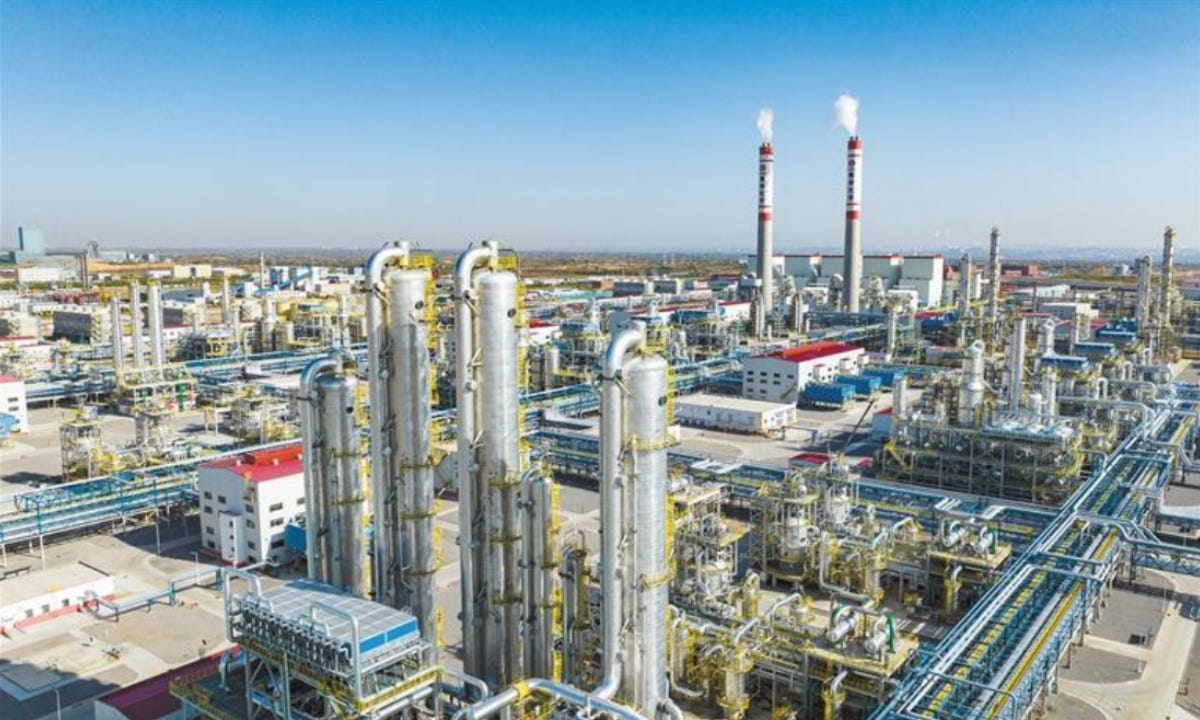
The claim that China is becoming a green electrostate sits alongside an operational coal fleet of 1300 GW with 261 GW of coal capacity either under construction or already permitted. While some are ultra-supercritical coal plants which now serve as flexible backup and load-smoothing assets for variable renewables, this fleet is not a legacy sector approaching retirement. Many are fresh investments in the sectors the electrostate narrative holds up as proof of China’s clean industrial future.
China will not retreat from coal for ideological reasons, as the European bloc has done with both coal and nuclear. Chinese planners have reasons to retire older, less efficient plants and reduce coal combustion near urban centres, but there is no structural incentive to remove a working power source from a system still growing at roughly 7 percent per year in electricity consumption.
Aluminum as a Diagnostic
An insightful case study for what is actually happening in China’s industrial economy is aluminum, sometimes referred to as “congealed electricity.”
Making a ton of primary aluminum requires roughly 13,000 kilowatt-hours (kWh) of electricity. To put that in terms that register: producing one kilogram of aluminum consumes about as much electricity as running an average North American house for twelve hours, while recycling a kilogram of steel in an electric arc furnace (EAF) takes roughly half an hour of equivalent draw.
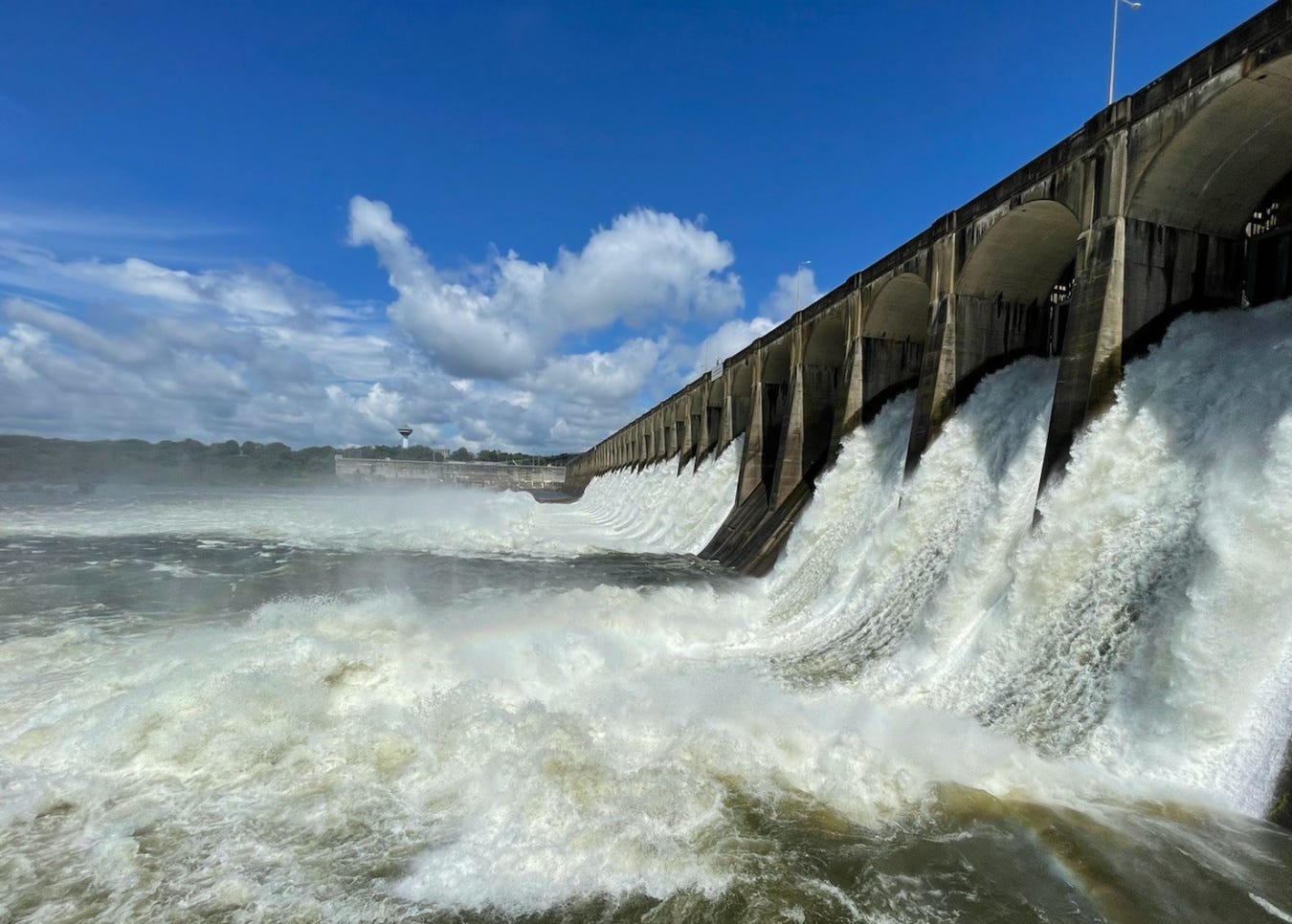
The aluminum industry has always chased the cheapest available power. It built smelters next to the Bonneville Power Administration and the Tennessee Valley Authority (TVA) in the United States, next to dedicated hydroelectric dams in Iceland and Norway, and in Quebec, where legacy hydro produces electricity at costs no thermal plant approaches. American aluminum, which has shrunk to one sixth of its peak production of 4.6 million tonnes/yr in 1980, used to receive half its power from federal or state-owned utilities.
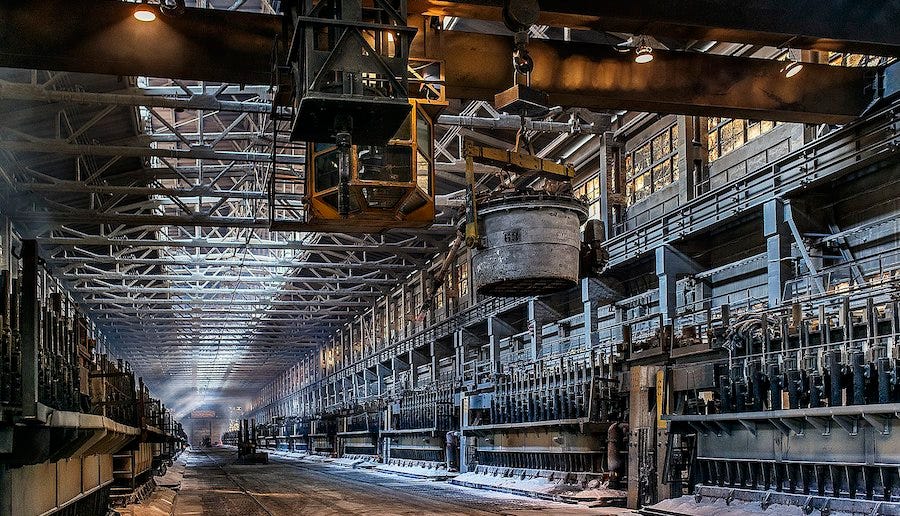
China now produces roughly 60 percent of the world’s primary aluminum, about 45 million tons per year, against a domestic capacity cap set by the NDRC to prevent further oversupply.
The electrostate narrative around Chinese aluminum runs as follows: production is migrating from the coal heartlands of Shandong province toward Inner Mongolia and Xinjiang, where renewable energy development has accelerated, and toward the hydropower-rich southwestern provinces of Yunnan and Sichuan.
The implication is that one of the world’s most electricity-intensive industries is being progressively decarbonized by the same renewable buildout reshaping China’s broader grid.
The timeline punctures this immediately. The majority of new aluminum capacity in Inner Mongolia and Xinjiang was built before 2020, before large-scale wind and solar deployment in northern China, and before the central government introduced any renewable energy purchasing requirements for the sector.
These smelters relocated to the northwest because coal was cheap there, and local governments were offering captive coal power at rates that made the economics irresistible.
The renewable energy purchasing requirement, mandating that smelters source a portion of their electricity from clean generation, was introduced only in 2024, and currently sits at around 30 percent for Inner Mongolia and Xinjiang.
Even on paper, even counting purchased renewable energy certificates rather than electrons physically flowing from wind turbines to reduction cells, these smelters remain predominantly coal-powered.
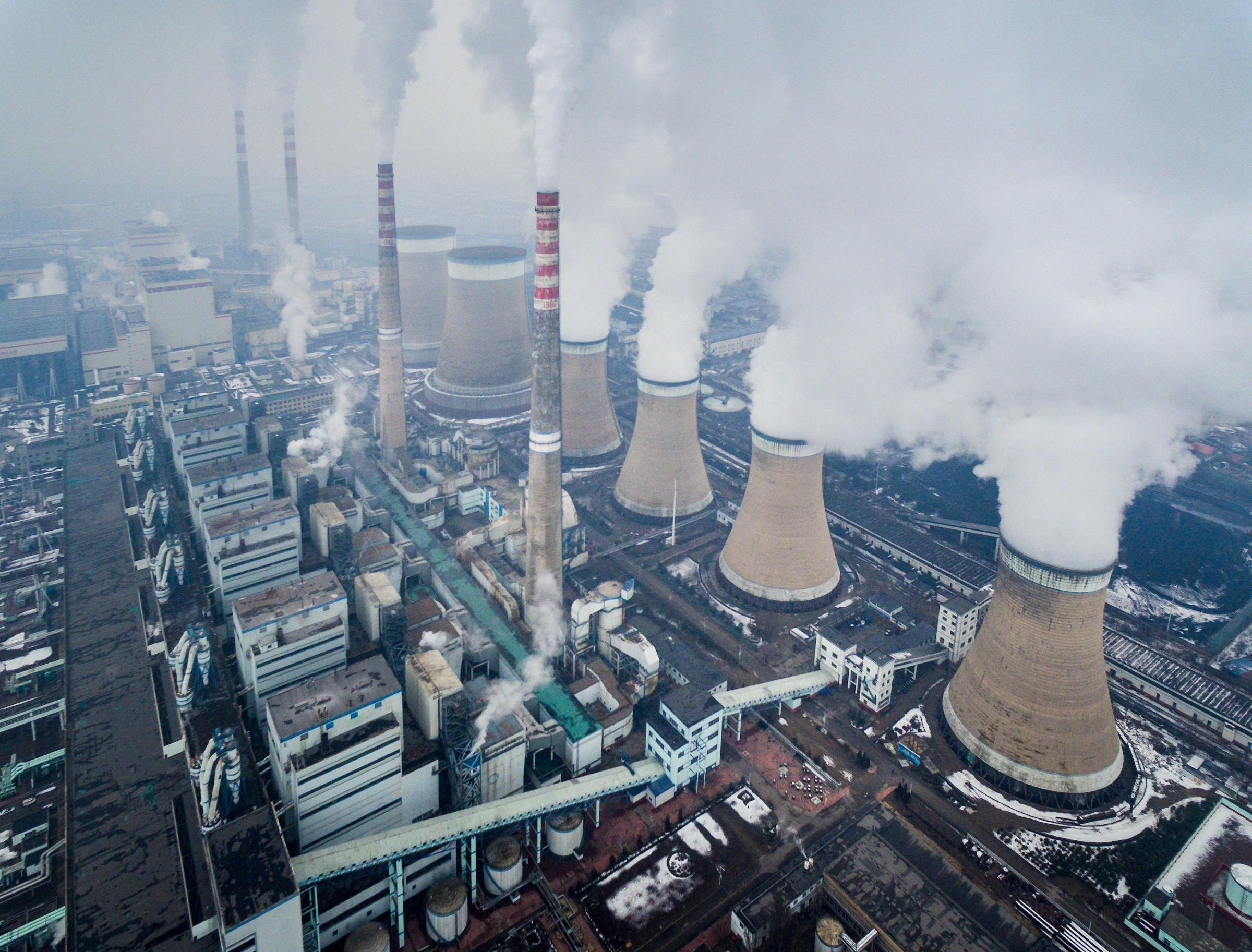
And paper is doing considerable work in that sentence. Upward of 80 percent of aluminum smelters in Inner Mongolia, and practically all of those in Xinjiang, have on-site captive coal power plants. There is nothing transitional about that infrastructure. The renewable purchasing requirement’s 30% cap is itself an admission that the economics of running these smelters on wind and solar do not close.
The Yunnan story is more favourable to the green narrative. Southern China’s hydropower provinces have genuine surplus generation capacity, and the Hongqiao Group, operating its aluminum business under the Weiqiao brand, has been aggressively moving capacity to Yunnan to capture cheap hydro before the NDRC production cap forecloses further expansion.
About 15 percent of China’s aluminum capacity now sits there. This represents genuinely lower-carbon production, but it is opportunistic: companies racing to claim cheap electrons while they still can, not a planned industrial transition toward renewable power.
Taking the full picture, roughly 25 percent of China’s aluminum production is hydropower-sourced. The other 75% runs on coal.
The Un-Electrification of Magnesium
If aluminum complicates the electrostate thesis, magnesium inverts it entirely. Before the late 1990s, most of the world’s primary magnesium was produced electrolytically, through a process broadly similar to aluminum smelting, using seawater-derived magnesium salts reduced through electrolysis. Production was spread across the United States, Norway, France, and Canada. The process was electricity-intensive but coal-free.
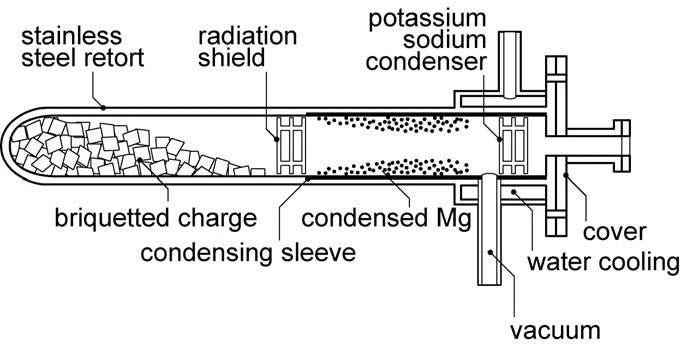
China industrialized magnesium production through a completely different route. The Pidgeon process, a pyrometallurgical method using carbon-based reduction of magnesium-bearing ores in small batch-operated furnaces, requires almost no electricity.
The coal chemical heartland of Shaanxi province became the global capital of magnesium production not because it had clean power or innovative electrolysis technology, but because it had coal to burn and workers to tend furnaces, and the economics of attaching a small magnesium shop to an existing coal chemical complex made the product nearly free at the margin.
The result was the complete elimination of Western electrolytic magnesium production. Today, over 95 percent of the world’s primary magnesium, a market of roughly one million tons per year, is produced in China through the Pidgeon process, almost entirely as a byproduct of coal chemistry.
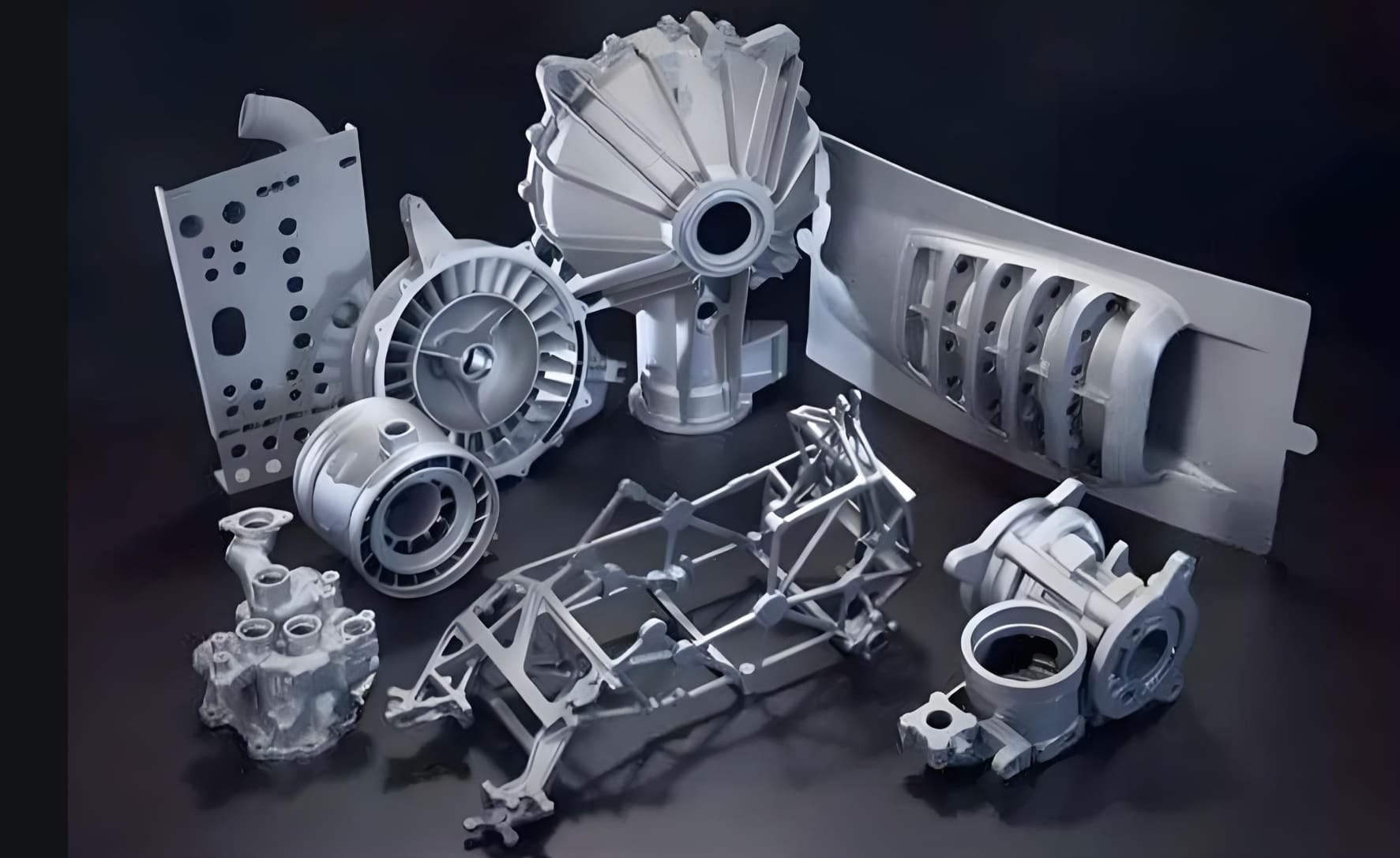
Magnesium matters beyond its own market. It is a critical input for aluminum alloys and lightweight automotive and aerospace structures, which means it sits directly in the supply chain of the very EV revolution the electrostate narrative celebrates.
However, the electrostate, in this corner of the periodic table, ran in reverse. Magnesium production was deliberately un-electrified by China to achieve cost dominance and the climate movement has nothing useful to say about it because it contradicts the entire narrative.
The Electrotech Stack and Its Foundation
Zoom out from aluminum and magnesium to the full set of supply chains the electrostate argument relies on, and a structural pattern becomes visible that the narrative consistently elides.
The five supply chains at the core of the electrostate thesis, solar cells, lithium-ion batteries, rare earth permanent magnets, semiconductor-grade silicon, and the metals that go into EV structures, all share characteristics that are more explanatory than their clean end uses.
In each, China accounts for 75-94% of global production. The consumer-facing product sits downstream of an upstream processing step that is not modular, not easily replicated, and not captured by the language of the tech economy.
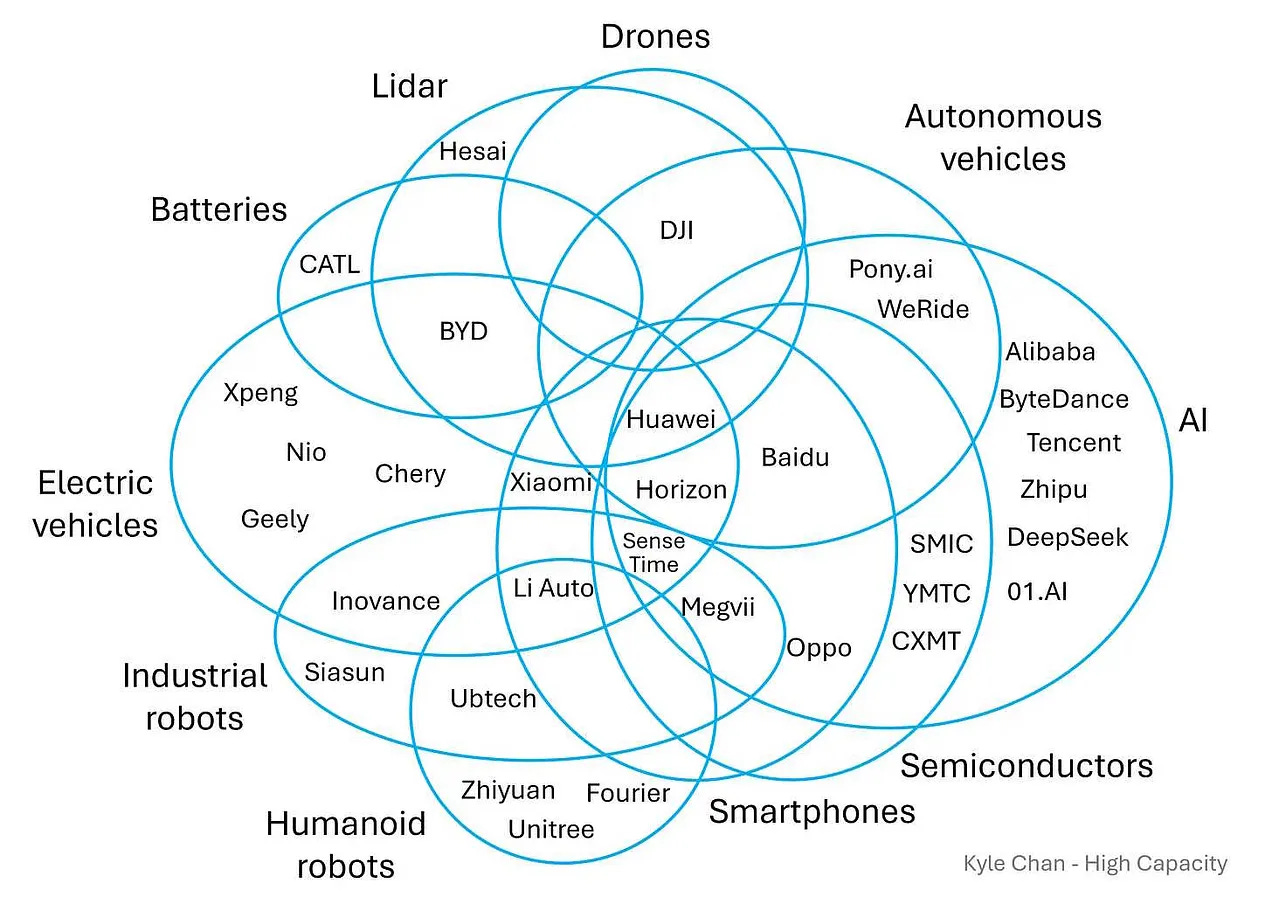
The electricity intensity of each of these upstream steps is extraordinary: solar-grade polysilicon requires five times as much electricity per unit mass as aluminum. Battery graphite matches aluminum’s energy consumption. Synthetic graphite, which accounts for 97 percent of global graphite anode production and is produced almost entirely in China, was built up in coal-intensive provinces precisely because the energy-intensive reduction process was cheapest where coal was cheapest.
China’s dominance in these industries was built between roughly 2005 and 2020, during the last great wave of coal capacity construction, when cheap and reliable thermal power allowed Chinese firms to accumulate the process knowledge, engineering expertise, supply chain integration, and economies of scale that now make these industries effectively uninvestable for outside competitors.
A cohort of chemical engineers who graduated from Chinese universities between 1980 and 1995, and spent their careers building polysilicon reduction plants, battery cathode factories, and rare earth processing facilities, is the actual foundation of Chinese industrial dominance in the electrotech stack.
The solar panels and wind turbines are the visible surface of a structure whose load-bearing elements were built in coal smoke, and the timeline matters: the dominance preceded the renewables buildout, rather than resulting from it.
What Chinese Energy Policy Actually Is
The electrostate framing imposes an ideological coherence on Chinese energy policy that the evidence does not support. China’s strategy is better understood as systematic, unsentimental diversification across every available energy vector simultaneously, driven by the specific vulnerability of importing roughly 12 million barrels of oil per day, much of it transiting the Strait of Hormuz.
China electrifies not because it has identified electricity as the industrial commodity of a new era, but because liquid hydrocarbons represent its central strategic exposure and domestic electricity generation is the domain where it has resource options.
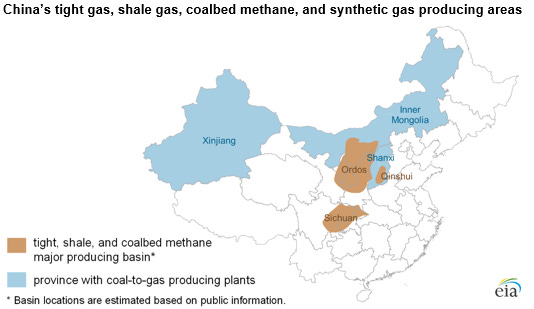
China doubled its domestic natural gas production between 2015 and 2025 and will likely surpass Iran this year to become the world’s third-largest gas producer.
It has 200 GW of gas-fired generation capacity, roughly four times its nuclear fleet by installed capacity. Renewables are one strand of a deliberately plural strategy, and the electrostate thesis mistakes that strand for the organizing principle of the whole.
The think tank Ember Energy has described China’s coal flexibility as evidence of innovation, praising the retooling of coal plants as ideal partners for solar and wind. Ember’s framing is a good example of how the green electrostate thesis works in practice: China’s clean energy activities are foregrounded, and everything that complicates the picture is reframed as further evidence of sophistication.
Forget Climate Change, Can America Catch up in Aluminium?
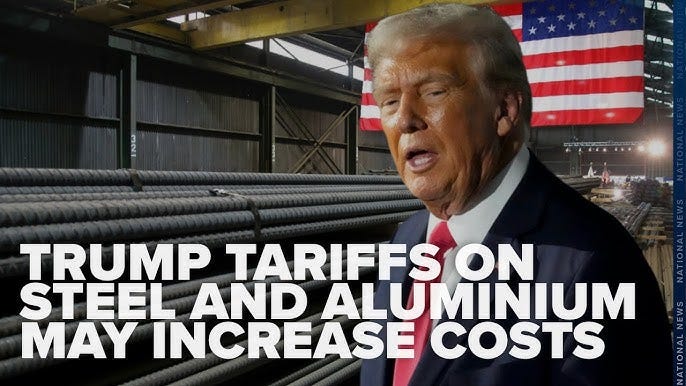
The United States finds itself in an uncomfortable position. With aluminum tariffs applied to treaty allies, a domestic smelter fleet whose newest facility entered service in 1980, and primary aluminum production of 680,000 tons per year against consumption many times that figure the situation is grim.
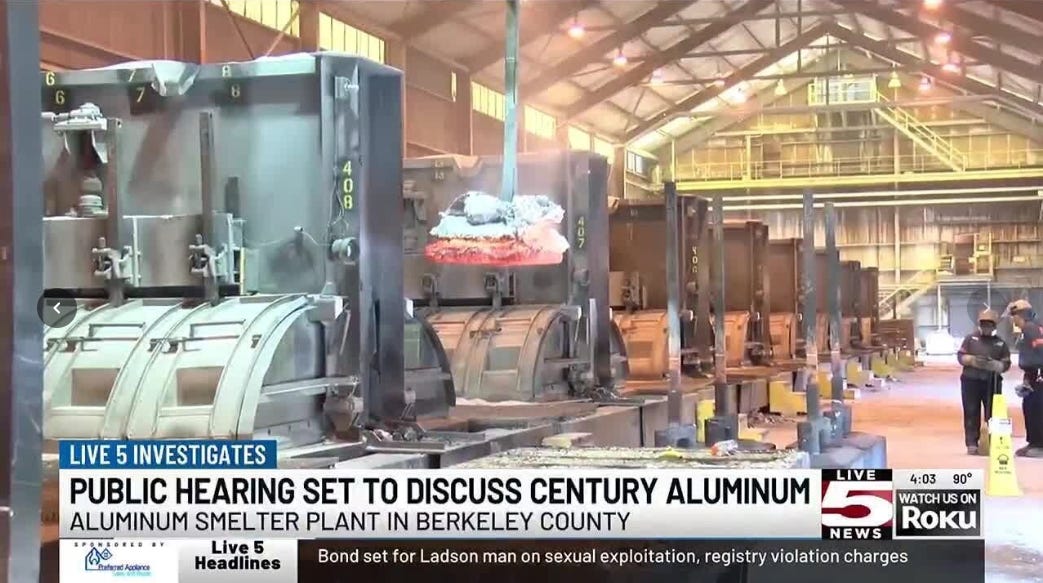
The tariff logic is not entirely without merit: rebuilding capacity in strategically important metals is a legitimate national security objective, and China’s practice of building new coal-fired aluminum capacity in Indonesia and Vietnam as joint ventures, once the NDRC domestic cap was reached, demonstrates that the competitive pressure will not relent.
But the mechanism is badly matched to the problem. The average US aluminum smelter consumes 12 to 18 % more electricity per ton than its newest Chinese or Canadian competitors, a penalty reflecting decades of deferred investment. Power costs for US smelters exceed $60 per megawatt-hour (MWh); Canadian smelters pay $20 to $30.
The Aluminum Association has calculated that even a retrofit of an existing US smelter requires a power supply contract below $40/MWh to be financially viable. Tariffs move the commodity price. They do not move the electricity price, and the electricity problem is about to intensify, because a new million-ton smelter requiring 1.5 gigawatts of grid interconnection now competes for queue position with electricity hungry data centers operated by Microsoft, Google, and Amazon.
The structurally honest answer to the question of how the West rebuilds aluminum competitiveness might involve Alaska hydropower development and coordinated allied industrial policy with Canada, Europe, and South America, rather than the transactional trade war currently being waged against precisely those partners. Quebec’s legacy hydro system, producing electricity at costs no thermal plant can match, is a strategic industrial asset on the US border. Tariffing the aluminum it produces is an unusual way to secure an essential commodity.
What the Argument Requires You to Ignore
China emitting 25 % of global greenhouse gases is not a detail that can be resolved by pointing to its solar manufacturing output. The industries driving those emissions achieved Chinese dominance through a coal-powered learning curve that has not been reversed. The rate of emissions reduction in China’s industrial sector is slowing, not accelerating, as the low-hanging fruit of textiles electrification and cement demand decline gets exhausted.
If the goal is Western industrial and military competitiveness, the relevant question is what it would actually take to replicate or contest the system built between 2005 and 2020 by engineers who are now the most experienced in the world at what they do, working in an industrial ecosystem that was capitalized by cheap coal.
The answer is not flattering to any currently available Western policy agenda, which may partly explain the appeal of narratives that avoid the actual industrial mechanics of the competition.
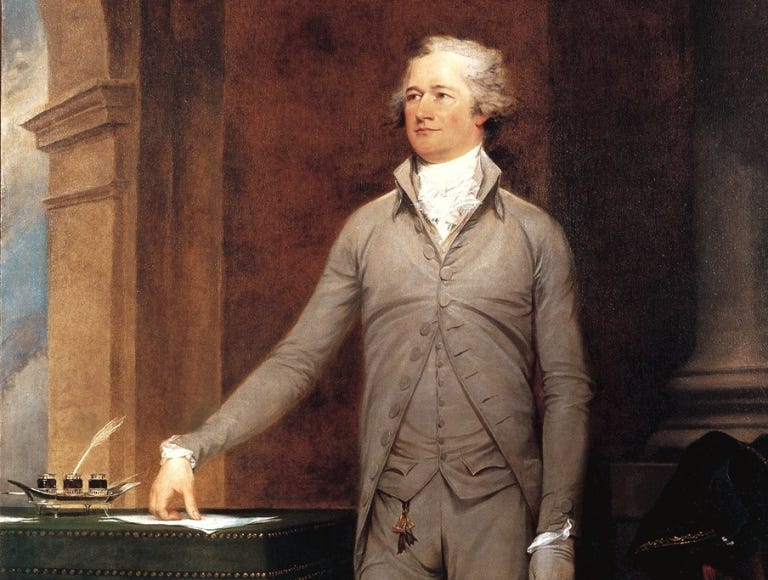
The tariff instinct draws on a genuine historical memory: nineteenth century American industrial policy, the infant industry protectionism of the Hamilton Report and the high tariff era that followed, did help build domestic manufacturing capacity, and did so at a moment when the United States was catching up to British industrial dominance. The analogy is not absurd on its face. But that era involved building the underlying industrial infrastructure from scratch in a country with abundant coal, cheap land, and a rapidly expanding domestic market.
The current situation involves trying to rebuild capacity that was deliberately offshored over four decades, in an energy market where the cheapest available electrons are in Canada and Norway, against a competitor that accumulated irreplaceable process knowledge during a specific historical window that has now closed.
Nineteenth century tariff logic assumed you could build the thing if you protected the market long enough. The aluminum problem is not primarily a market problem. It is a power price problem, a supply chain knowledge problem, and a capital commitment problem, none of which a tariff schedule resolves.
On the climate front believing that China will take the world through the looking glass to net zero by 2050 requires believing that a country whose government describes coal as its energy ballast rock and which hosts captive coal power plants physically attached by conveyor belt to its most advanced manufacturing facilities, will undergo a transformation so complete and so rapid that it overrides the physical and economic inertia of all of that invested infrastructure.
The fact that this prediction finds a receptive audience in the Western climate movement is telling. It is what happens when people confronting what they believe to be an existential threat exhaust the available policy options.
The desperate need for a solution that produces a powerful appetite for evidence that someone, somewhere, is solving the problem at scale. China’s solar deployment numbers are impressive enough to feed that appetite. Everything upstream of the solar panel is easy to ignore, especially if looking at it means that the narrative collapses.
China’s clean energy manufacturing is real, consequential, and has permanently changed the economics of solar and batteries for the rest of the world. The industrial system that produced it is still, predominantly, powered by coal, and the Chinese government has told us so, repeatedly, in its own policy documents.
This essay accompanies a Decouple conversation with Seaver Wang, Climate and Energy Director at the Breakthrough Institute and co-author of “Greenwashing with Chinese Characteristics,” published in the Breakthrough Journal. If you find this work valuable, consider supporting Decouple by pledging on Substack or making a tax-deductible donation through our fiscal sponsor at Givebutter.
Chris’s dismantling of the “green electrostate” myth is powerful, but his understanding of China as a system remains incomplete. China is not simply a coal-driven new-energy empire. It is a composite system in which coal-fired power as a stabilizing base, renewable expansion, grid investment, industrial clustering, engineering organization, and national-security anxiety are all layered together. Coal does explain much of the upstream cost advantage and the early-stage learning curve. But without the subsequent build-out in grid infrastructure, energy storage, equipment manufacturing, market scale, and policy coordination, China could never have translated that upstream advantage into today’s global dominance in end products. The real question should be understood at a higher level: how coal has been embedded within a much larger state-industrial-power system.
China is the first country in the world to combine a high-coal base, massive renewable additions, a super-scale power grid, dense manufacturing clusters, and security-driven industrial policy within one integrated system. That is precisely the part the West will find hardest to replicate.
Agree. The West sees China through a lens of its production layer and ignores the coal fired industrial base below. However, the major constraint in this situation is not the fuel composition. What made cheap coal so important was that it allowed for compressing learning curve, stabilization of yield rates and the formation of high density upstream clusters related to polysilicon, graphite, metals & chemical products. The actual difference is whether or not your competitors will be able to create an industrial time compression similar to what existed prior to the cost of producing energy, as did China.