

Atlas Atomics, a U.S. nuclear startup developing advanced heavy-water reactor technology for the U.S. market, has reportedly raised $400 million in a Series A financing round at a $1.9 billion valuation.
Back in 2020, during the first season of the Decouple podcast, Mark Nelson observed in an episode titled Existing Nuclear and Imaginary Nuclear that if a contemporary nuclear startup repackaged and marketed a CANDU-like technology, it would be hailed as an advanced reactor with an impressive list of compelling features. Mark’s tongue-in-cheek prediction is looking rather prophetic.
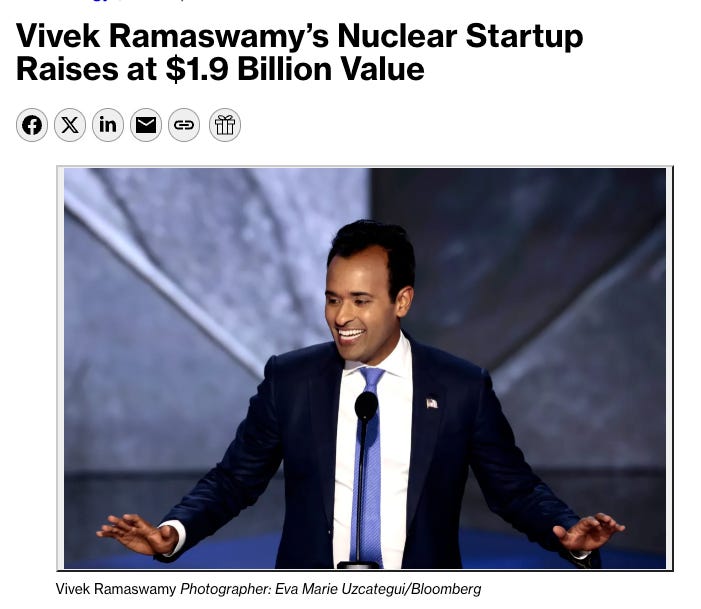
Natural-uranium fuel, online refueling, and the potential for high-volume isotope production are precisely the sorts of capabilities that Atlas Atomics could tout as innovations. Canada’s CANDU program has been demonstrating them for decades.
The Atlas Atomics proposition is, to put it mildly, ambitious. The company has apparently convinced investors that it can develop a new generation of heavy-water reactors more economically than an established Canadian technology family with decades of accumulated engineering experience.
Adding to the irony, AtkinsRéalis announced in June that it had begun engagement with the U.S. Nuclear Regulatory Commission to bring CANDU technology to the American market. Atlas may find itself competing against the very technology it is trying to reinvent, backed by an incumbent with a half-century head start.
What it took to develop Gen 3+ CANDU
Canada invested many tens of billions of dollars over decades in nuclear research, reactor development and engineering. That investment was followed by billions more in commercial construction, operation, refurbishment and life-extension programs. The result is an extensive body of tightly held intellectual property and institutional knowledge.
Those advantages come with considerable engineering complexity.
Pressure-tube technology alone represents decades of materials science and operational experience. Hundreds of zirconium-alloy tubes must withstand high temperatures, pressure, and intense neutron irradiation while managing creep, deformation, hydrogen embrittlement, and the risk of cracking. Their integrity requires specialized inspection techniques, predictive models, and eventual replacement.
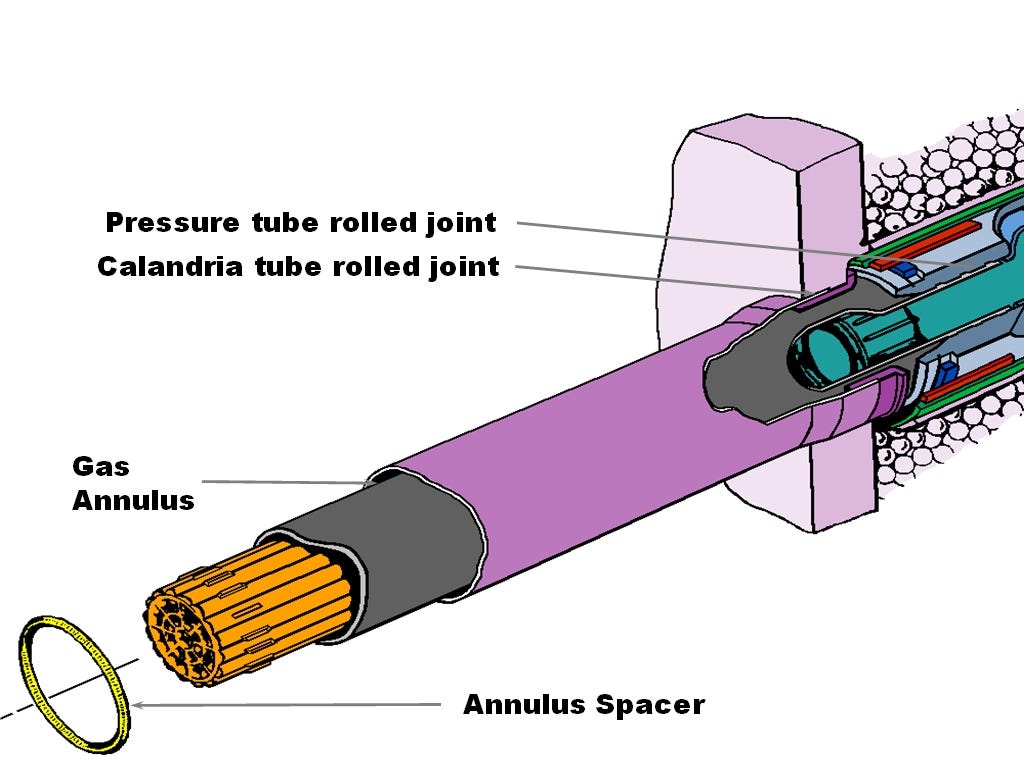
Online refueling adds further complexity, requiring sophisticated reactor physics and reliable precision fuelling machines.
Heavy water is expensive to produce, must be maintained at high isotopic purity, and requires careful management of tritium accumulation. There are rumors that Atlas Atomics will have preferential access to the Department of Energy’s substantial heavy-water inventory at Savannah River. But this is no ready-made supply of reactor-grade heavy water.
DOE has disclosed that its approximately 530,000 gallons of legacy heavy water contain varying levels of tritium and other impurities requiring processing before commercial reuse.
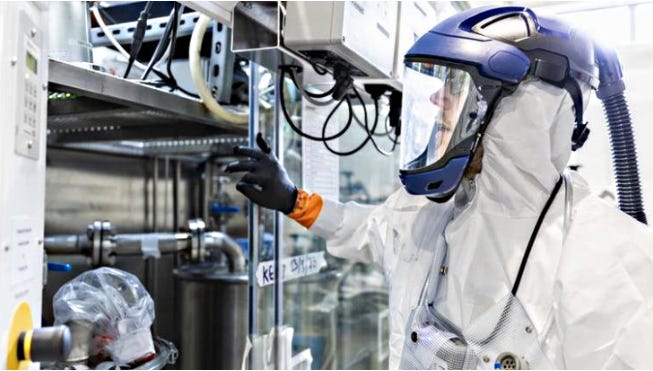
Complicating matters, North America’s only large-scale heavy-water detritiation facility is operated by OPG at Darlington, where capacity is already committed to servicing Ontario’s CANDU fleet and throughput has been declining as equipment ages.
DOE has no comparable facility. Access to Savannah River’s heavy water would therefore solve only part of Atlas’s supply problem, leaving the expensive and technically demanding question of purification and detritiation unresolved.
The CANDU intellectual-property problem
The 2011 sale of AECL’s commercial reactor business, CANDU Energy Inc., established SNC-Lavalin, recently rebranded to AtkinsRéalis, as the exclusive commercial licensee of CANDU technology. AECL cannot simply license the same intellectual property to a competing reactor developer without undermining that exclusivity.
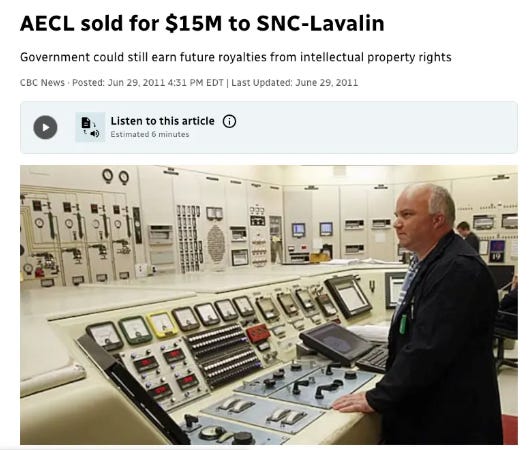
That leaves Atlas needing to develop its own clean-sheet technology or obtain access to another design lineage.
India is the obvious country to consider. Its nuclear program began with Canadian-derived PHWR technology before developing its own designs and a substantial domestic engineering capability. India now has decades of experience in designing, constructing, and operating indigenous heavy-water reactors.
Could Indian collaboration provide Atlas with a shortcut? It is a reasonable proposition, but there is no basis to assume that such a relationship exists. And even if it did, access to expertise would not automatically deliver a complete, commercially mature design or a ready-made American licensing case.
The US Nuclear Regulatory Commission would still need to evaluate the specific design, its safety analysis, materials, fuel, manufacturing processes, and operating systems. A reactor developed around a different regulatory and industrial framework would face substantial work to establish its licensing basis in the United States.
Bubble much?
Atlas is entering a market crowded with nuclear startups promising simpler, cheaper, more manufacturable reactors. Announcing an ambitious technical vision and attracting substantial venture capital are a far cry from constructing and operating a complex reactor technology, let alone at a competitive cost.
A $1.9 billion valuation further inflates the current nuclear bubble and reflects unrealistic expectations about future opportunity.
Nevertheless, there is something flattering to this Canuck about the renewed interest in PHWR technology. AmeriCANDU mimicry is, after all, the highest form of flattery
If you think the nuclear startup bubble is getting a little loonie, give this post a like, eh?
Perhaps the rumors about Vivek's initial pharma success being a pump & dump IPO were not entirely unfounded, eh?
Vivek: "Those tech issue things? No prob! China's already stole it all; we'll get it from them!" 😂