

For almost the entirety of human existence, a single material did the work that coal, oil, gas, steel, and concrete now divide among themselves. Wood provided the fuel that cooked our food, fired ceramics, and heated indoor spaces.
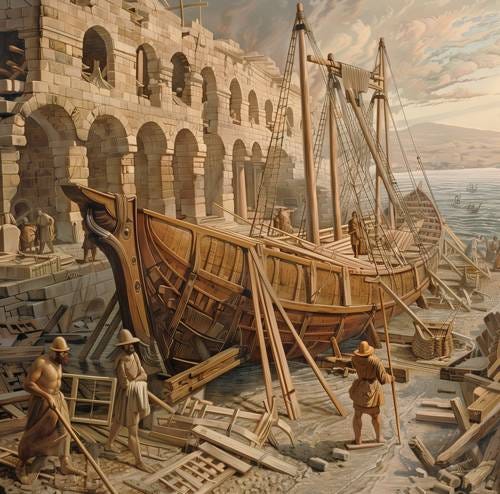
Its timbers were the skeletons of our housing and ships. As charcoal it was the reducing agent and heat source that pulled iron out of rock. It was also the feedstock for a pre-industrial chemicals industry that produced, for example, the tar and pitch that kept ships watertight.
About 200 years ago the buried fossil forests of the carboniferous era stole centre stage.
In today’s essay, which accompanies my interview with Decouple fan favourite Mark Nelson, we perform a sweeping deepdive of humanity’s symbiosis with trees and wood.
An Arboreal Ancestry
Our co-evolution with trees predates our dependence on wood as fuel and material. Primates are an arboreal order, and the anatomy that gives modern day humans some of our unique capabilities evolved in the canopy.
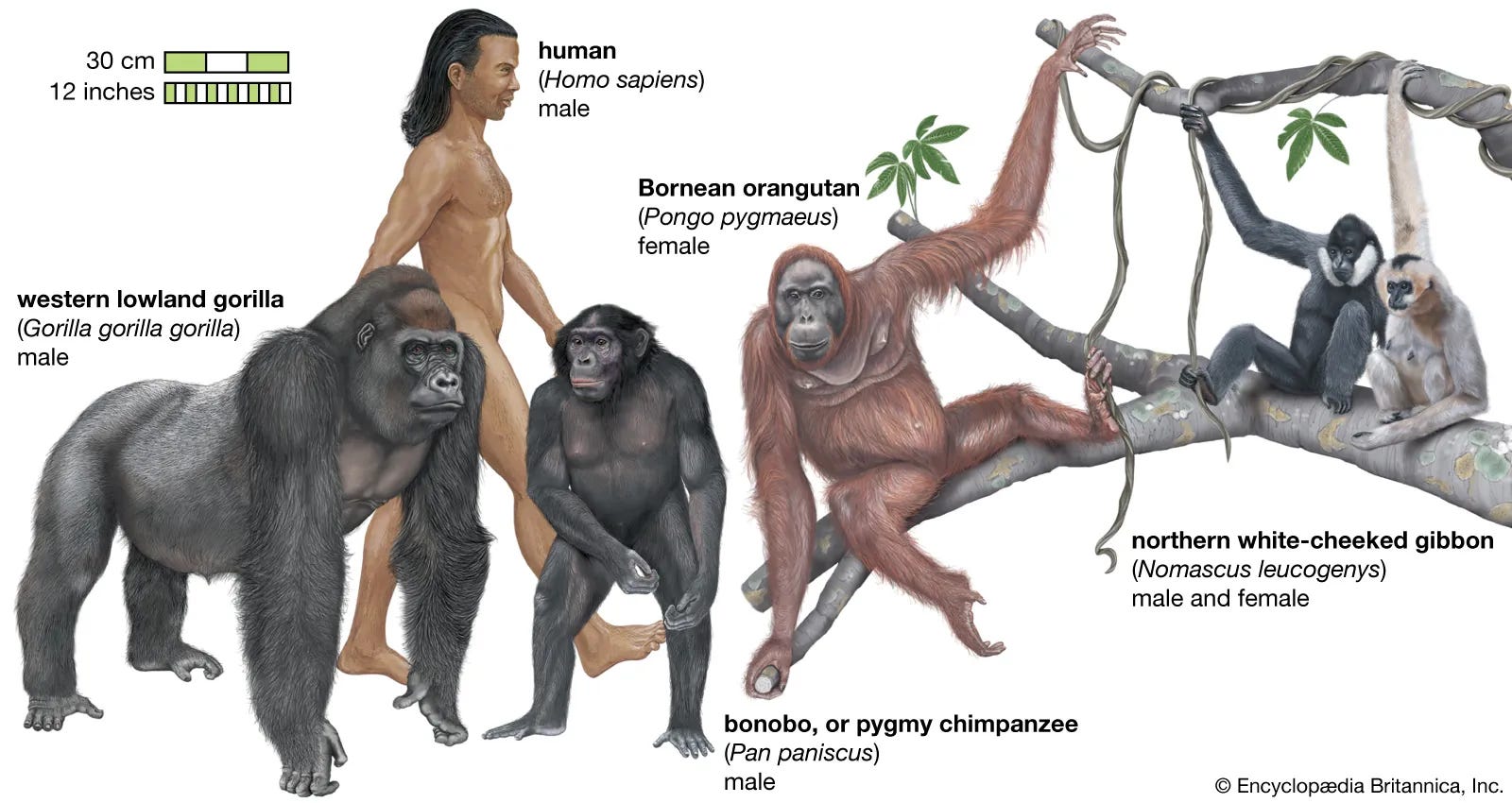
Amongst those, the grasping hand, the opposable thumb and binocular, trichromatic colour vision that helped us judge distance and find red and orange fruit in a sea of green foliage. The two legged animal that would later slash, burn and build from the forest was itself moulded by it.
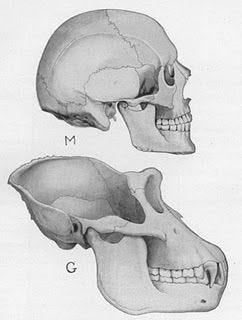
The controlled combustion of wood further refined our bodies and boosted our capabilities. Cooking externalizes much of the work of digestion which enabled Homo sapiens to develop a shorter gut, a smaller jaw and spend the energy surplus on a larger brain.
As wise as we are, we might more accurately be called the fire ape, Homo ignis.
The Wooden Battery
What makes wood special among the products of photosynthesis is a biochemistry that enables long term energy storage. Plants are less than 1% efficient at converting sunlight into biomass and for non-woody plants most of that carbon based material is recycled to the atmosphere through rapid decomposition.
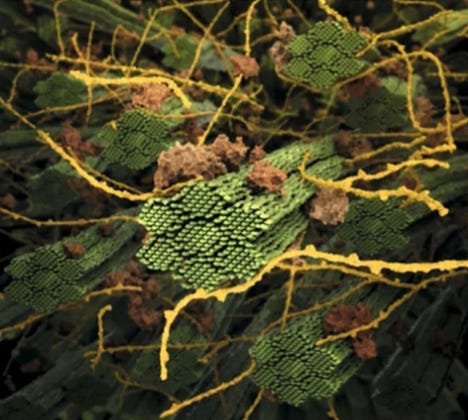
A tree, however, can hold a century of energy conversion in a form that can be harvested, transported in bulk by water, stored and burned releasing significant quantities of energy on demand.
This attribute is enabled by a unique biochemistry. In a close parallel to rebar and concrete, cellulose carbon fibres, strong in tension, are set in lignin, a rot-resistant cement that is responsible for 15% to 30% of the tree’s mass.
In the case of the California Redwood this biological composite can stand 100 metres in the air and endure for centuries.
Energy = Land Area x Growth Rate
While the wooden battery can stretch photosynthetic constraints slightly the pre-industrial energy equation: Energy = Land area x Growth rate, imposed unforgiving limits. Forested land is finite, sunlight arrives at a fixed rate determined by geography and weather. Growth rate varies by close to an order of magnitude based on species, precipitation and latitude.
Wood acts like savings in a bank account but the balance refills only as fast as the sun allows. This becomes the ceiling in the story that follows whether it’s one of wood as fuel or the products it enables like iron, ships and even maritime empires.
Charcoal and Metals
Preindustrial metallurgy is illustrative of the limits of photosynthesis and lignin. Smelting iron demanded charcoal, both as the fuel and as a reducing agent. Charcoal is made by pyrolysis: heating wood without air to drive off its volatiles and leave carbon behind. The purer the carbon, the better the metal. Every pre-industrial furnace therefore had a forest standing behind it.
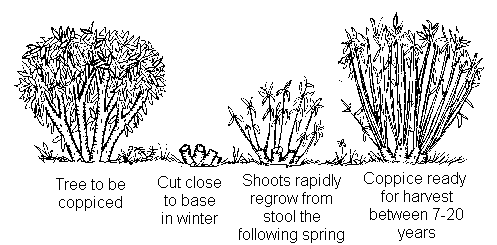
Foresters managed the fuel supply through coppicing: cultivating species that resprouted after cutting and allowing the new shoots to mature over roughly twenty years. A woodland could be divided into twenty lots, with one cut each year, creating a theoretically perpetual supply of fuel for the furnace.
This system however imposed a hard economic limit on growth. A larger furnace required charcoal from an ever-wider ring of forest, and charcoal was a poor freight: bulky, fragile, and low in value by weight.
It could be hauled from farther away, but each added mile raised its delivered cost until expansion ceased to be profitable. Iron output was therefore capped by the productive woodland within an economically cartable radius of the furnace.
Deforestation and Agriculture
While forests provided fuel, materials and process heat they competed with human caloric needs. Clearing forest for farmland has therefore been the greatest driver of global deforestation.
The European medieval warm period saw a particularly rapid era of deforestation. The combination of a solar maximum and uncharacteristically low global volcanic activity raised temperatures across Europe and the North Atlantic.
This expanded the growing season by 3 to 4 weeks and made previously agriculturally unviable land across northern Europe cultivable. Vineyards sprung up in England, the Vikings spread across the North Atlantic into North America and a group of forest clearing monks spread like wildfire transforming the European landscape.
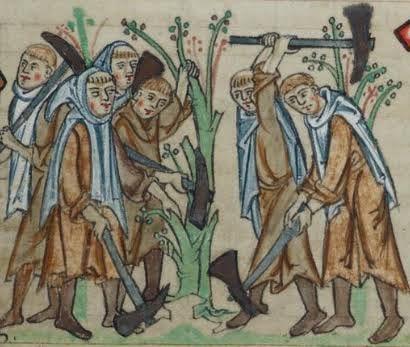
The Cistercians were a reform order. They wanted a stricter reading of the Rule of St. Benedict than the wealthy Cluniac houses of the day, which meant austerity, self-sufficiency, and a return to manual labor as a form of prayer.
The order’s ideal demanded remote sites far from existing towns and tillage, so its houses took the marginal ground nobody else wanted: woodland, moor, and marsh. The monks then set about clearing and draining it.
What turned a spiritual preference into a continental clearing operation was the labor model. A class of lay brothers, the conversi, men bound by vows but dedicated to toil rather than the Divine Office, consolidated farms of anywhere from 30 to over 2,000 hectares. This arrangement concentrated labor and animals on a single block of land under a single owner, which made felling, stumping, and drainage worth the outlay at scale.
The order replicated this model with an efficiency no secular institution of the period could match. Its network of daughter houses worked something like a franchised joint venture fused with an ant colony. From 26 abbeys in 1124 they reached roughly 700 across Latin Europe by the 13th century, from Ireland to Poland and Sweden to Sicily.
Forests the Enablers of Maritime Empires
At sea building materials were also determined by Land Area x Growth Rate and this set the size of navies. A single 74-gun ship of the line consumed on the order of 50 acres of mature oak.
Shipwrights wanted high quality compass timber, curved oak whose grain had grown into the shape of a knee or a rib, so that structural loads ran along the fibres rather than across them.
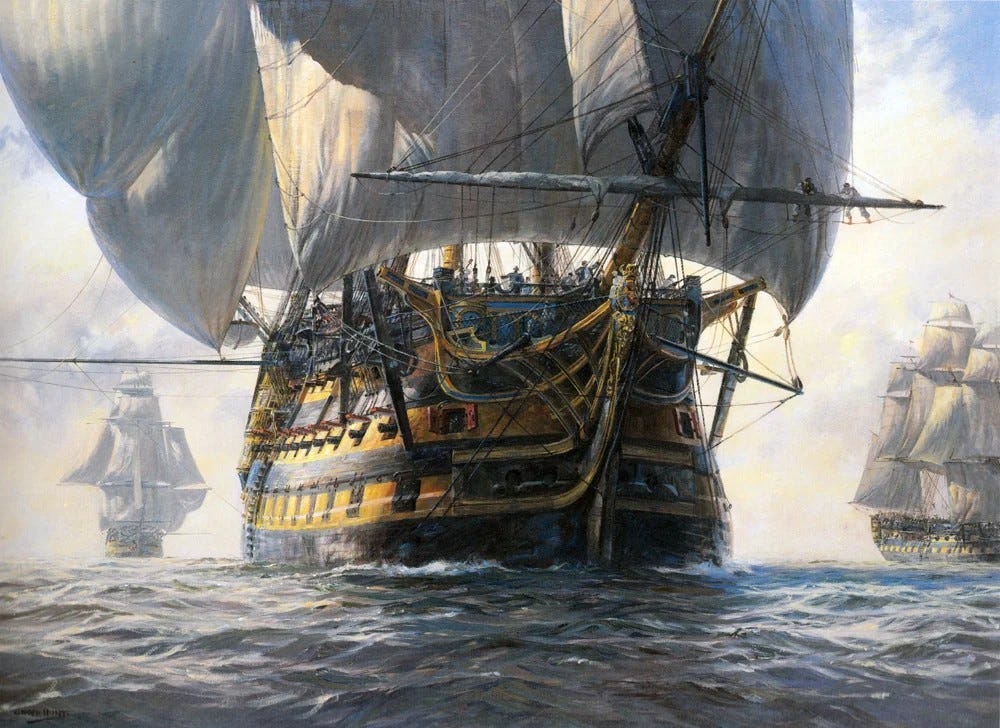
Above the hull came the naval stores and the running consumables of a wooden fleet: tar, pitch, rosin, replacement beams, and above all masts, which had to be tall, straight, and close to flawless.
Britain had deforested itself of sufficient quantities of these high quality timbers well before it reached for a truly global empire, so the supply came from abroad.
The 18th Century Strait of Hormuz
The old Hanseatic axis ran from London to Novgorod, drawing timber, iron, and naval stores out of the forests of Scandinavia, the Baltic, and Russia, which funnelled the entire system through the Øresund, a four kilometre wide strait between Denmark and Sweden.
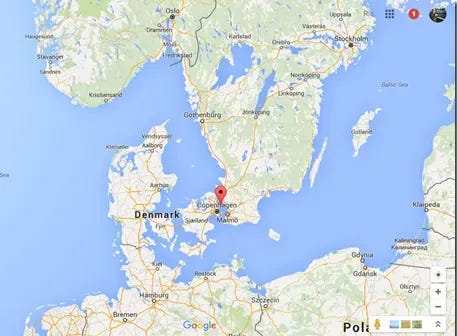
During the French Revolutionary Wars, Britain was attempting to starve France of maritime trade using its superior navy to stop, search and confiscate the goods of its trading partners.
These countries, including Denmark and Sweden, banded together into the League of Armed Neutrality and threatened to close the Oresund to British trade if their shipping continued to be harassed.
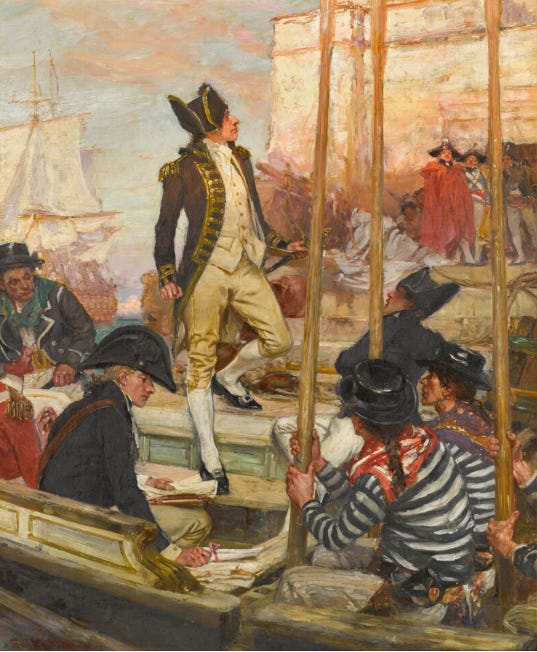
In 1801 a British fleet under Sir Hyde Parker, with the legendary Admiral Nelson leading the attack, forced the Sound and destroyed much of the Danish navy at anchor off Copenhagen.
The Industrial Fruit of the Subterranean Forests
The fossilized forests of the Carboniferous eventually broke the pre-industrial energy equation. Coal is accumulated lignin and cellulose that refused to rot. A single seam holds the stored photosynthesis of forests that grew and fell across the same ground for millions of years, energy a coppiced woodland could release only one 20-year rotation at a time. Tapping it severed human energy constraints from the fixed rate at which sunlight arrives and the finite acreage available to catch it.
This did not mean the end of humanity’s marriage to trees. As documented by French historian Jean Baptiste Fressoz in 1750 Britain consumed roughly 3.6 million cubic meters of fuel wood per year. In 1900 it used more than 4 million cubic meters just as pit props to hold open the shafts of its coal mines and now in 2025, Drax, a British wood pellet burning power plant, consumes 10 million cubic meters per year.
In an upcoming part two with Mark Nelson we will pick up the story of our ongoing post industrial symbiosis with wood and take a closer look at the broad arc of deforestation and reforestation.
Stay tuned.
Very interesting post, Chris.
When examining the history of energy I recommend the books of Vaclav Smil. He documents and calculates in detail the exploitation of energy by man.